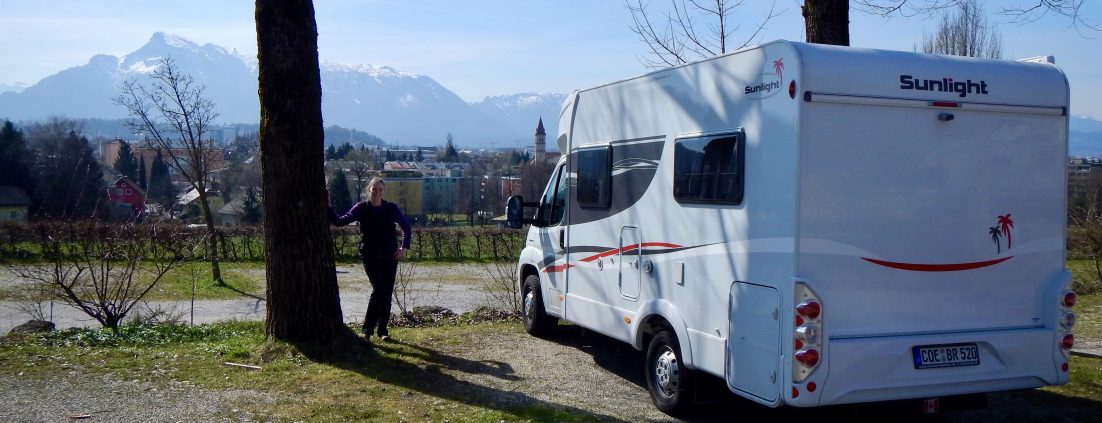
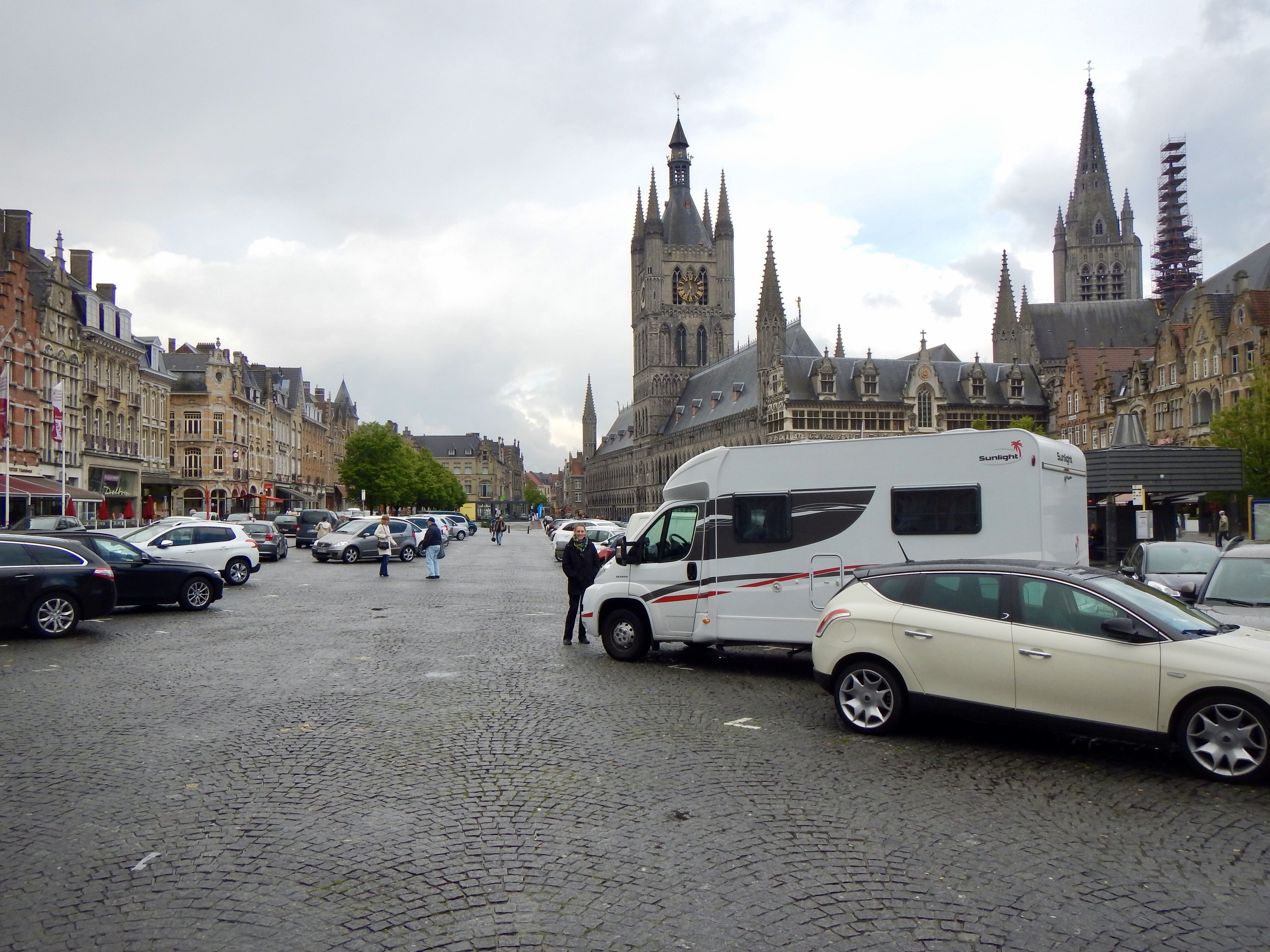
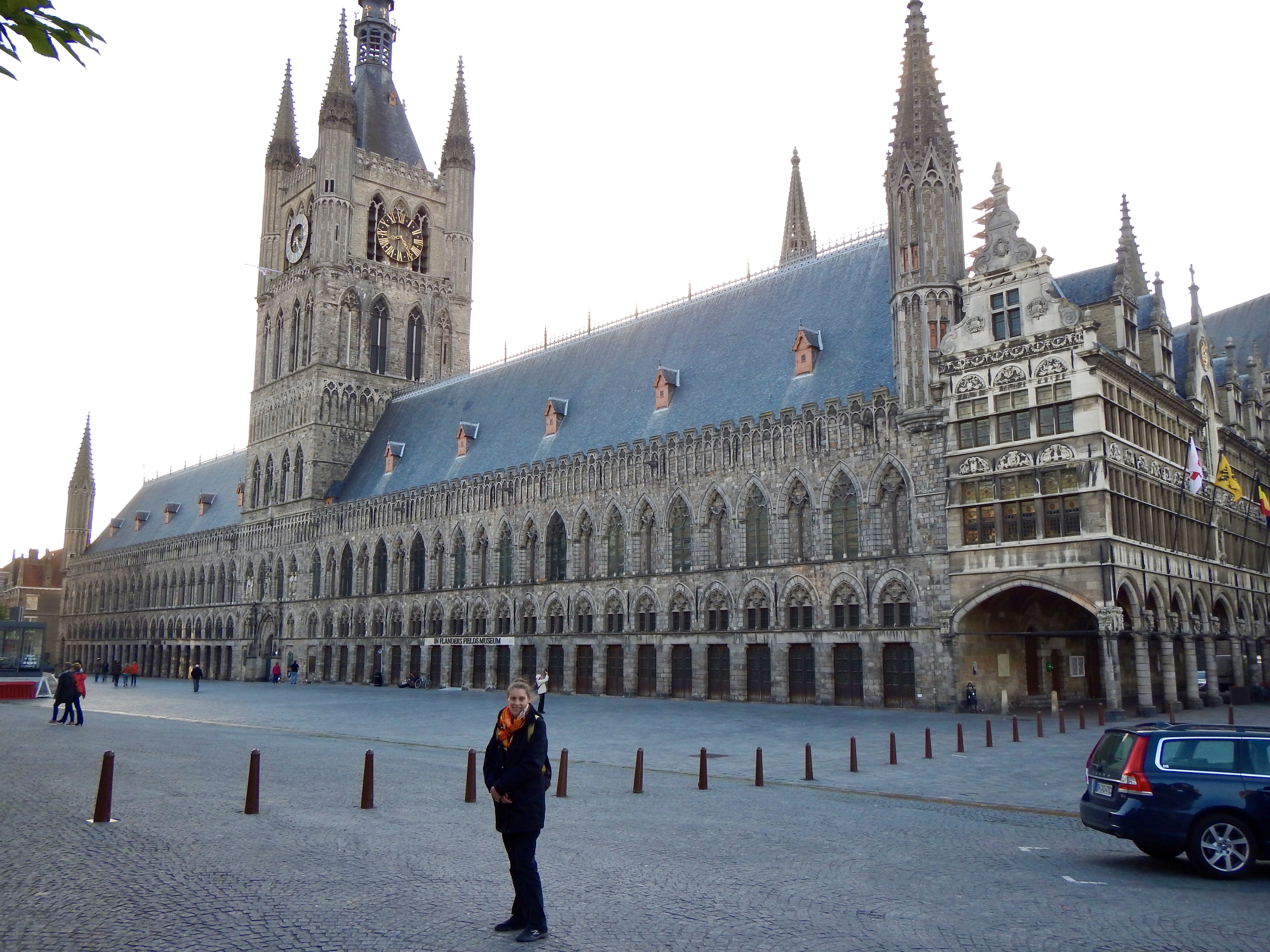
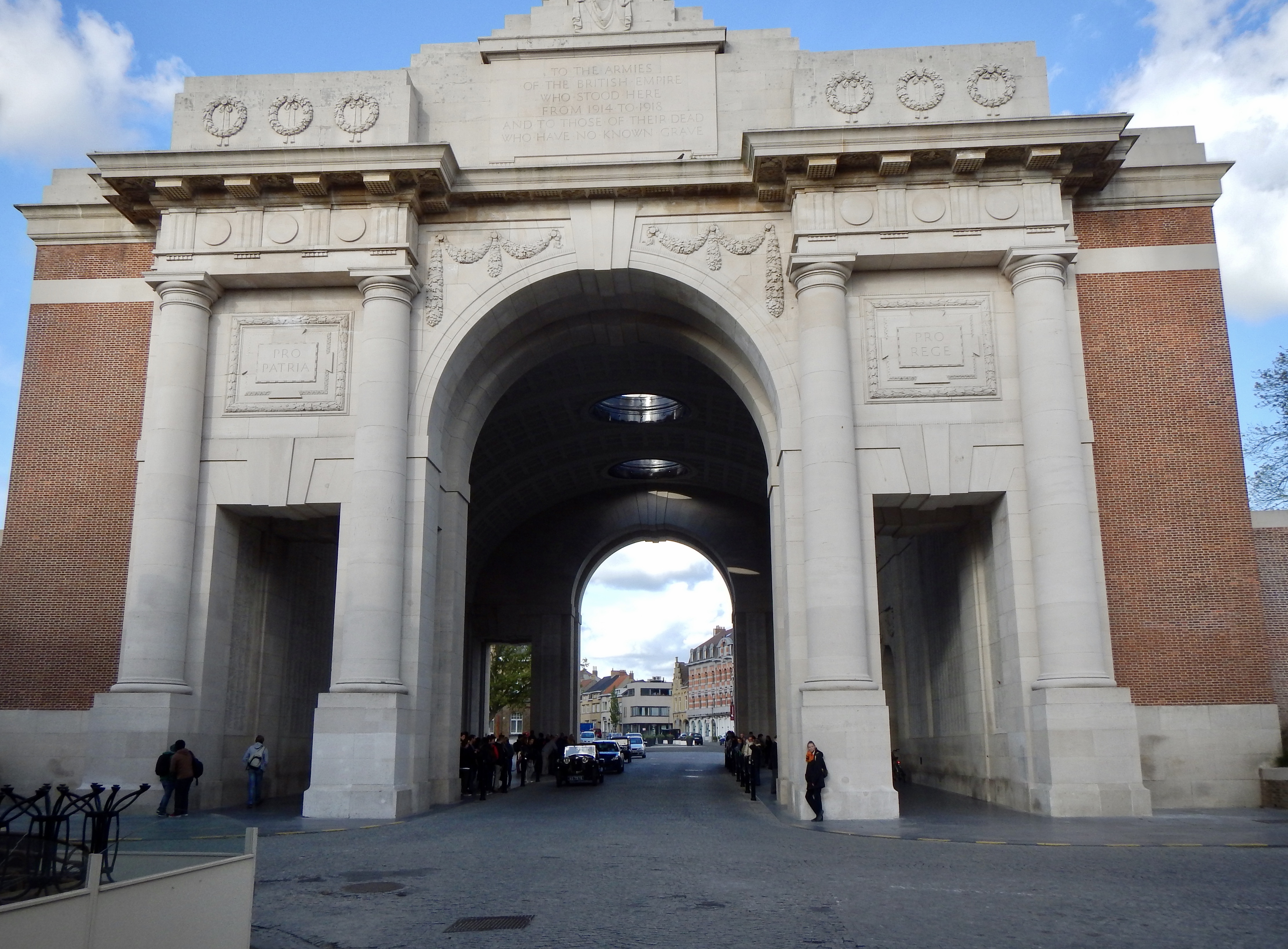
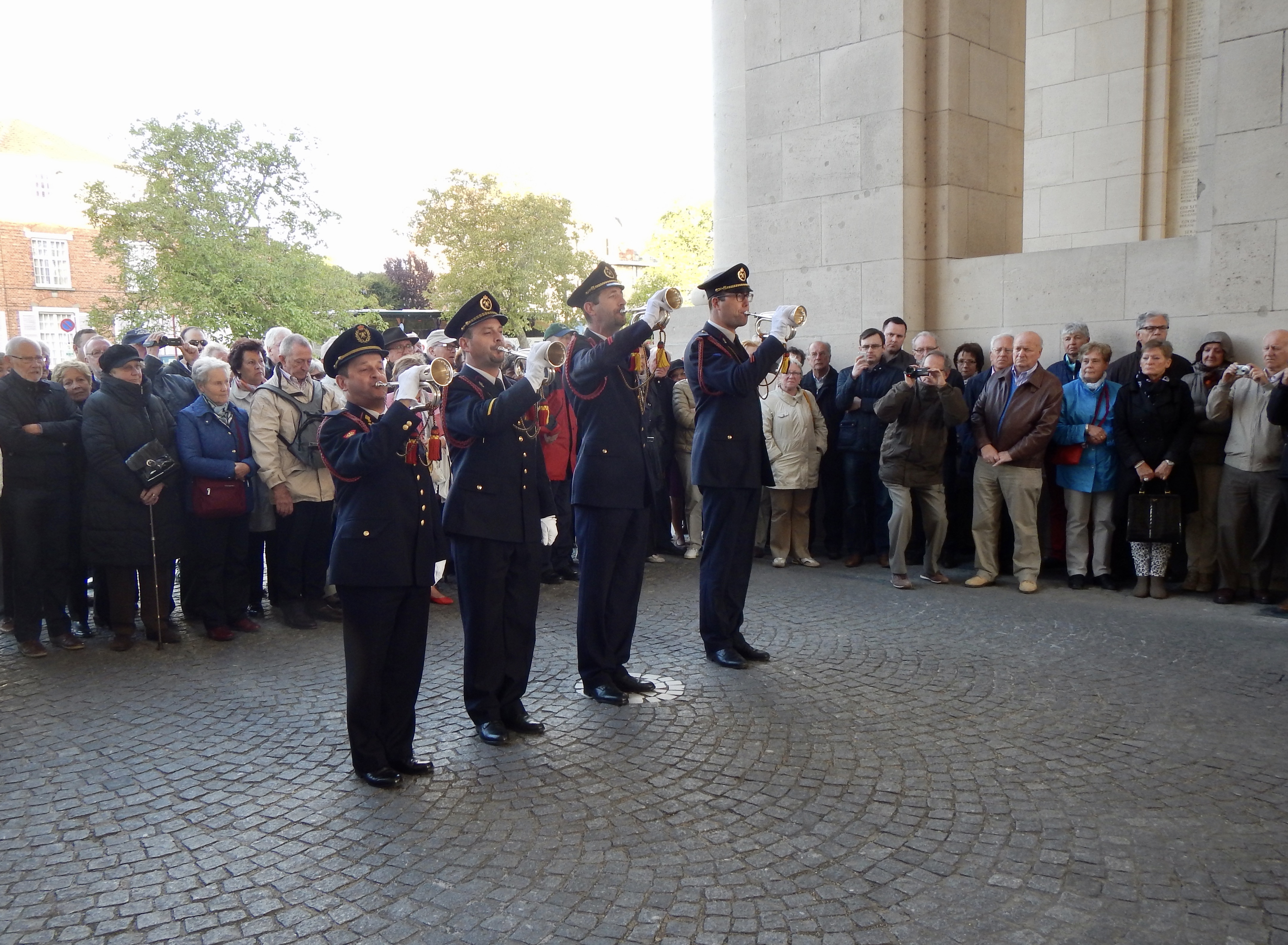
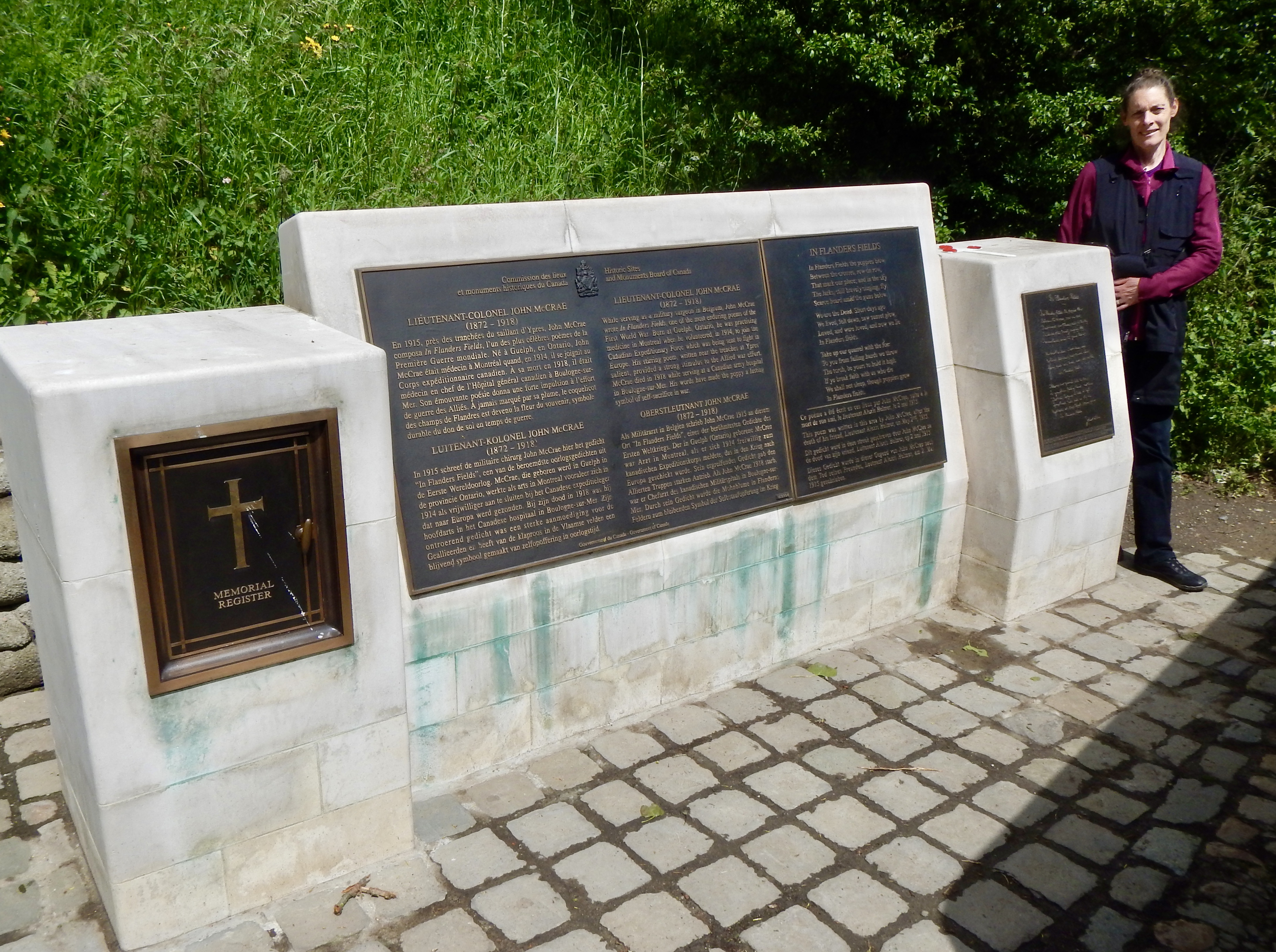
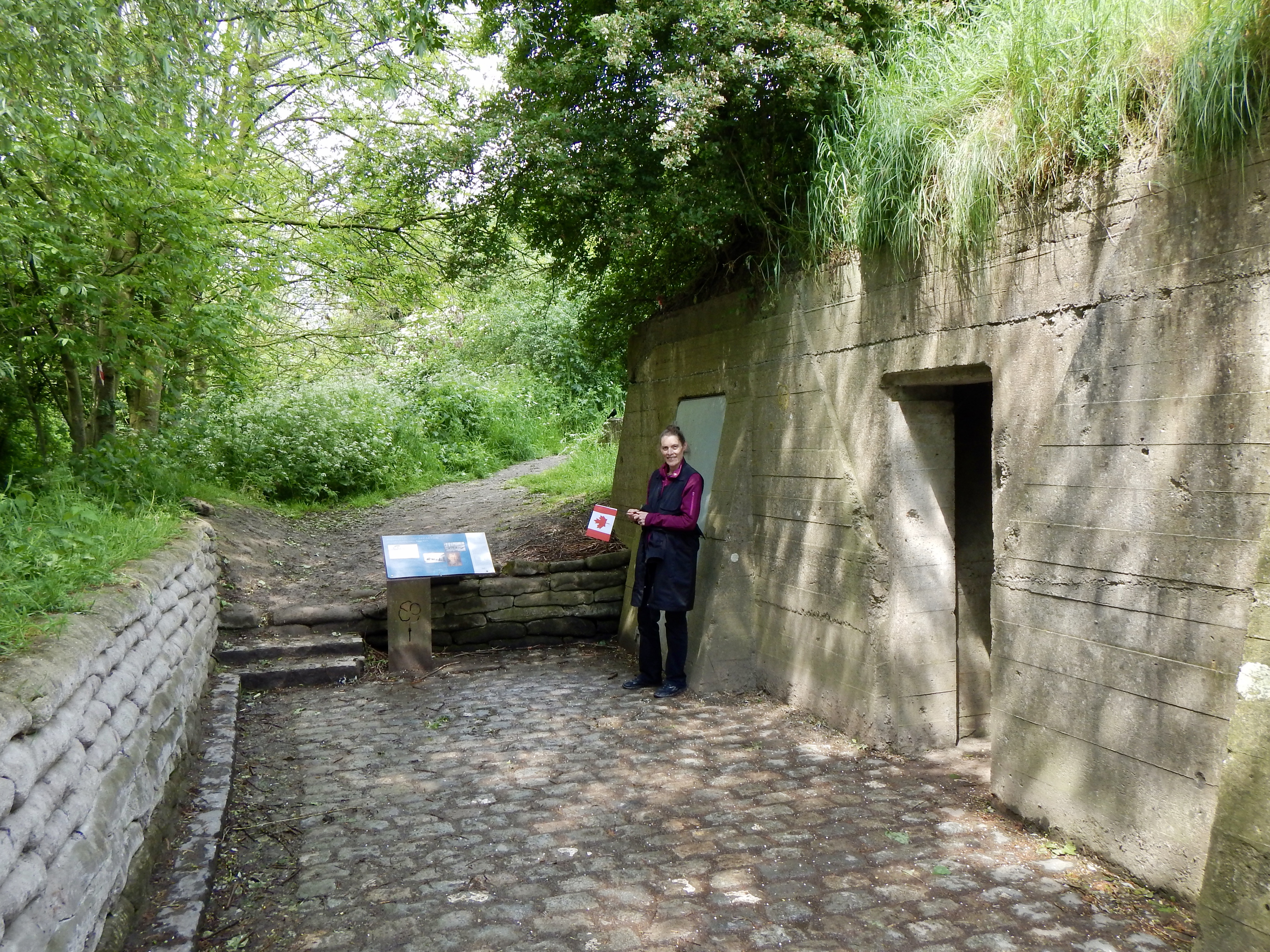
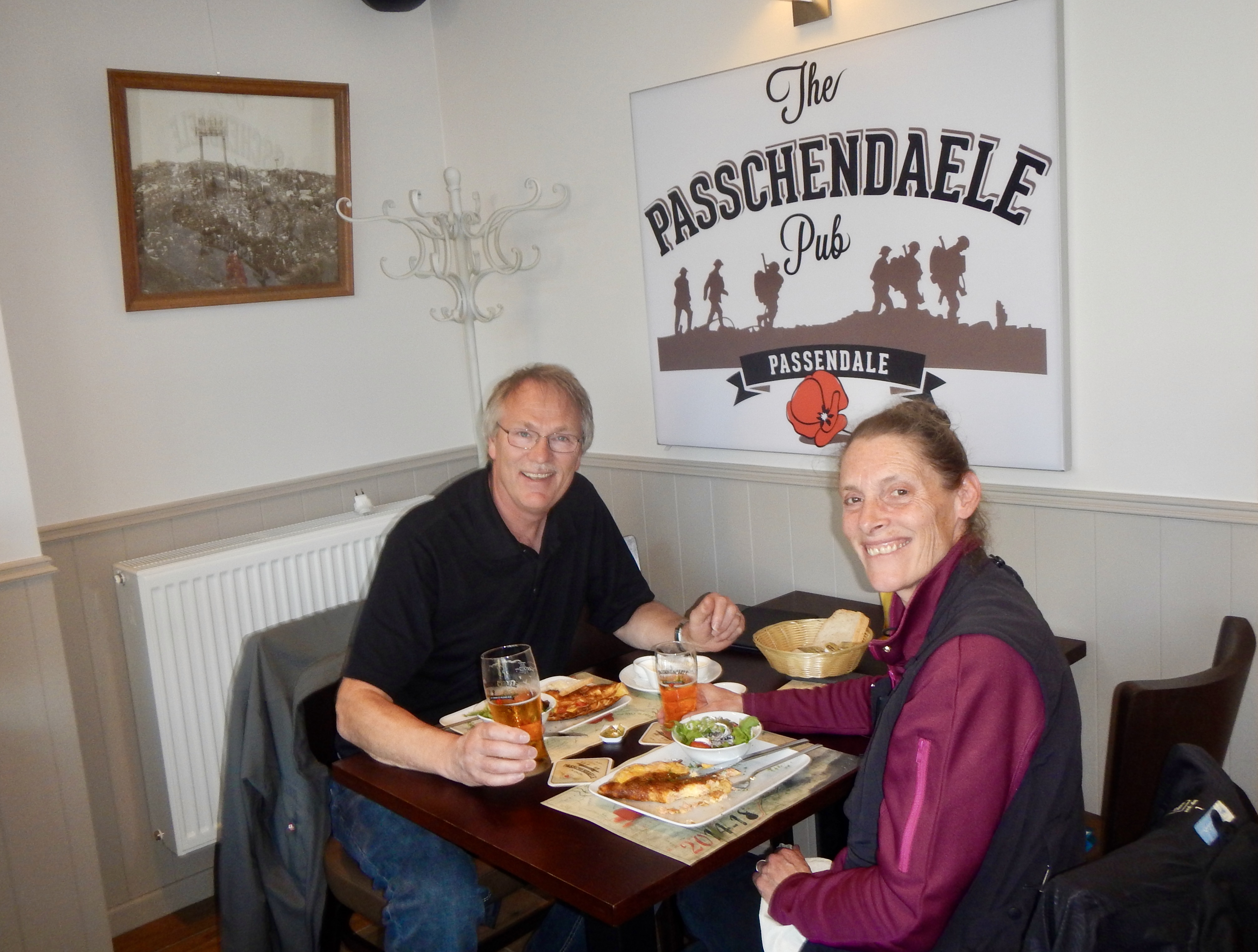
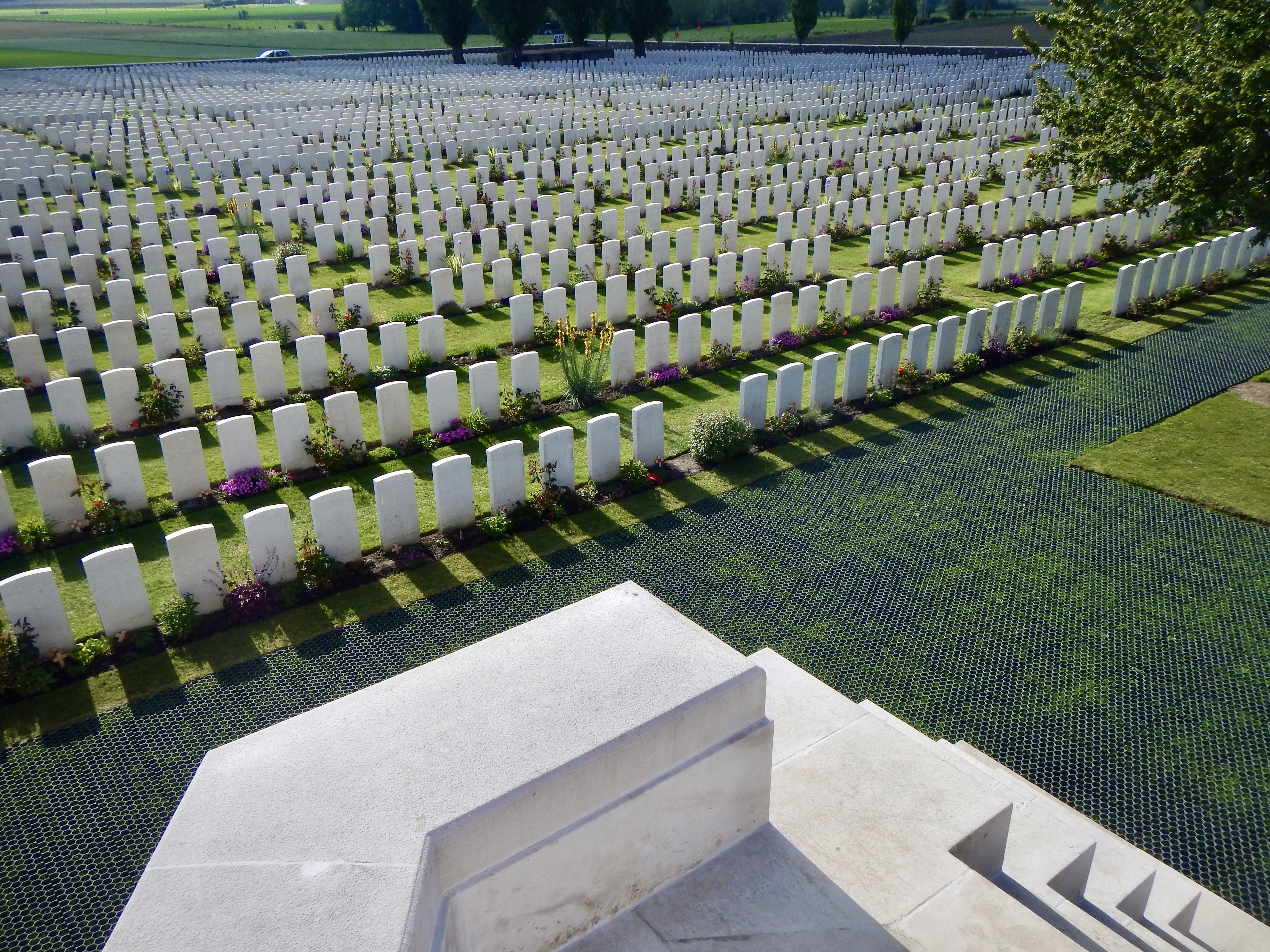
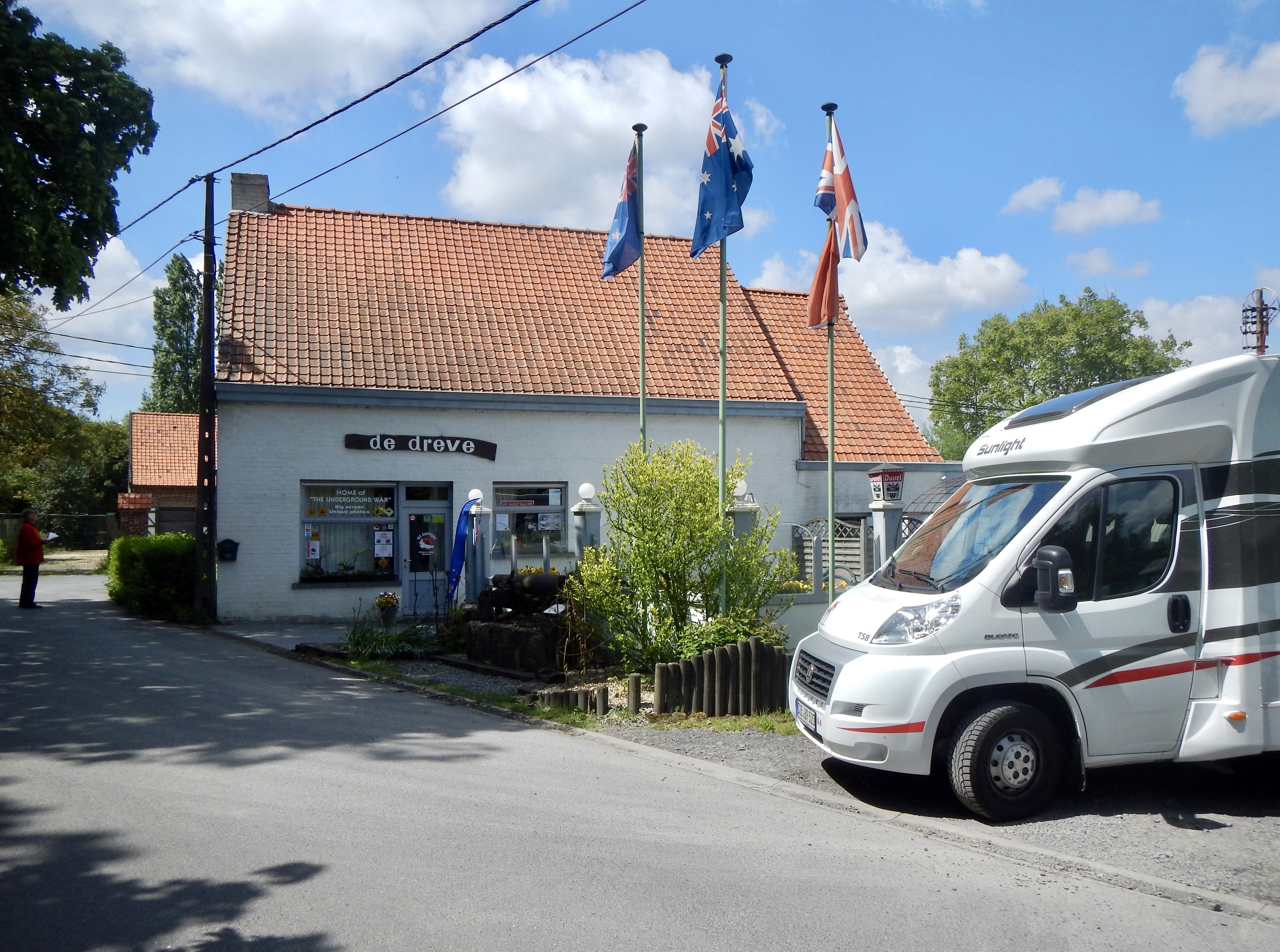
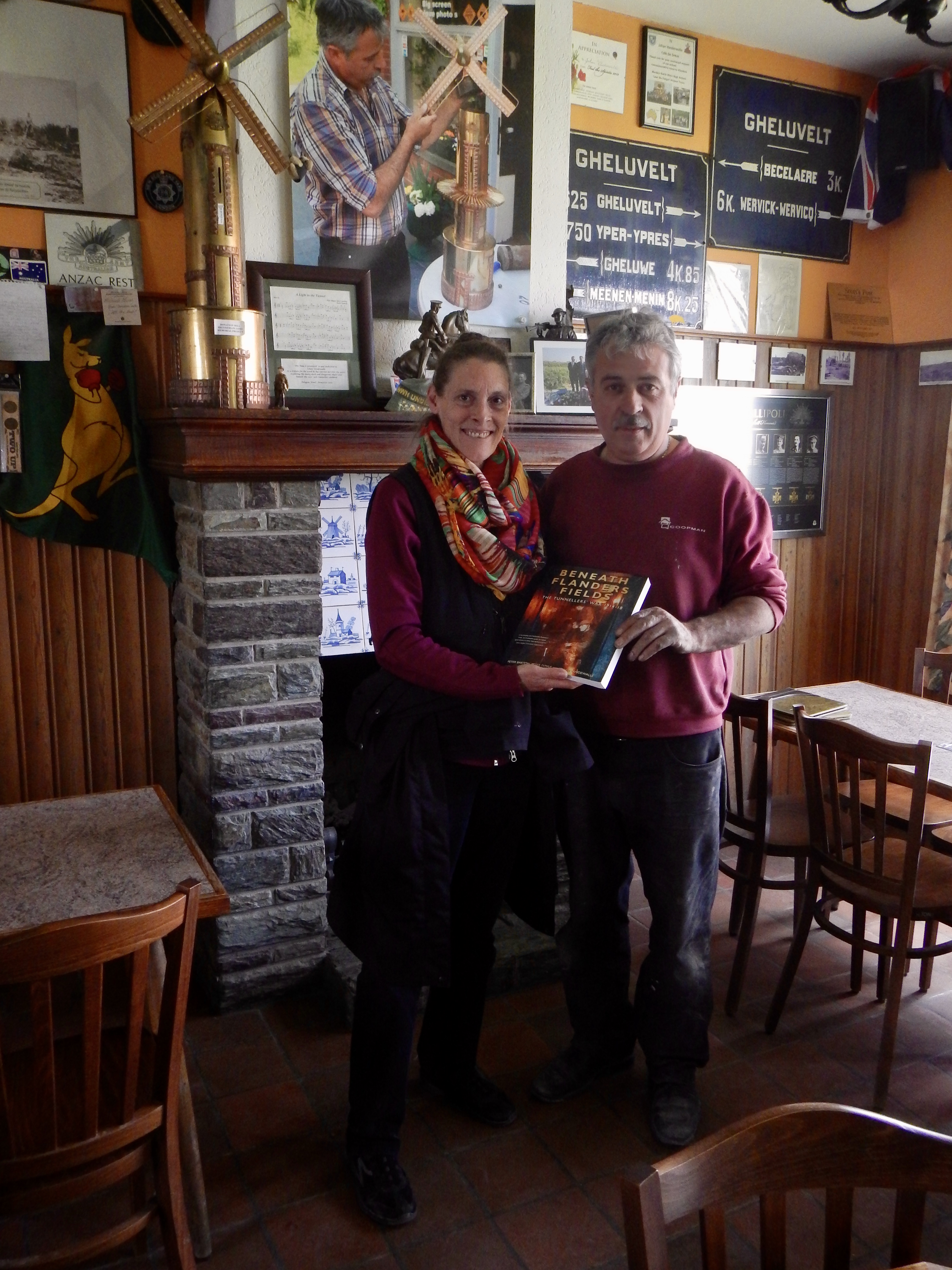
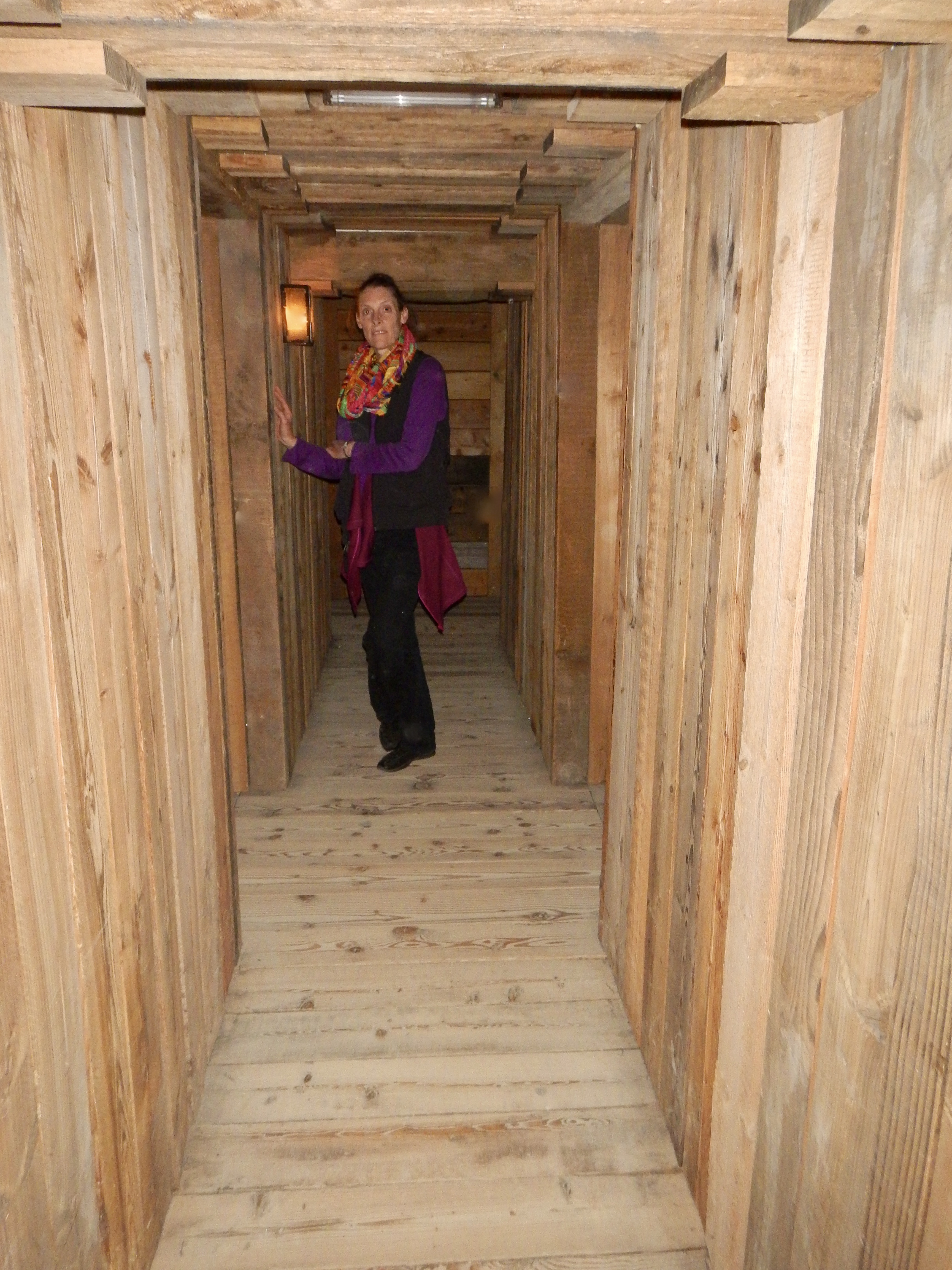
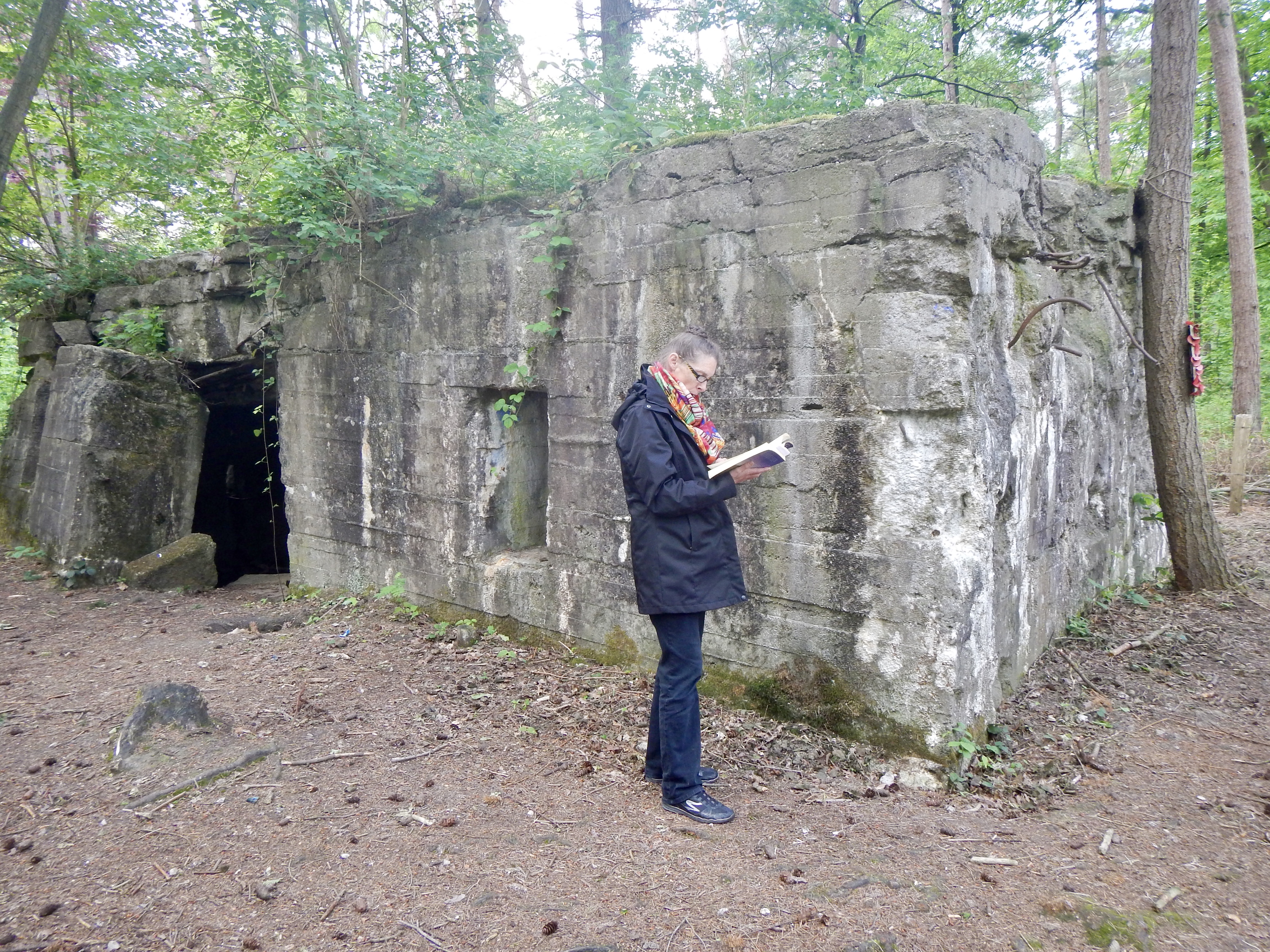
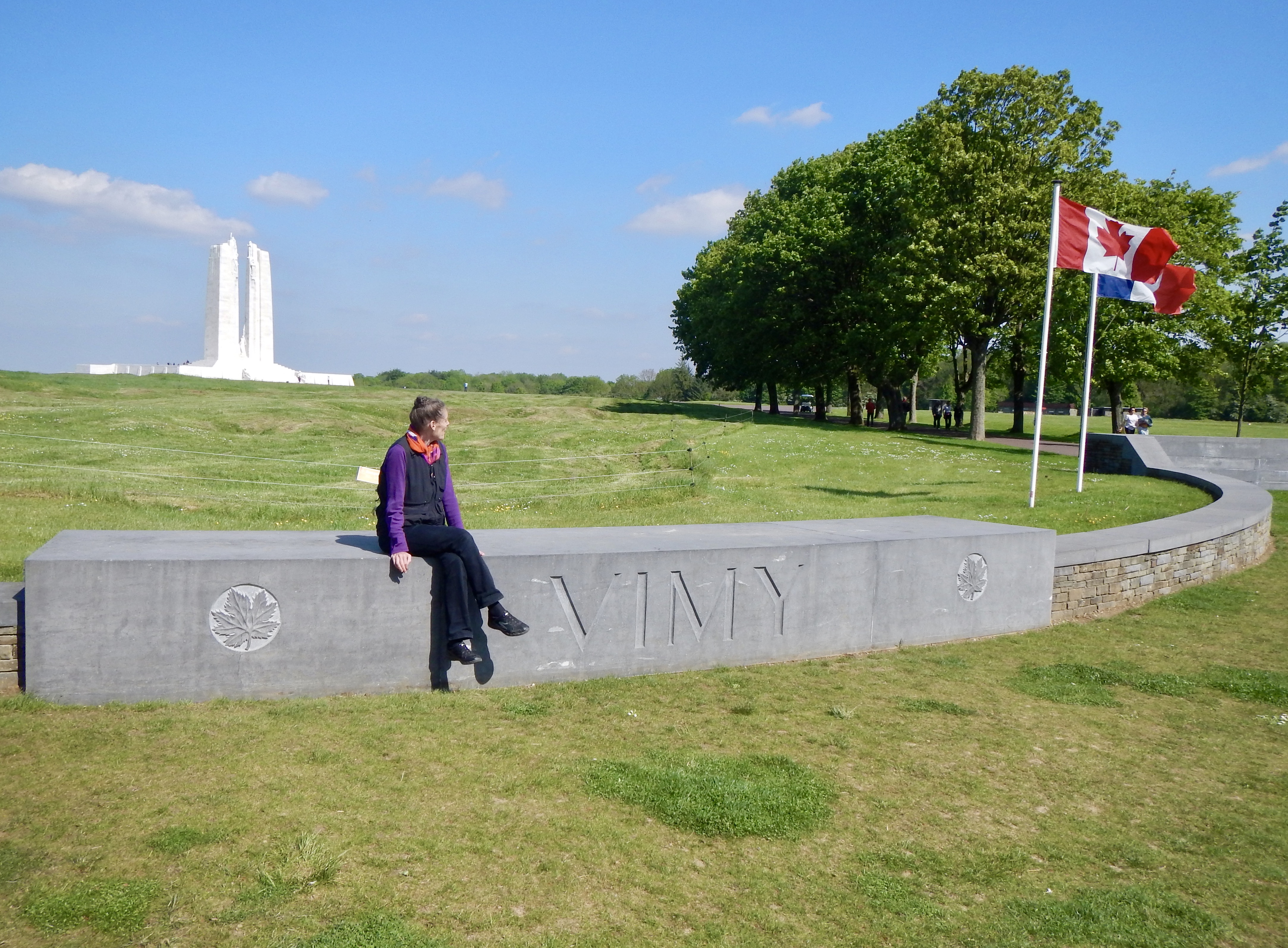
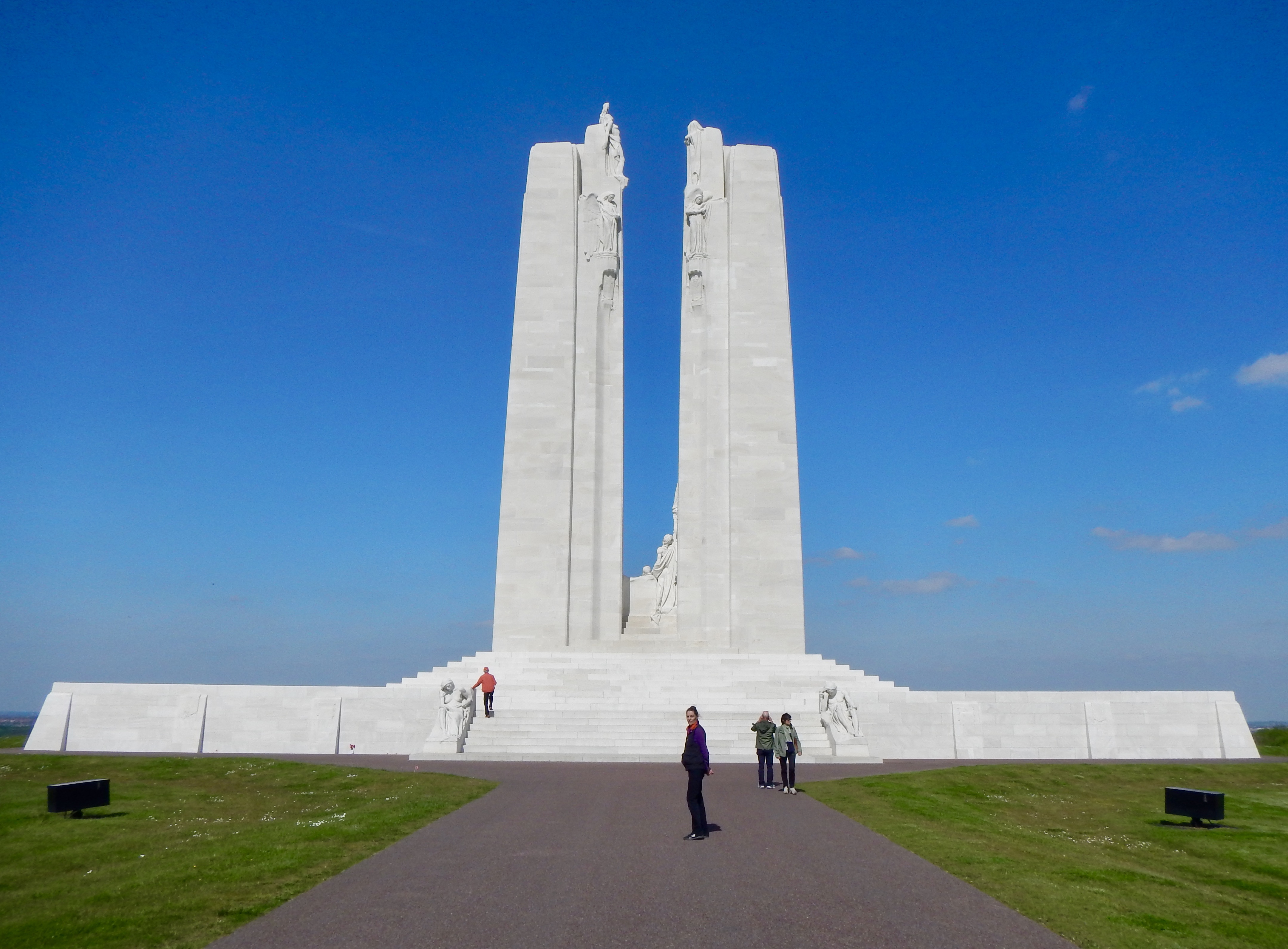
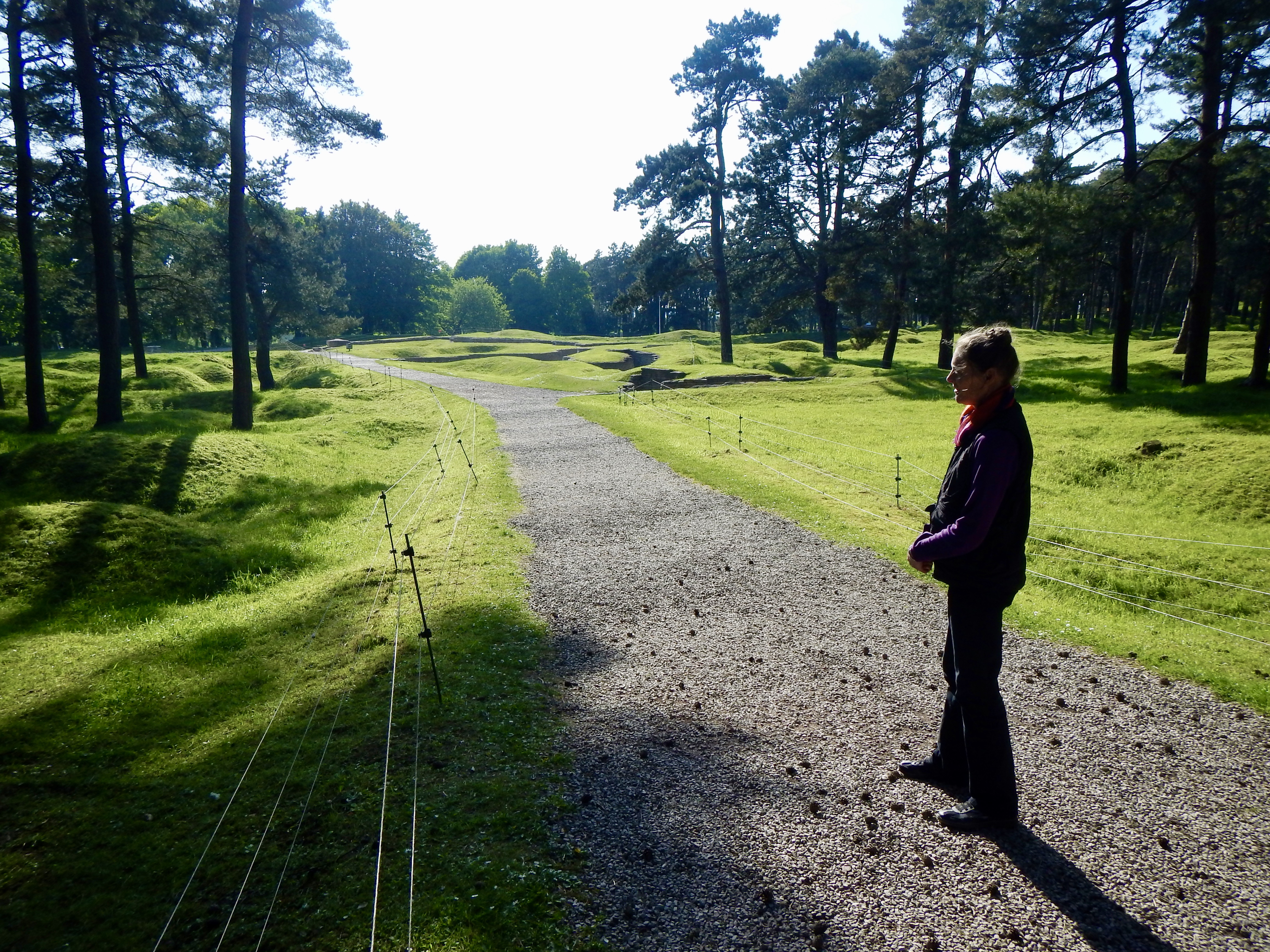
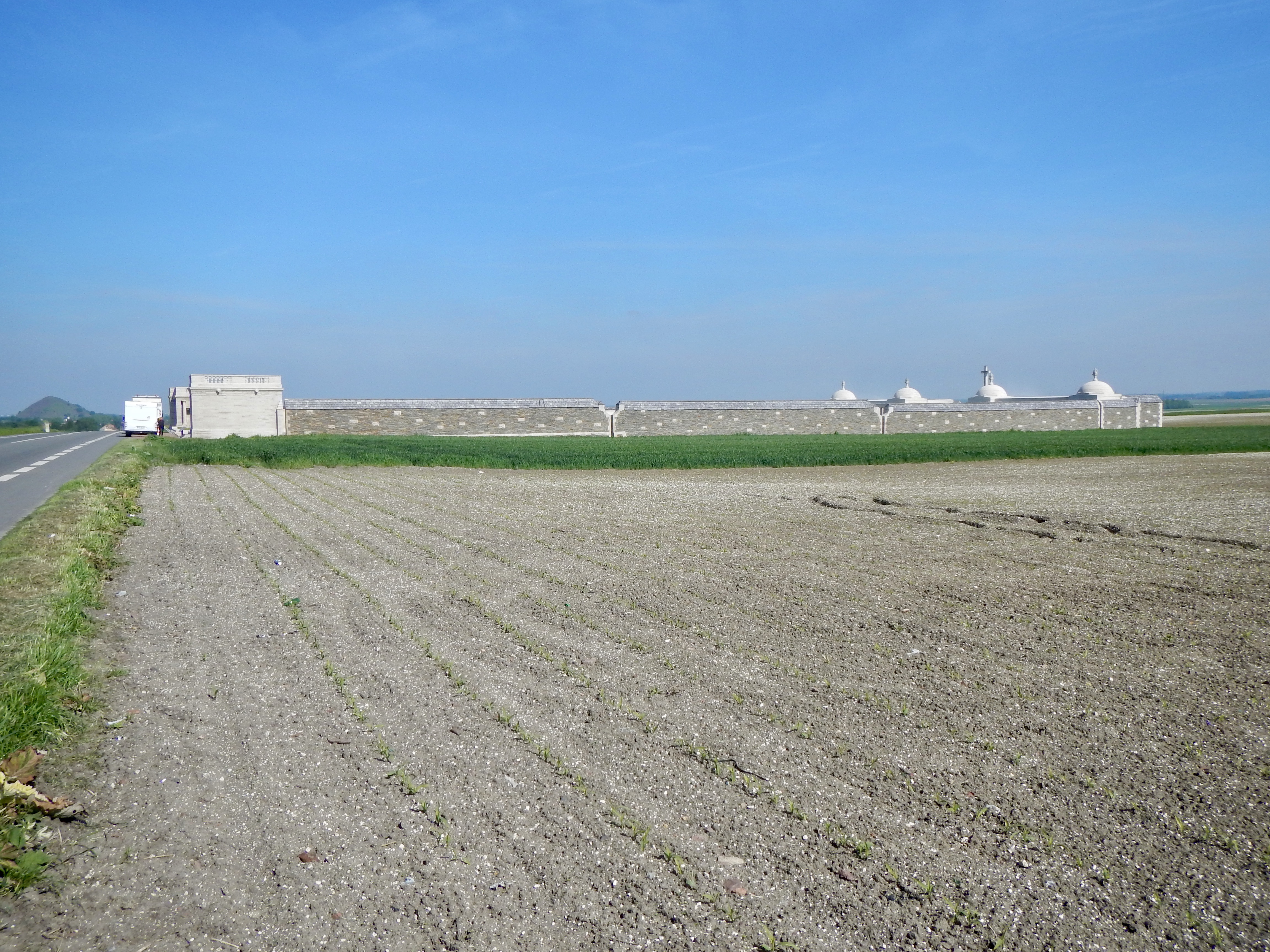
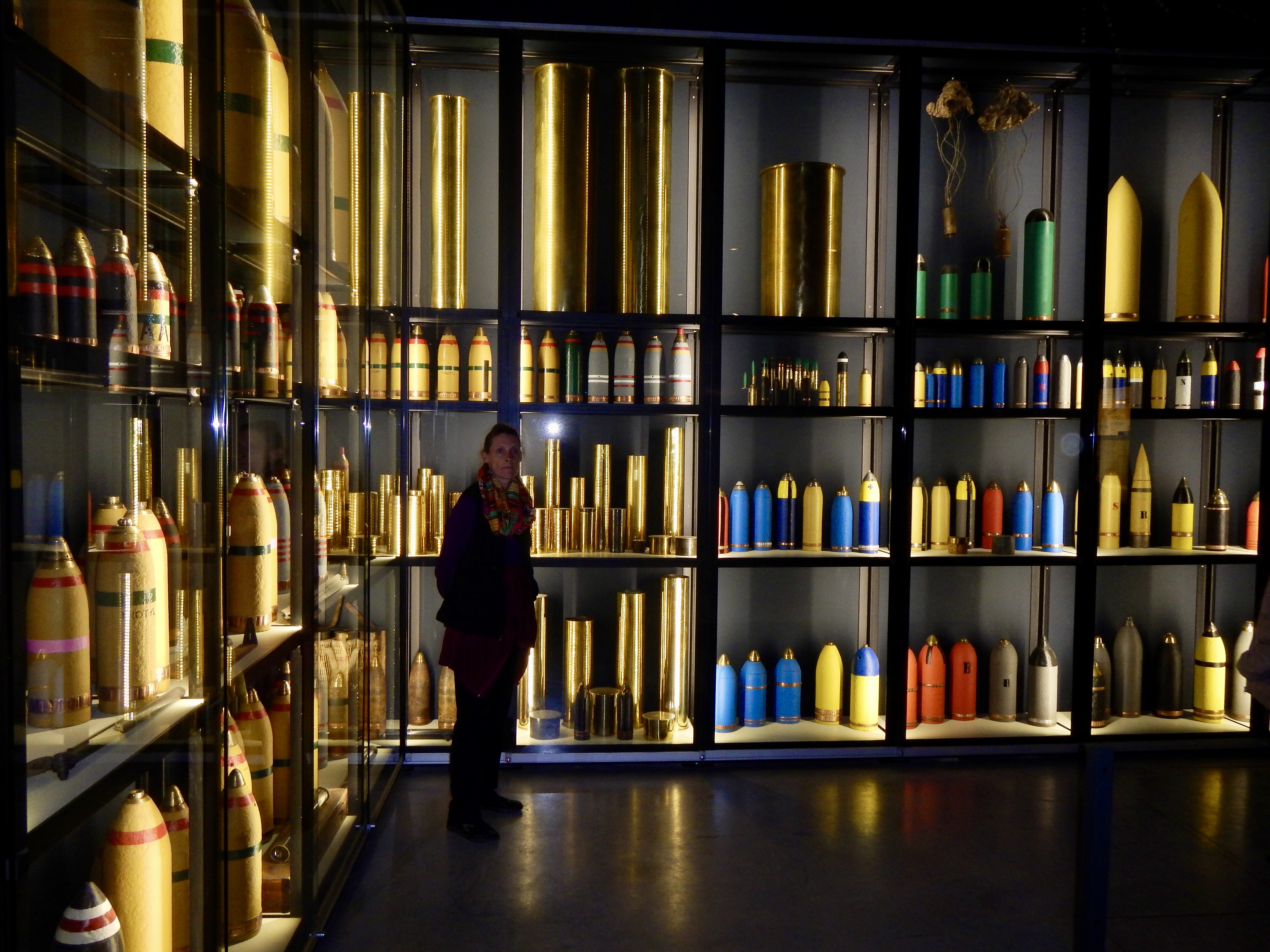
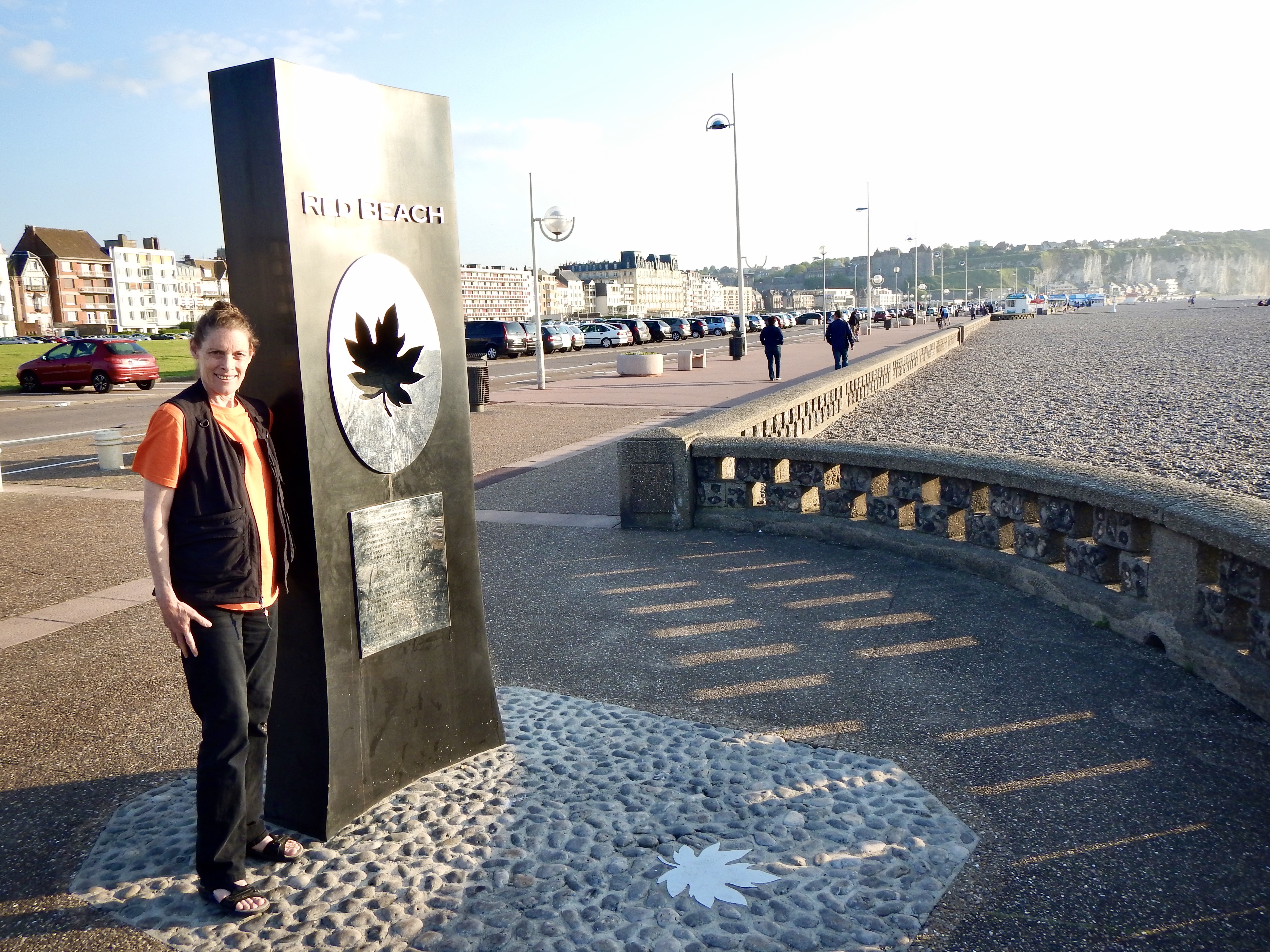
We wanted to visit Ypers, Belgium and pay our respects to the fallen Canadian troops of WWI, visit the location where John McCrae wrote his poem “In Flanders Fields”, and see the town of Passchendaele where Canada suffered 16,000 casualties in 1917. We thought it would be a fairly quick visit and then we’d move on to the Vimy Ridge memorial not far away in France, Days later and we’re leaving this fascinating area with still more to see and do. We were under the false impression that “Flanders Fields” was one large military memorial site but learned that “Flanders” is a large region of Belgium and France and the “Fields” of Flanders are the locations of a thousand plus “Field Hospitals” where only the military graveyards now survive. One could spend weeks here trying to absorb it all but in fact, it doesn’t take that much effort to get an impression of just how incredibly massive and brutal this war was. We’ve also learned about a lesser known component of the war that took place underneath the front line trenches that incorporated about 3000 km’s of tunnels dug by thousands of underground workers. The tunnel mines (on both sides) were very effective and successful in causing extreme damage and high numbers of casualties. This is really a fascinating story that we were fortunate to learn about from a local expert. We stopped in at a pub next to “Polygon Wood” (A major battleground that claimed some 50,000+ men and saw one of the biggest air battles of the war) and met Johan Vandewalle who grew up across the road from this well preserved site. Johan has a background in mining and developed an interest in WW1 tunnel warfare and over time, has become an “amateur expert” on the subject. He has contributed to a number of books (We purchased “Beneath Flanders Fields” – The Tunnellers’ War 1914-18) and has been involved with the production of a number of respectable TV documentaries as well. He regularly explores these dark and very dangerous tunnels and has been responsible for locating missing soldiers, finding many unexploded artifacts, and verifying significant historical information. In 2007 his important efforts helped discover 5 Australian soldiers that were subsequently reunited with family members from Australia and now have proper burial plots in the Polygon Wood Cemetery. Johan is a real character doing very important work and he’s filled with impressive stories that we enjoyed even more than the great Belgium beer. Good thing we had a perfect camping spot out back of his “Cafe De Dreve”. If you’re interested you should Google Johan Vandewalle. We discovered there’s still a significant amount of recognition and admiration in this area for the Canadian contribution to the war effort and we did feel proud wearing our Maple Leaf. Ypers was beautifully reconstructed and you would never guess now that in 1917 it looked like a moonscape. Since 1928 every evening at 8:00pm “The Last Post” is played under the impressive Menin Gate Memorial commemorating those that have no known grave and daily it draws huge crowds. The town of Passchendaele was much smaller but the area has great significance considering over half a million soldiers died in this area in just 100 days to gain eight kilometres of mud. In fact innocent people are still dying, like the two farmers that were killed a few months ago after ploughing up a live bomb. The “Belgian Bomb Disposal Service” still destroys an average of 150 tonnes of ordnance, including gas shells, per year. No wonder many areas are set aside for grazing sheep only. Walking through the beautiful tranquil forest of Polygon Wood, it all seems so pointless and unimaginable, yet it really did happen, and 100 years later it’s still dominating in every way. Onward to the Normandy Coast and a look at the famous beaches on the 70th anniversary of D-Day














 Brumablog