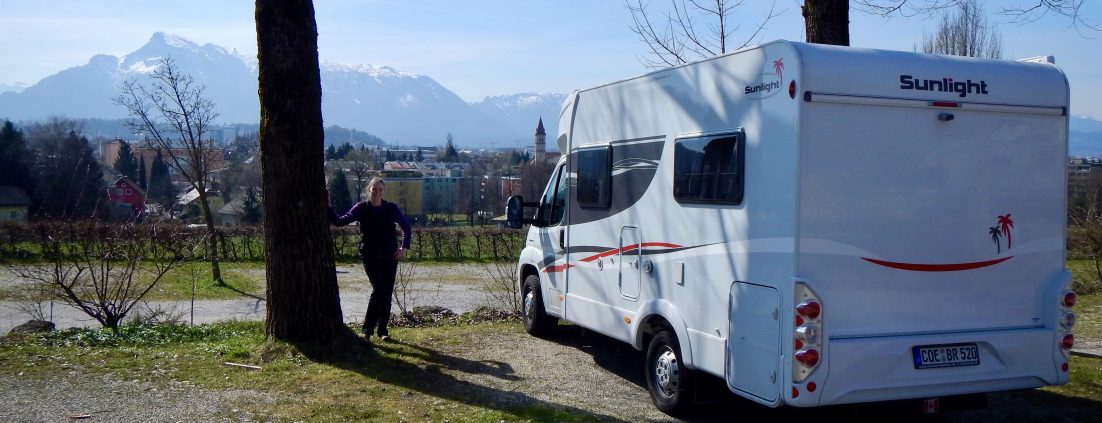
How can an entire year go by so fast? Why does “life-at-home” seem so chaotic compared to leisurely roaming about and exploring Europe in a tiny motorhome? As we’re readjusting to our “normal” life, we can’t help but wonder occasionally if our year long adventure was just a figment of our imaginations, like trying to recall a good movie that we saw a number of weeks ago. It’s a good thing we have 8500 photos as proof it really did happen and we can clearly see that we played the starring roles. We feel amazingly blessed to have had this experience and daily we relive some aspect of this escapade, although we do find it difficult to describe to others (that care) just how fantastic our trip really was. We saw and experienced so much that it’s virtually impossible to express it adequately and do it all justice. “In a heartbeat” is the answer we give when asked if we would like to do it again and in fact we’re already planning our next motorhome adventures in Europe, though future trips will be somewhat shorter in duration and probably utilize a rental motorhome option. One quick phone call to our new friend Michael at the “Dumo Reismobile” dealership in Germany, and we’re on our way.
The main intent of our blog was to keep friends and family informed of our nomadic travels, but when all is said and done, we hope that we’ve also inspired a few others to consider some kind of extended travel adventure of there own. If that adventure includes a long, or short, motorhome trip in Europe, then possibly we can be of some help in the planning process. I have assembled below a few facts and figures that may, or may not, be of assistance to you. Please feel free to give us a call at any time if you have any specific questions that you think we could answer.
Making it Happen:
The biggest step in turning your dream into reality is making the decision to go, as “Nike” says, “Just-do-it”. I suggest you tell as many people as you can about the dream trip you’re going on and soon you’ll have told so many people that there is no way of backing out without looking bad… self inflicted pressure. Next, pick a reasonable (or not) date and book a non refundable flight. Now you have a deadline on the calendar and everything else will fall in place. See how simple it is! Below I have assembled a few thoughts specifically about traveling Europe in a motorhome that may answer some basic questions some of you may have.
Visas:
If you plan on traveling Europe for three months or less a specific Visa is not required, your Canadian (or American) Passport is all you’ll need. However, if your stay is longer than three months, you’ll need a special “Schengen Visa” from a qualifying European country (most of the EU countries). Our 12 month German Visa required a few specific conditions be met such as proof of medical insurance, a base address and sponsor in Germany (our dealership graciously provided us with these two items), and proof of financial stability (this is where my pop bottle collection really came in handy). If you want more information on long term Visa requirements, research “Schengen Rules in Europe”
Medical:
Basic Canadian immunization shots are probably just fine for traveling most parts of Europe however we would highly recommend getting a series of Hepatitis A & B shots as well as a Tetanus booster before you go. Preventive shots like Shingles and Flu would not be a bad idea either.
Access to very good medical services throughout Western Europe is excellent however, obtaining basic Canadian “off-the-shelf” medication like Aspirin, Ibuprofen and Neo Citron can be somewhat difficult in many countries so carry what you need with you.
It goes without saying that travel medical insurance is a must. But when applying for it be very careful to declare ALL pre existing conditions (EVERYTHING!) and understand the fine and deceptive print. For example, we purchased a very clean, simple and complete 10 million dollar world wide policy from “Travel Now” that was recommended by our Insurance brokers “Megson FitzPatrick”. Despite this we were caught by surprise when Margot sprained her ankle in Portugal. The hospital X-ray costs added up to about $150 so we decided it was not worth chasing after such a small amount. But, when her ankle was still a painful concern after a full week, we decided to inform Travel Now just in case her ankle required more aggressive and expensive attention going forward. We were quite surprised to discover that they considered the ankle “emergency” to be over a week prior to our phone call and that now they would only be responsible for the original hospital visit of $150 and a single “follow-up consultation” with a physician but, no further or additional treatment (if she’s mobile, she can return to Canada for any newly required treatment). Always keep in mind that your travel insurance is strictly for PRESENT MEDICAL EMERGENCY purposes only.
If you’re planning on leaving Canada for an extended period of time here’s a little-known piece of advice that could save you some extra cash. Our “Blue Cross Extended Medical and Dental Service Plan” is only accessible from within Canada and between us we pay about $1500 a year for this service. However, with some limitations, it’s possible to put this service on hold when travelling abroad for extended time frames. Our Travel Now insurance for the year cost us just over $3000. Therefore, with not having to pay Blue Cross $1500, our total cost of additional emergency travel medical coverage was cut in half to just $1500.
Planning:
If you’re plan entails a limited three month trip we would suggest that mid March to mid November provide excellent opportunities for motorhome travel in Europe. Obviously July and August will be busier months but we had no problems negotiating the somewhat excessive travel crowds. Try to avoid driving the Alps during the winter shoulder seasons because the weather can be unpredictable for driving a motorhome. As you would expect, mid summer in the southern Mediterranean area can be particularly hot but for the most part we really enjoyed the southern August heat and we took full advantage of the endless beautiful Mediterranean beaches and ice cold German beer.
If you only have three months at your disposal, we would recommend that you narrow the driving scope to either northern Europe (Germany, Austria, Switzerland, France, Belgium, Holland) or alternatively, the southern Mediterranean areas (Croatia, Greece, Italy, Southern France, Spain). Trying to include too much in one short trip can turn a potentially relaxing and laid back adventure into a somewhat stressful ordeal. We met a few people along the way that seemed to be racing along in order to check limitless destinations off their list in limited time and in our opinion, they were missing out on the main essence of what this kind of trip is all about. Over a period of 10 months we comfortably drove our motorhome close to 30,000 km’s throughout 20+ countries touring both the northern and southern regions of Europe. We personally never did feel overly rushed but in reality we could have easily spent our entire 10 months in any number of specific and amazing locations like Germany or France or Spain. We’re completely aware of the fact that traveling time is a relative and depleting commodity for most. If you are limited to a shorter time duration, and if it’s possible, we would suggest taking 2 or 3 separate motorhome trips with each one focusing on a specific and new area. Finally, an obvious reminder is to keep in mind the seasons and your desired location so that if you’re intention is to experience the tulips of Holland, hiking in the Alps, or wine festivals on the Rhine, you’ll need to plan your driving route and seasons accordingly.
Renting our Home:
We decided to rent out our furnished condominium for the year to help offset some of our large travel expenses. We removed all our personal items and stored them in a secure location. We hired a property management company that we trusted and let them handle all the rental details. When all was said and done, the renting enabled us to cover our fixed property expenses (condo fees and taxes), our management fees, and still put a thousand dollars a month into our travel account. This really helped out and virtually covered most of the cost of our motorhome. When we returned home we found our condo in fairly good condition. It did require some attention in the cleaning department and some very limited repair but we planned on having it painted anyway and after a couple of busy weeks around the place, it looked and felt like new again. I would say that renting a nice home for this period of time is not without it’s risks but we were fortunate, and it all worked out positively for us. If you do decide to go this route we would highly suggest employing a reputable management company to watch over your investment. Prior to us leaving we were a bit concerned and apprehensive about our decision to rent but once we were on the road, we never gave it a second thought other than waiting for those monthly deposits.
Clothing:
Due to our extended stay we required a variety of seasonal clothing be available and to reduce the overall burden of carrying large bulky clothing we utilizing the concept of multi-functional “layering”. “Eddie Bauer” became our favourite “go-to” clothing store as it has a great selection of reasonably priced quality multi purpose clothing designed for easy maintenance and lightweight travel. But, as usual, we packed way more clothes than needed considering our “on-the-road-tendency” to reuse the same select set of clothing over and over. Our confined living space in the motorhome did not provide the luxury of excessive storage space for lots of dirty laundry to pile-up and therefore we would wash and wear on a regular regular basis. Most campgrounds had clothes washing (machine) facilities available but often without dryers. We soon discovered that drying clothes on a line is a European norm so keep in mind that a basic clothes line becomes essential camping, or non-camping, equipment. Washing clothes by hand in a special sink is also very common and most campgrounds have these special laundry sinks available as well. If you do choose to use a washer and dryer, be prepared to pay the high price because it’s not uncommon to pay over $10 for a single load of laundry.
Packing:
We had an airline luggage limit of 125 pounds each and therefore we carried with us as many extras as possible including bedding and some miscellaneous kitchen items. We ended up having to purchase lots of other camping essentials on our arrival such as pots and pans, lawn chairs and a BBQ so lucky for us there’s no shortage of shopping opportunities for anything in Europe. At the end of our trip we shipped home 4 large boxes of items by ground freight. The shipping estimates varied wildly from about $250 to $2500 and the best shipping deal we found was with “DHL”. It took two months for our boxes to successfully arrive safely in Victoria and for $250 dollars, we felt it was well worth the exercise.
Books:
Endless travel books exist for those wanting to explore Europe and they provide as much detail as you’d like but for our purposes we found the best books at the right level of detail were the “Eye Witness” series. These books have great drawings, great photos and just the right amount of description if you don’t want to be buried in detail. The “Lonely Planet” books are also good and they worked very well to supplement the Eye Witness guides by providing even more information from a slightly different perspective. If you plan on camping in Europe there’s an important camping club, with a low season book and APP you should know about. It’s called “ACSI” (www.campingcard.co.uk) and this is truly a must have item for the road. You can purchase the camping club card (CC) and related books in Europe but if you want the British “English” version you should order it well in advance of your trip and have it delivered by mail, you’ll find it”s well worth the hassle of carrying it over with you. The ACSI guide will rate the camping sites, give GPS location directions and provide you with many other campground details on thousands of possible sites all over Europe. As far as paper maps are concerned, you’ll need a very high level planning map that you’ll bring with you from home showing your general travel route clearly highlighted. We used different highlight colours to represent different seasons. You will also need a decent road atlas to work in conjunction with your GPS and after trying out three different road atlas books, we discovered a very good one that’s produced in England by “Phillips” (Philip’s Multi-Scale Europe 2015 – Road Atlas – Europe). It had just the right amount of road detail, was easy to read, easy to flip around through and it has an excellent short review of road regulations and expectations for each country. You can find this great atlas online at amazon.com.
The Internet:
The internet was an essential tool for the entire trip. We used it every single day of our travels for such things as research, banking, blog writing, e-mail, reservations, backing up photos to Drop Box, Apple FaceTime visits, Skype telephone calls, world news, business, entertainment and more. Looking back, I don’t know how we could have ever functioned without it.
There are so many web sites and blog’s that exist on-line providing an infinite amount of information at just the right price. I would love to tell you exactly what sites are the best to use but that would be impossible considering how vast and dynamic the web is. Your best bet is to just start digging around by searching with on-line questions like “Motorhoming in Europe”. But, make sure the information you’re reading is relatively up-to-date. We often used “Wikipedia” for additional in-depth information on specific people, places and things, and it was really valuable in helping us sort-out many complex historical events.
A very good web site to help you with your WiFi needs is produced by a young couple, (Adam & Sophie) who started out there life together traveling Europe in a motorhome and now they run there own online motorhome travel business called “Motorhome WiFi” (motorhomewifi.com) They’re really worth checking out if you have specific questions regarding any European WiFi needs. They can also pre-supply you with the electronics and the operational support for using it. We purchased a 4G Huawei Hotspot and used a European wide SIM card with somewhat limited data usage available. As you would guess the SIM market is in constant change and I’m doubtful if this specific EuroSIM card is still available. Adam or Sophie will have all the latest information and best advice regarding mobile WiFi needs in Europe. Certainly we preferred using our own dedicated WiFi Hotspot rather then public WiFi as it was often faster, but most importantly, it was very secure when doing important things like “on-line banking”.
Staying connected was fairly easy but not without it’s frustrations. WiFi Data is definitely the most economical way to keep in touch and do your “on-the-road” research. Most campgrounds have WiFi available for a daily usage charge but the speed, quality and dependability of these connections vary greatly from place to place and/or time of day. You will definitely need a SIM card to connect to the internet and if you do decide to use a Hotspot, keep in mind your Hotspot can run multiple devices at the same time. Again, I suggest you contact with motorhomewifi.com for more up-to-date and reliable information.
The Dollars and Nickels:
Of course the question on everyones mind is, how much did it all cost? We tried to keep an accurate accounting of our year long expenses but our trip was really in two distinctly separate stages and the motorhome component was very different than the flying home through Asia part. Looking at our 10 months in the motorhome the numbers are surprisingly positive. With our home rental income being deposited regularly there were many months that after our expenses were covered, we were actually putting money into the savings account. As we toured, we never denied ourselves any tourist opportunity that came along, we dined out whenever we felt the desire and never concerned ourselves with the small stuff that regularly pops up. Our lifestyle however did save us some money. We really did enjoy relaxing at the motorhome with a glass of beer or wine and cooking up a simple evening meal on the BBQ. These are some of our best memories. Lunch was often a sandwich of some kind, usually on delicious French bread, and eaten as we motored along some beautiful winding country road.
With exchange rates constantly changing it’s very hard to provide exact present day Canadian values to our trip so instead I’ll give you some numbers based on 10 months in 2014. At this time, 1 Euro was worth about $1.40 Canadian. And keep in mind all these numbers are very general and approximate.
February to November 2014
A. – New 2014 Motorhome:
1. Depreciation cost of the motorhome: 8,500 Euros
2. Motorhome insurance: 1,000 Euros
B. – Operating Expenses:
3. Cash Spent: (Add this to categories 6.7.8.9.11) 13,600 Euros 43%
4. Camping Fees: 3,600 Euros 12%
5. Diesel Fuel: (Avg. 10.56 Km/L) 3,600 Euros 12%
6. Groceries: 2,800 Euros 9%
7. Other Transportation: 1,300 Euros 4%
8. Tourist Attractions: 1,200 Euros 4%
9. Dining & Entertainment: 1,200 Euros 4%
10. Motorhome Expenses: 1,000 Euros 3%
11. Miscellaneous Items: 2,700 Euros 9%
_________
Total: 40,500 Euros
These figures do not include return airfare to and from Europe. (Our airfare to Europe was purchased on points and our multiple return flights home were East through Asia)
When all is taken into consideration it probably cost about the same to travel the 10 months throughout Europe in our motorhome as it would have cost us to live normally at home.
Driving:
The first and most important thing to say about driving in Europe is… do not attempt this exercise without your very, very best friend, “GPS” at your side. A quality GPS system is an absolute must and it’s essential that it speaks to you so that when things get really busy, you can concentrate on watching the road. A GPS that warns you of photo radar will be valuable when driving these unfamiliar roads as this seems to be the main method of traffic control in Europe and the fines are very expensive. We used the combination of an iPad, Dual Sky Pro Receiver and a Map software “APP” to navigate all over Europe (More specific information about these items is described below). This combined set-up worked extremely well for us by providing a wonderful viewing experience on the iPad and the reliability of a serious satellite GPS receiver (NO cell or roaming charges). Various options of mobile APP software such as “Sygic” or “Waze” is available on the internet for free or at a reasonable price. Once you have decided on your GPS system, I would strongly suggest that you become familiar with using the software BEFORE you leave home.
Despite the uncharacteristically narrow secondary roadways, fast freeways and large mobile population, the driving in Europe (without formal border crossings) was relatively easy, orderly and non stressful. Virtually all the secondary roads were in great condition with the exception of some in the Mediterranean areas of Greece and Sicily. We tried to stay off the fast moving autobahns and major highways but on occasion we had no choice and when faced with no other alternative, we successfully managed them without too much stress at all. A warning however, If you do find yourself on a major roadways be careful you don’t get an unpleasant surprise at an unexpected toll booth, especially in France. Tolls can be very expensive like the $50 dollar,150km drive from Le Mans to Paris. Also, keep in mind that certain countries require a “Vignette” (electronic toll permit) that you must attach to your front windshield. You can usually purchase these for a number of days but in some cases like in Switzerland, you must buy an annual permit for 30 Euros. You have to purchase these Vignettes before driving any distance into the country so look for the locations that sell them (like certain gas stations) just as you cross the borders.
GPS
Dual – SkyPro, GPS receiver. This small red pucklike device is placed on the dashboard of your vehicle and receives GPS signals from US and Russian satellites. The Dual then sends the signal to your electronic device(s) (iPad, iPhone, Android etc.) by way of bluetooth. This unit therefore replaces the need for a dedicated GPS unit from outfits like Garmin or Tom Tom. It requires NO Cell or WiFi connection at all and will function anywhere in the world when the appropriate software APP like “Sygic” for Western Europe, or “Waze” from Google is down-loaded on you device. The cost of the Dual is about $160 and you can purchase it and obtain further information from “GPS Central” Calgary, Alberta. We successfully used the Sygic software for all of Europe and for the first 8 months I would have rated this APP a solid 10+. Unfortunately I made the mistake of updating this software with 2 months of driving to go and the new version was awful. I don’t think they properly road tested it and it had all kinds of issues, my rating scale slid to a -4 with the push of a single button. I really hope they’ve worked out all the bugs by now, I know that their North American map software seems to be working much better. The cost of the European Sygic APP software was about $30 at the time I purchased.
Blogging:
If you decide to do your own Blog, “WordPress” is an excellent choice as you actually own all the content including the photos which is unlike other outfits like Google. Once you figure out the complexities of this software all you need is an iPad (a keyboard is very helpful) and a wifi connection. This is a great way to keep all your friends and family informed about your adventures all at the same time and it’s a much more personal and secure platform than options like Facebook.
Top 10 Gadgets:
1. iPad – iPad – iPad – iPad * With Logiteck keyboard and Ram automotive mounting clamps
2. Dual – SkyPro, GPS receiver
3. Ram” iPad mounting bracket – For vehicle dashboard
4. Logiteck Keyboard – for the iPad
5. iPhone – For iPad “back-up”, camera, walk about wifi from free sites, travel APP’s on the go, communication if needed, etc,
6. Digital pocket camera – we used a “Nikon Coolpix” waterproof and shockproof AW110 (Bring with you an “Apple plug adapter” to download photos directly from your camera to your iPad
7. Huawei 4G Hotspot – (with appropriate SIM card) For personal and secure WiFi
8. Swiss International Travel Plug
9. Extension cord – “North American” so you can charge 3-4 devices at one time
10. Battery operated burglar alarm for the motorhome (Canadian Tire – Swann Motion Alarm)
*Note worthy. Small traveling magnifying glass
Top 10 APP’s
1. GPS Map Software – We used Sygic (Western Europe)
2. 1Password – Keep all your passwords and secure information in one place. Best APP EVER!
3. Skype – With auto Visa prepay, world calling capability (pennies/min) to any phone, using wifi
4. Dropbox or iCloud for documents, photos etc
5. Units Plus – Check the dollar value and convert to Euro’s. Convert most measurement units
6. WorldCard HD – Keep a digital copy of all the business cards you collect in one place
7. Day One – Daily Journal. Helps keep track of where you were when and what you did
8. CampingCard (ACSI) and YouCamp – Information on thousands of European campsites
9. Visual Budget – A user friendly APP for easily keeping track of your daily expenses.
10. Fuel Monitor – Track your gas usage
Other Useful APPS:
– Wikipanion – The Wikipedia APP for the iPad
– TripAdvisor – Also provides great POI information for most major destinations
– 1000 Places – Interesting, and has a limited information on key tourist attractions
– Choose a Medical advice APP such as the Blue Cross “Mobile Travel Kit” Expedia, Hotwire, booking.com,
– CNN (Fast when using slow wifi), CBC news, CBC Radio, BBC news, HuffPost, Etc.
– Choose a European Weather APP of your choice
– Google Translate – Excellent for translating information or pages from the internet
– Scanner Pro – Copy important documents and other Items as needed
– EverClip HD – Multi use App used for such things as copying and holding internet information
– Talkatone – Googles equivalent to Skype. If Skype’s reception is poor, Talkatone may work
– Vocre Translate – Will translate languages and speak the sentences out
– Offline German English Dictionary Translator for Tourists – Also available for other languages
– Fodors – Multiple Travel APP’s available
* countless other great travel APP’s exist so spend some time locking them all over.
Note: Without question you’ll need the specific secure banking software APP from your own Banking institution.
Note: If you purchase the Dual Sky Pro GPS Receiver, you should download the mobile Dual APP to go with it. This APP allows you to monitor the operation of the Sky Pro and see what’s happening with your connection.
Photos:
After a days outing I always downloaded my pictures directly onto my iPad and that way if something nasty happened to the camera or the “SD” card, I was only loosing the last few pictures. Now when you download the pictures onto your iPad, they should also be saved to the Apple iCloud when you turn on the iCloud option and have a wifi connection. If you don’t want to use the apple iCloud I can highly recommend “DropBox” for backing up your photos and or any other data or documents you may want handy. Most of my photo downloading to Drop Box took place during the nighttime while we slept. As far as the camera SD cards are concerned, we started with the biggest and fastest cards we could buy but soon discovered that this was not really the best approach for operating our camera. After about 1200 photos on a single high-end card we noticed a significant drop in camera performance including the battery life, activation speed and picture quality. I switched to using smaller SD (4GB #10) cards and after about 800 photos I would pop in a new one, this seemed to rectify our camera issues. This also put less SD card photos at risk of loss from any unfortunate situation. Ultimately, the iCloud is your supreme back-up buddy.
Money Handling and Money Belts:
Banking anywhere in the modern world is a snap these days with all the new technology at our fingertips. We did virtually all our banking for an entire year using our iPad connected to our own personal wifi hotspot and we were amazed at how straight forward and easy it was. We found that cash was the preferred method of payment at most smaller establishments in Europe and in many cases discovered that credit cards were not even accepted. Therefore it’s necessary to have more daily accessible cash available. We used the “Hide-en-Seek” method of cash management. We had 2 or 3 excellent hiding places in the Motorhome and I think we remembered them all when we traded it back in. As for our “day-to-day”-“on-the-go” we used this same principle. In our pocket, in a small change purse, we carried what we thought would be just enough cash to get us through the day and nothing else. Backing up the change purse we had, without question the most vital travel option available for travellers riding on our hips. In our “Money Belts” we had two cash stashes. First was the “Fail-safe cash” in a little sleeve inside the very difficult to enter back passport pocket. This was our final cash solution and we only needed to use this hard to get at cash a few times during our trip. (also inside this pocket, besides our passport, was our travel medical insurance card, vehicle registration ((not to be left in the vehicle)) and a back-up credit card). The second cash stash was the easy access pocket at the front of our money belts where we kept a very thin “RFID” protected card holder with our daily back-up pocket cash, main credit card, and drivers licence.
The trick to a money belt is to keep it as thin as possible by including only what you need and can’t do without in an emergency. Get rid of the wallet and use only the plastic card holder that comes with it. Dump most of the stuff that filled that up and you’re almost ready to go. We placed our passports in a small plastic bag/sleeve and that helped to protect and keep them fresh. We were never-ever without our money belts for the entire year. Thank goodness our fantastic “Packsafe” money belts with there slash proof cable belts were easy to wash by hand and quick to dry overnight. Many money belts exist but you can find this great money belt online or at Mountain Equipment Co-op. Keep in mind that it will take you a little time to get comfortable with using a money belt and manipulating yourself in public to get at it, but it’s well worth the effort for security and piece of mind. If you go to Europe for any length of time, you WILL encounter amazingly talented pick pockets.
Before we left home we obtained a list of European banks that were affiliated with our own Bank and when it came time to top up our cash, we looked for the appropriate bank and ATM (NOTE: Only ATM machines with the “Plus+” symbol displayed work for international bankcard withdrawals). There were not that many affiliated banks available for us to choose from but when necessary, they were definitely worth looking for considering the high percentage service charge for using a non-affiliated bank.
Multi Languages:
Easy! Most Europeans have learned english as a second language and many of them are very willing to practice there skills on any verbally fumbling North Americans. However, you’ll definitely gain high points if you first attempt your own limited version of German, French, Spanish or Italian. Most road signs use easy to understand symbols and items like menus, campground instructions and tourist information very often come with an english version attached. If all else fails, revert to using the truly international language of charades.
Motorhome:
If you plan on traveling in a motorhome for over six months you may want to consider purchasing and then reselling. We purchased our motorhome new with a prearranged agreement to sell it back to our dealer ten months later for 20% less then what we paid. Taking the registration and insurance cost into consideration it still worked out financially in our favour compared to renting a similar sized unit for the ten months that we were on the road. If you do decide to purchase, and you’re not a European Union citizen, you will have vehicle registration and insurance issues. You will probably need a European address, sponsor, and depending on the country you enter from, you’ll also need someone to represent you on the official vehicle documents. We obtained our visa for Germany and developed a good relationship with Michael Thyssen at Dumo Reismobile, a Motorhome Dealership just outside Dulmen, Germany in a village called Hiddingsel (www.duemo-duelmen.de). We placed a great deal of trust in Michael’s word and we can now report that his word was truly his bond from the start to finish of our transactions. Michael helped us every step of the way by getting us through the initial complex bureaucratic procedures and paperwork, then out the door and on our way. When it came time to returning the motorhome to Dumo, he and his entire staff were wonderfully helpful, honest, and efficient while wrapping things up. We would not hesitate to recommend Michael Thyssen and Dumo Reismobile to anyone planning a similar trip based on our own personal experiences. If you decide to rent a motorhome instead, Dumo Reismobile rents out a variety of units as well or you can also find a number of other possible motorhome rental companies throughout Europe such as “McRent”.
Before arriving in Germany I thought we would be mostly interested in obtaining a camper van style of motorhome but on closer examination of all the possibilities before us, we decided that for the length of time we would be using it, one motorhome size up would be our best bet. This turned out to be a great decision because after learning how to move and function in it, it became a very comfortable living space. It had everything we needed with lots of storage space. Eating, sleeping, cooking and relaxing was easy to do in this 21 foot long unit, and it had a great little washroom (head) as well. It was also a decent size for driving around on the roads and finding parking spaces to fit, not too big and not too small. The only extra options we put on our Sunlight T58 (on a Fiat chassis) was a back-up camera (very useful), radio, winter tires, mud flaps and awning. We used the standard radio a fair amount but the best use for the radio was having access to my iTunes from my iPhone or iPad by using a standard connecting cable. We purchased a great little gas BBQ that we used regularly, a small folding table and two comfortable lawn chairs. Most of our camping supplies were purchase at a huge camping store called “Obelink” in Winterswijk, Netherlands. This very well stocked Obelink store was a pleasant 45 minute drive from Dumo Reismobile and for us it was well worth the time and effort to get there. But, there is no shortage of other shopping opportunities along the way including big box stores similar to Home Depot. These kind of stores turned out to be the best place to replace our empty gas bottles used for heating and cooking.
Camping Facilities and Infrastructure:
Camping options in Europe are amazing and I would say superior to ours in North America, with thousands of campgrounds to choose from and they’re located in every community. We never came across a really “bad” campground. Some were much better than others and some were just amazing, like resorts located on spectacular estates. One star campgrounds are very basic so we tended to zero in on the 3 to 5 star campgrounds that usually had a great selection of facilities including small stores, restaurants and better WiFi. Washrooms, showers, dish clean-up, and laundry facilities were usually excellent. It’s interesting to note that in our entire ten months of using these campgrounds, I never once remember having to wait in line for access to a small personal shower room (which are standard throughout Europe). 5 star campgrounds, in some cases, were truly amazing like the French Chateau in the Loire valley and the beautiful resort in southern Portugal. Most of the campgrounds near major attractions have public transportation that is easily accessible. We also utilized popular overnight camping facilities referred to as a “Stellplatz or Aires” when convenient and available. You find these official designated camping lots everywhere in Europe but most particularly in the smaller towns and centres. They usually only charge a few Euros per night and some are even free but keep in mind that during the busy months of the year they fill up fast. These Stellplatz’s are only available for self contained Motorhomes that are passing through the area and therefore they usually provide only minimal options such as power, water, and sewage disposal access. The idea here is to have a safe and clean place for people to camp overnight that’s within walking distance to the town centres so campers can easily find places to dispose of their money at willing local establishments. The concept is brilliant as these are great places to stay when on the road and in some cases you’ll even find shower opportunities right there or at nearby civic facilities such as public sports centres. Markets and grocery stores are everywhere, fun to explore, and the selection of food is fantastic and reasonably priced too. Just thinking about the markets makes me want to jump onto an airplane and fly back to some little town in France just to sample that wonderful fresh French bread again, no additional condiments required.
Thanks for reading our Blog:
I hope this “Nut’s and Bolts” post will be of some use to someone, somewhere, somehow. We would never consider ourselves absolute authorities on motorhome travel in Europe but, we did learn a few things during our adventure so if you’re planning your own escape and have some specific questions, please feel free to contact us and we’ll do our best to help you out.
“Just-Do-It”… Happy travels!
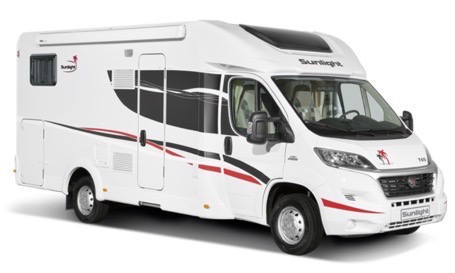
The Sunlight T 58. Great German design and construction on a reliable Fiat chassis with a clean and economical diesel engine.
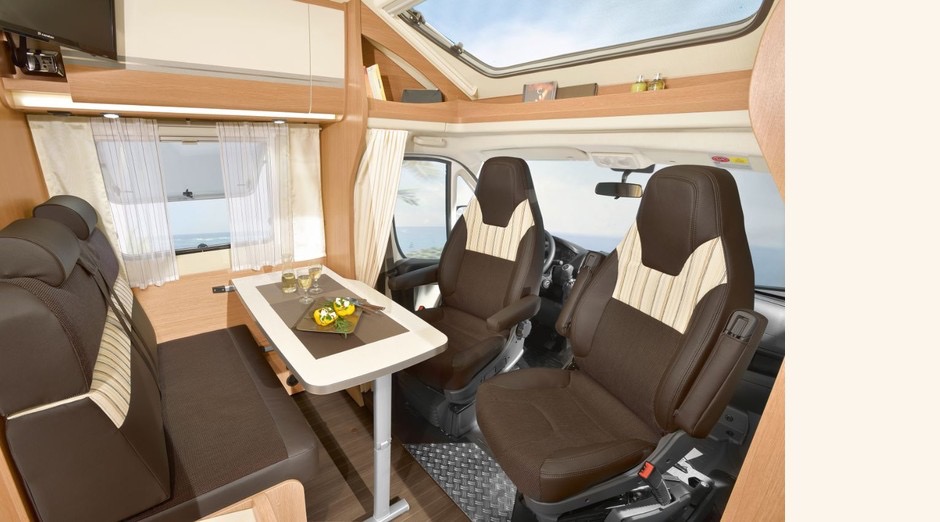
A great place to eat, sit and relax… and do your homework.
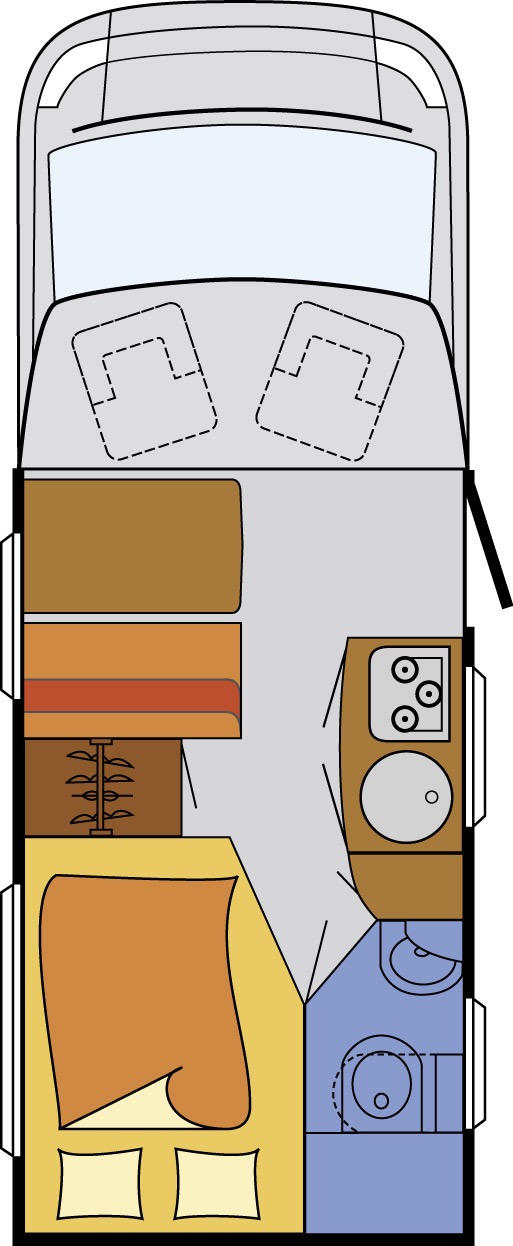
Our fantastic Sunlight T58 layout. Before leaving home I thought this would be the perfect motorhome but probably too big for driving in old Europe… wrong!

It only took us a few hours to make this decision. Not bad for me.
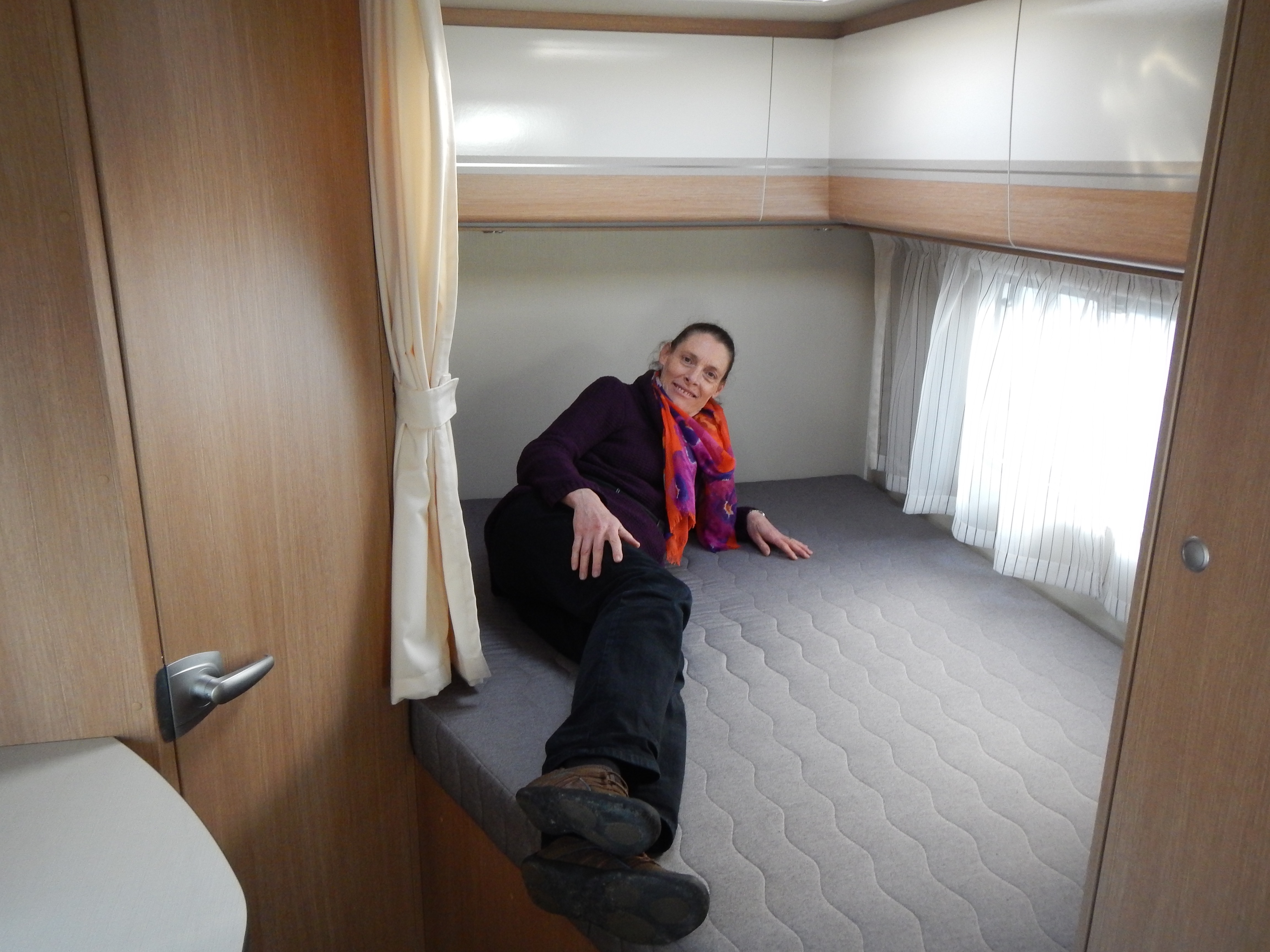
A cozy but very comfortable bed.

A small part to the Dumo dealership complex showing the main office.
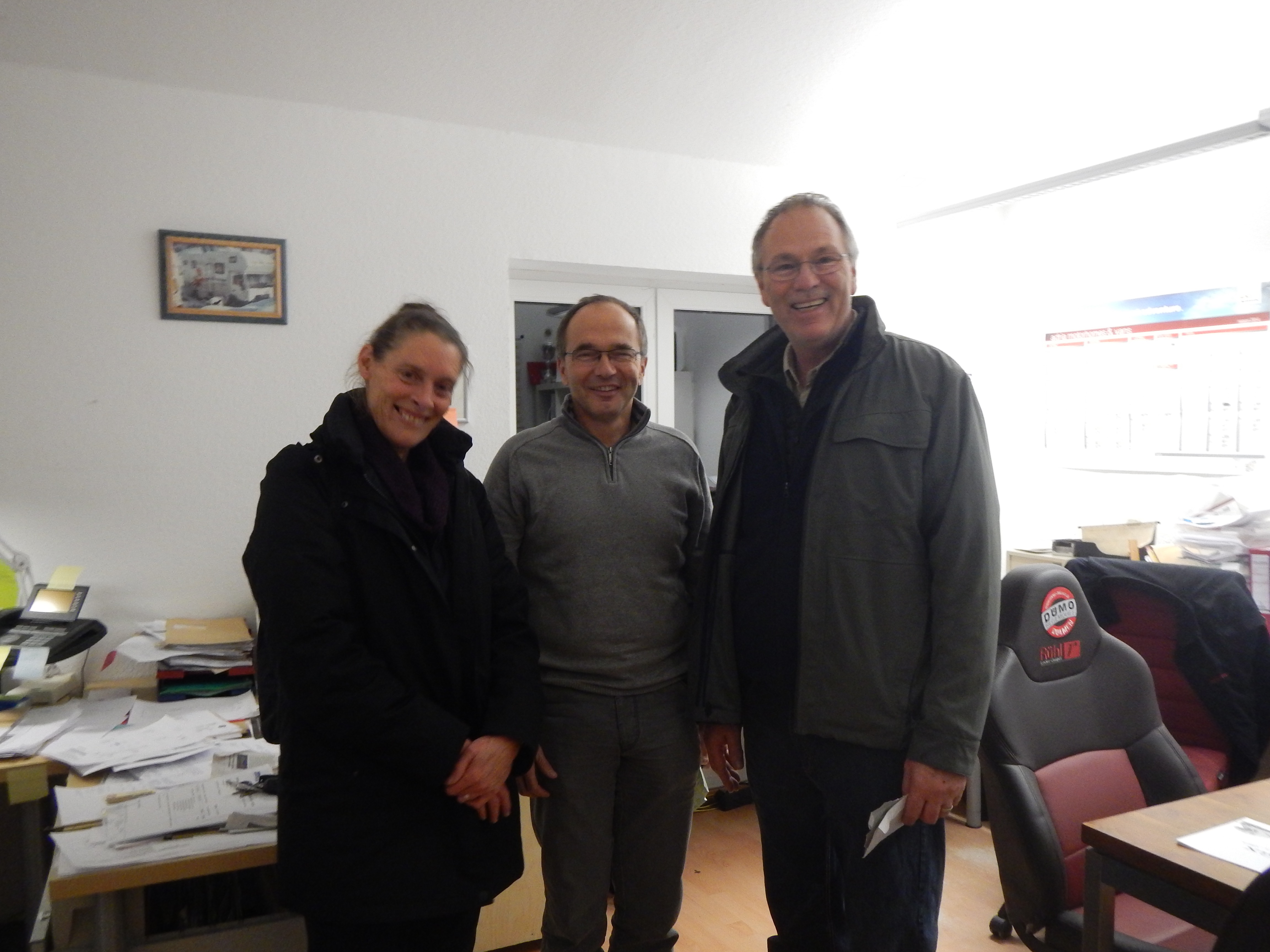
Making things happen with the help of Michael Thyssen at Dumo Reisemobile.
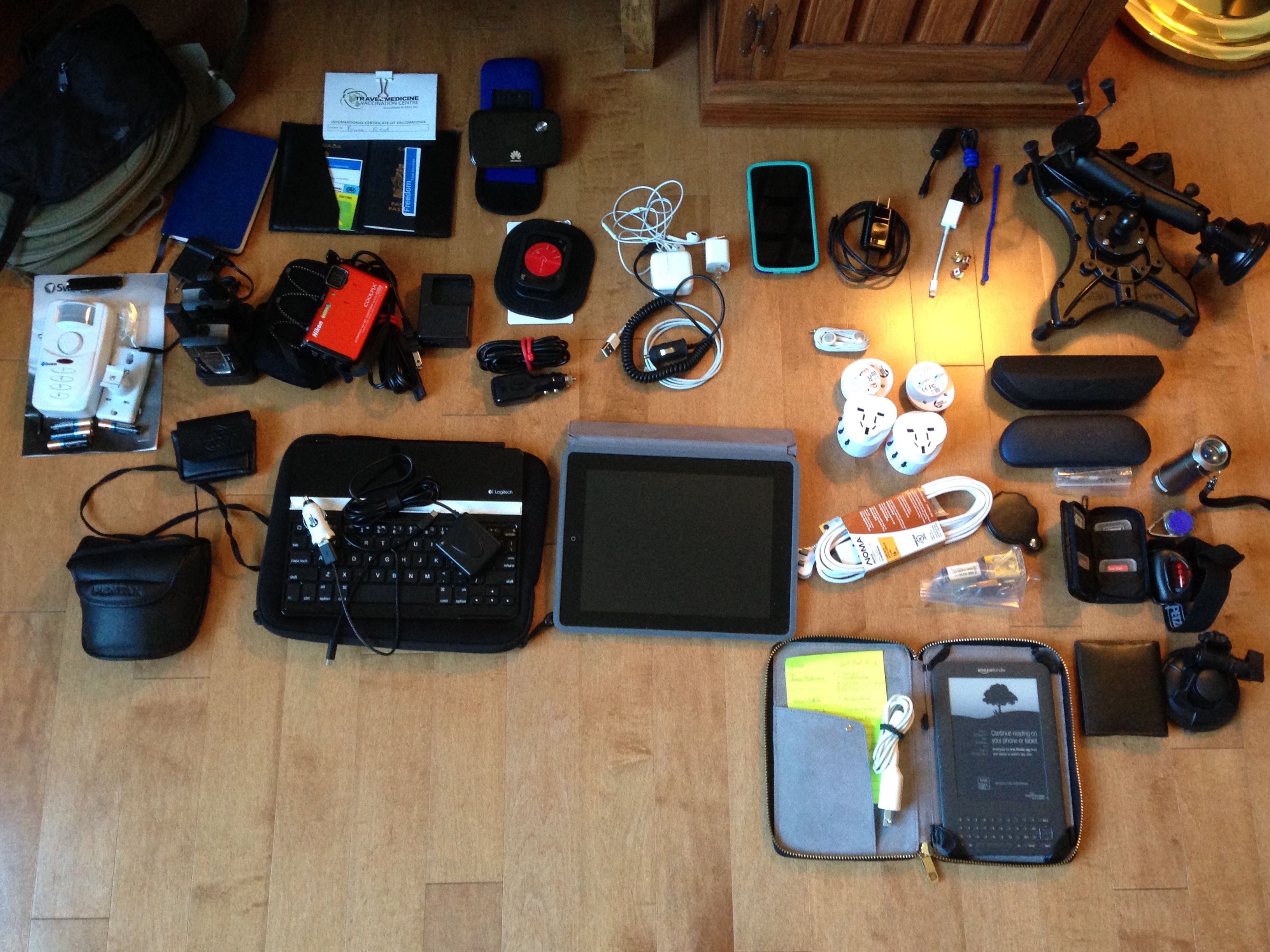
Packing gadgets just prior to leaving home. We used virtually everything here except the Walkie-Talkie.
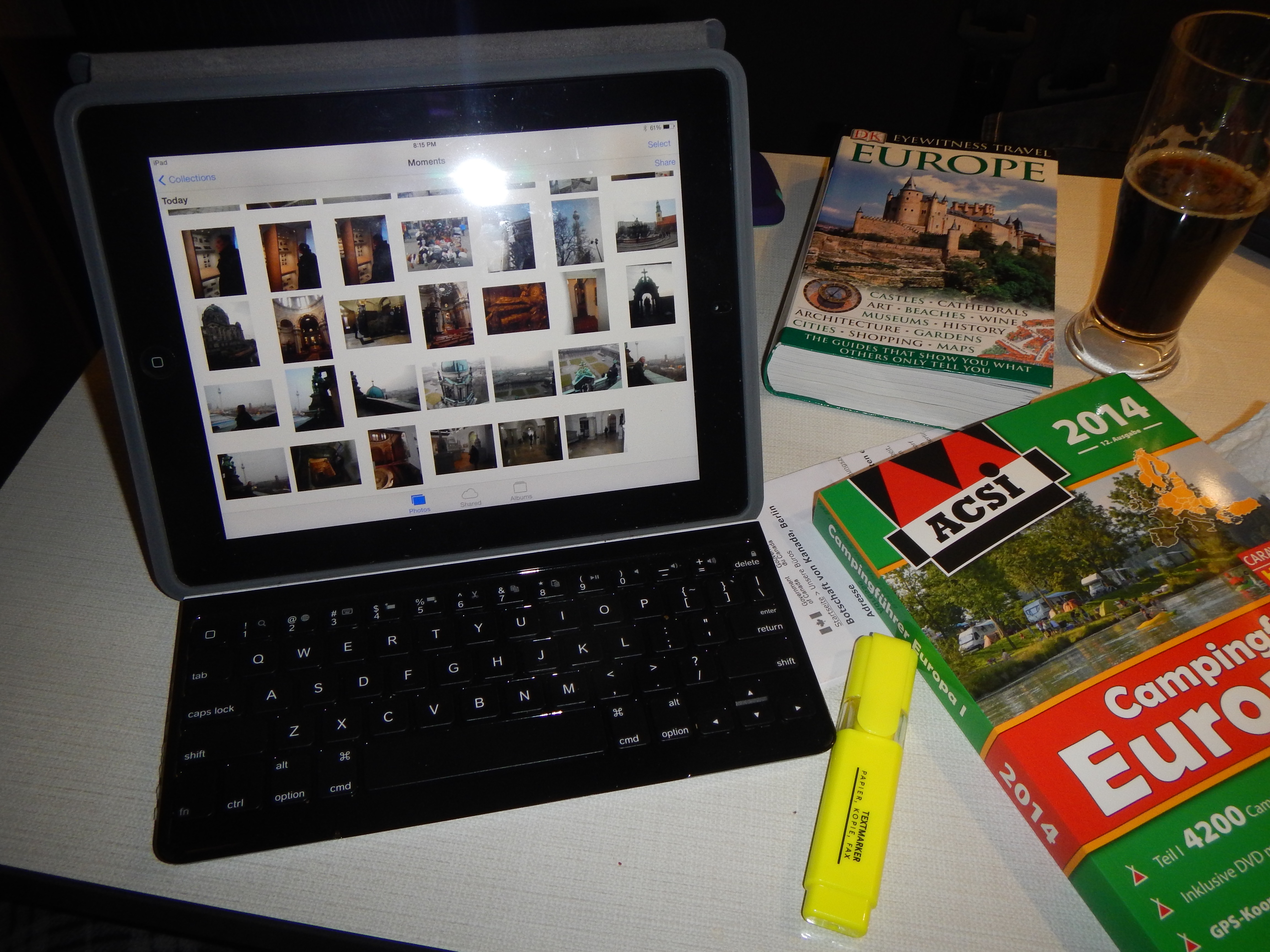
#1 travel option… the iPad. On the job 7 days a week and often operating night and day. 2 great books; DK Eyewitness Europe and ACSI campground guide.
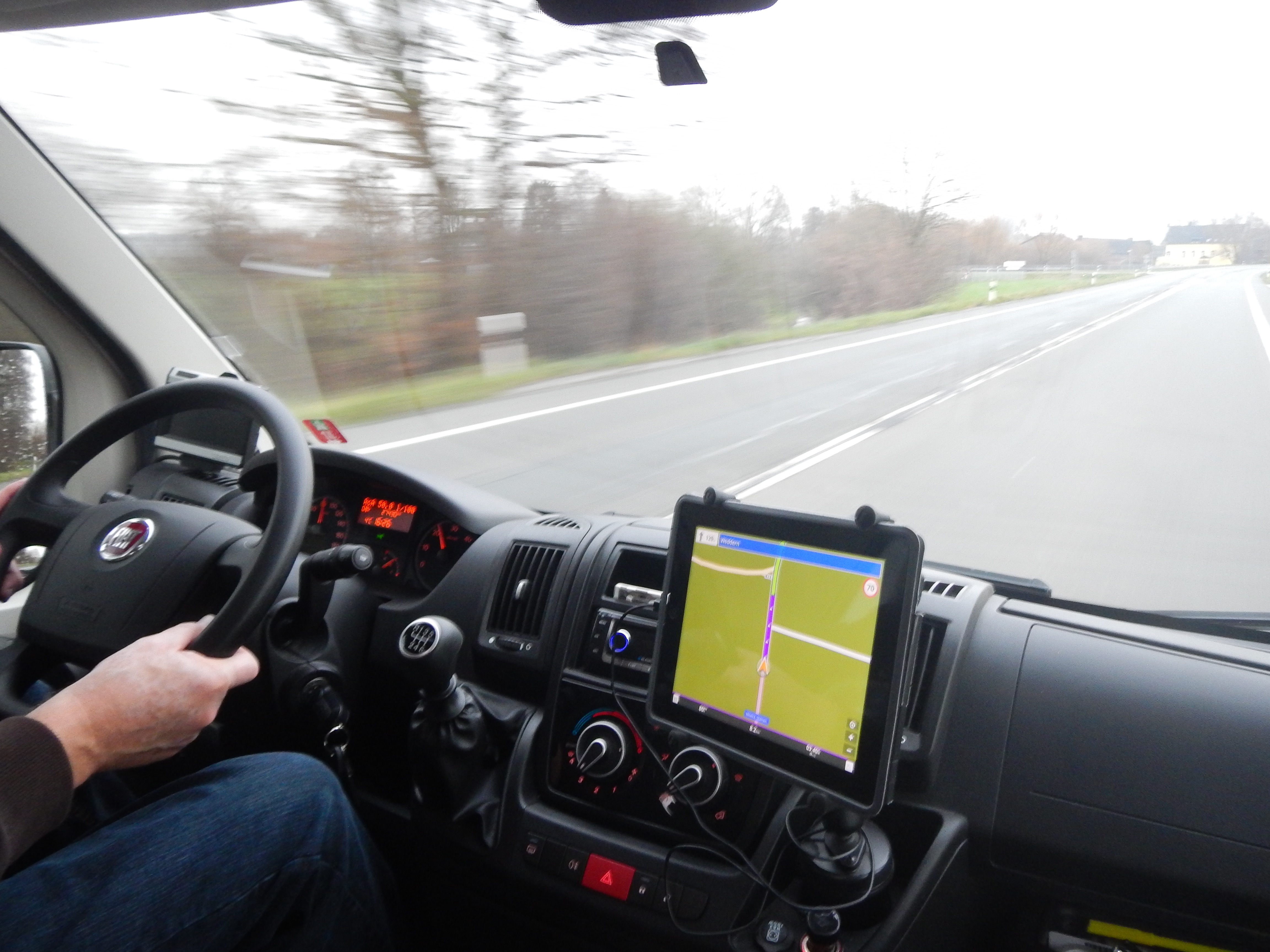
The Dual – SkyPro, GPS receiver at work. When connected to my iPad it provided me with wide screen navigation… Fantastic!

Dual – SkyPro. This GPS receiver will send a “Blue Tooth” signal to 5 mobile devices at once.
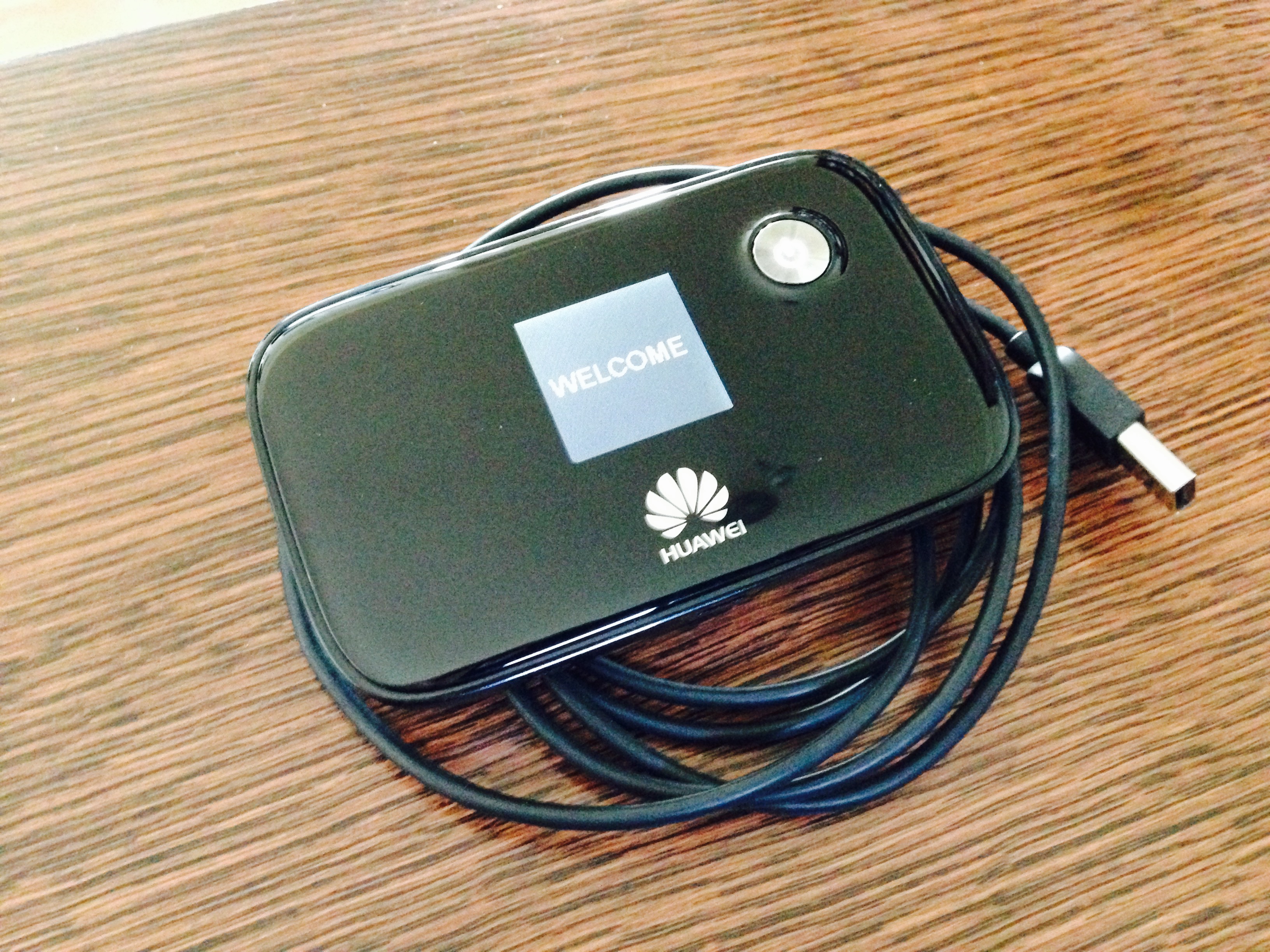
Huawei 4G Mobile WiFi Hotspot. A local SIM card is required.
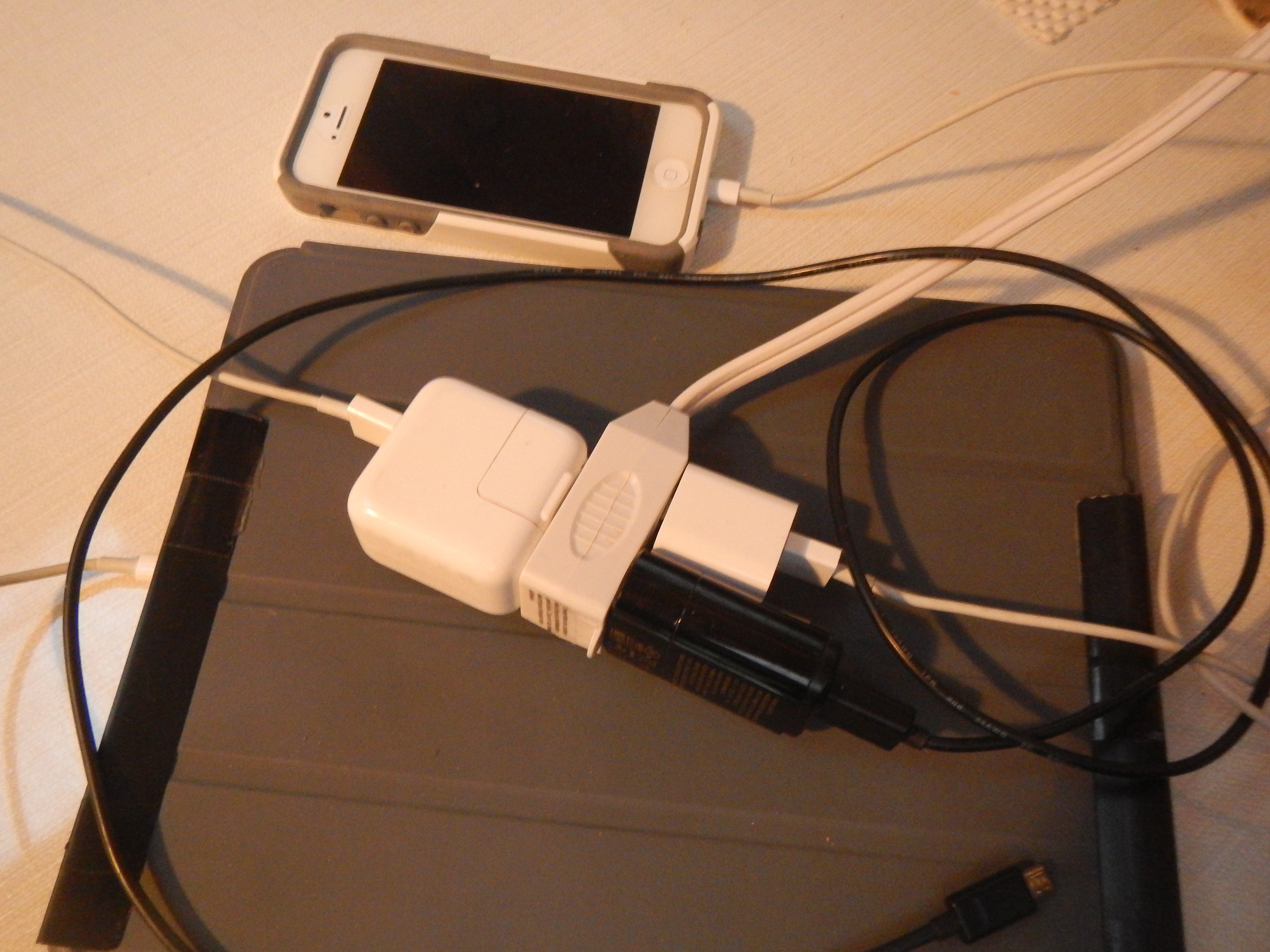
The “must have” North American extension cord. Plug it into your World travel plug and you can now charge multiple devices at once. I used this cord every day.
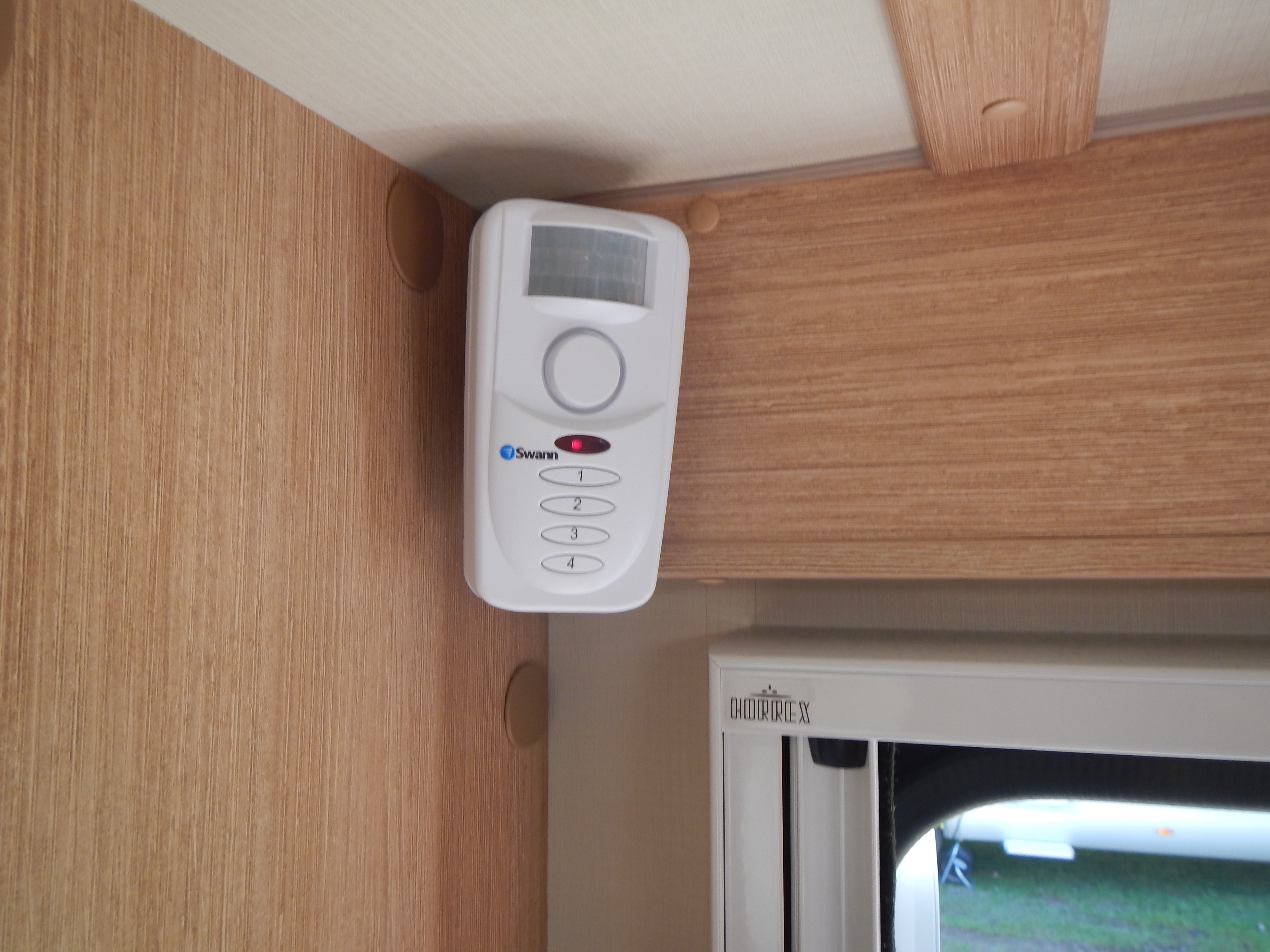
Inexpensive motion detector we purchased from Canadian Tire. On occasion it really helped to provide us with a good “false sense of security”.

Homework every night.
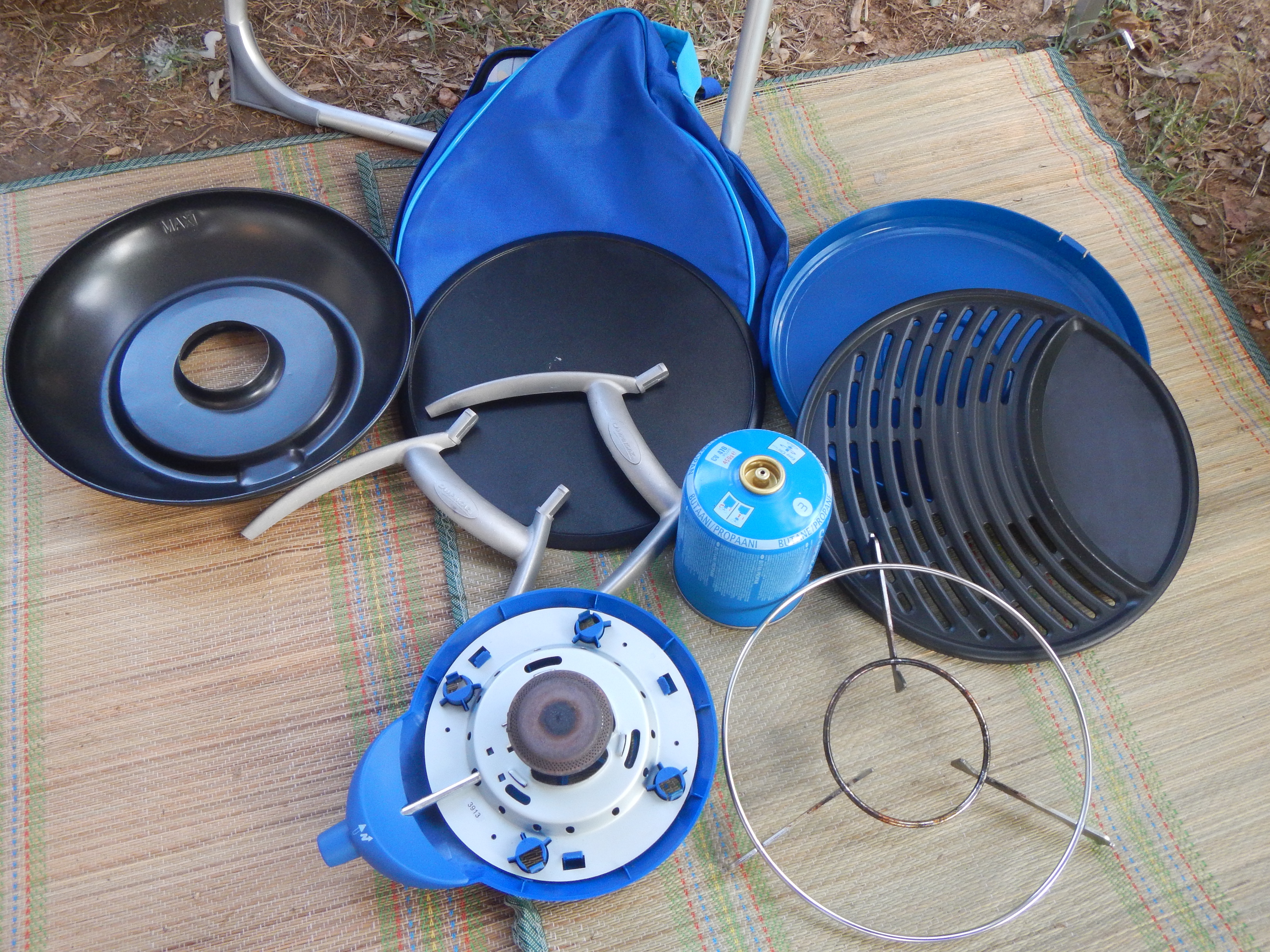
All the BBQ parts. You filled the pan base with water to catch the grease. We made a lot of great chicken dinners on this puppy
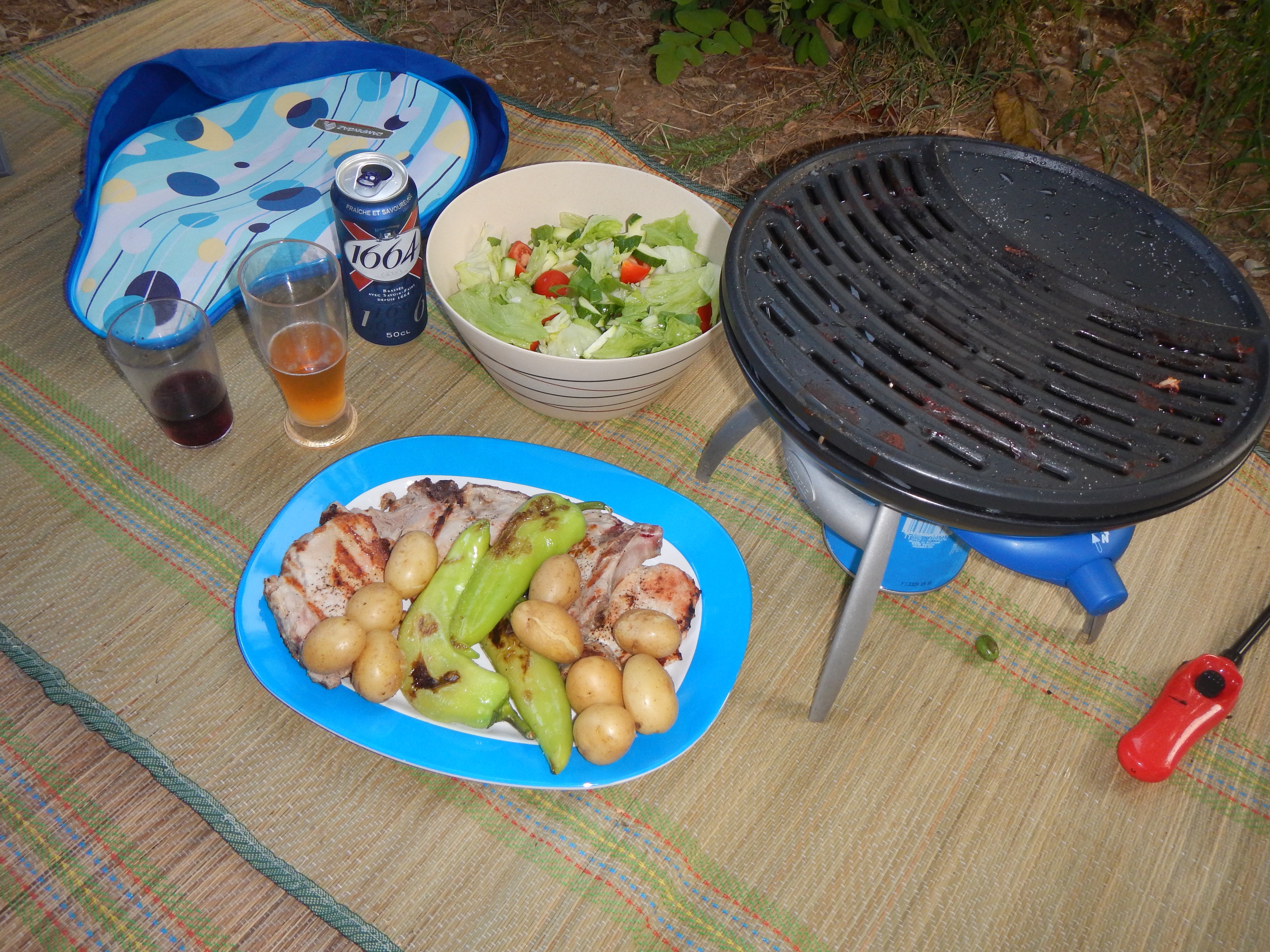
We loved this little BBQ. You washed it up after every use and packed it away in it’s travel bag
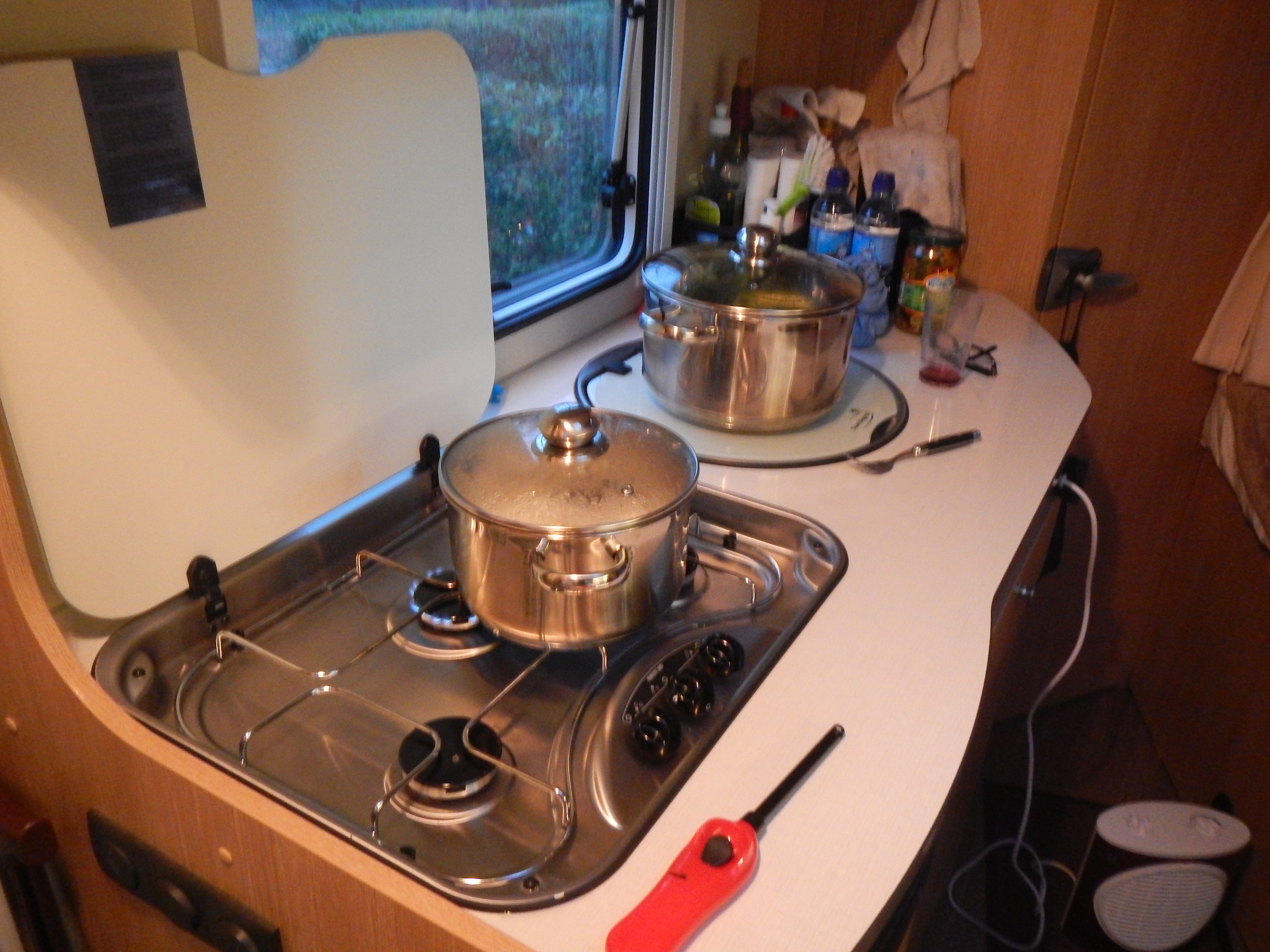
Margot cooked some amazing meals on this little stove. I usually washed the dishes using the campground facilities. Notice the electric heater on the floor; this was a great gas saver when we had the campground power.
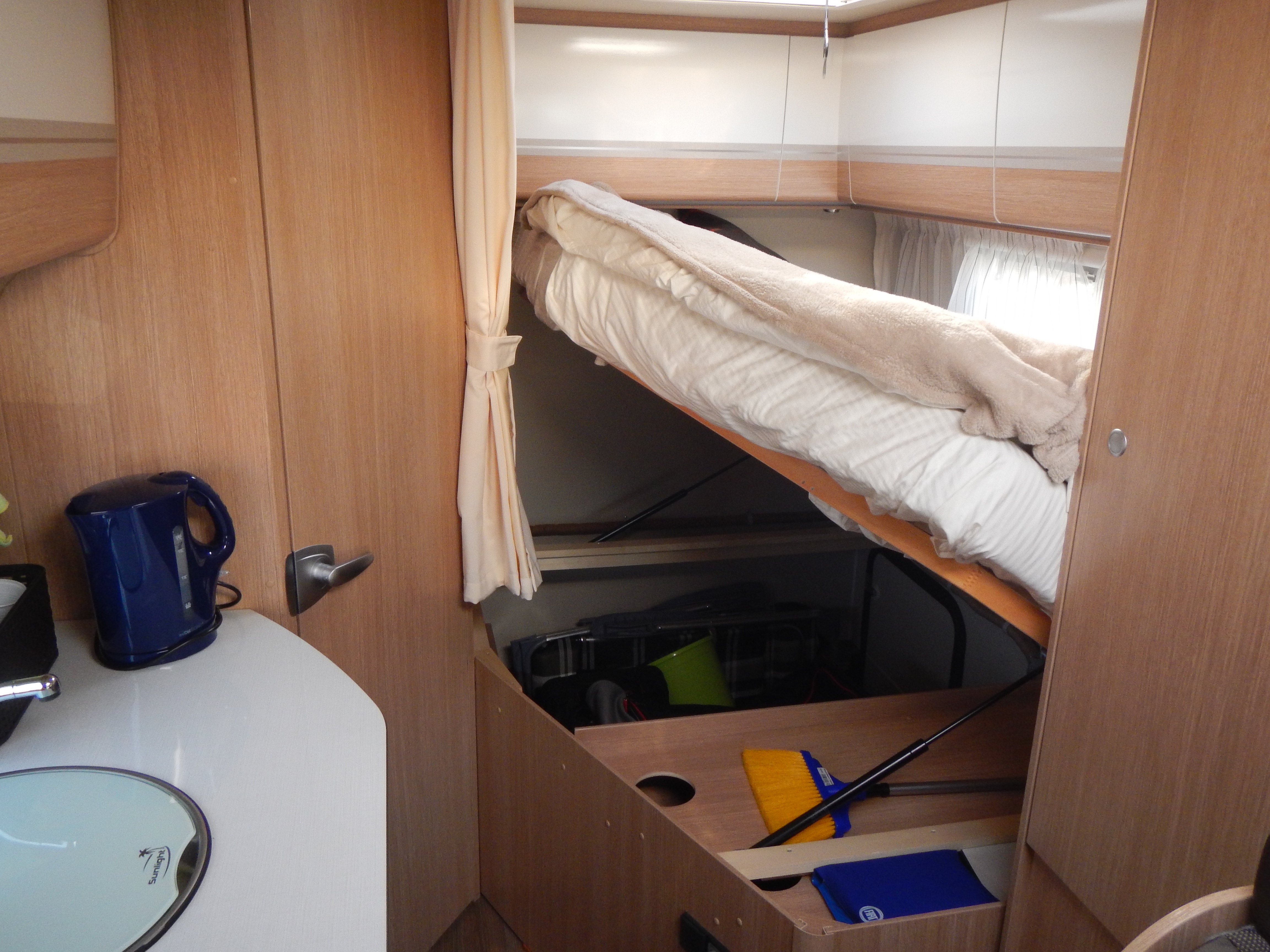
The “garage”. We had lots of storage space in our unit. This large space could also be accessed from an outside door.
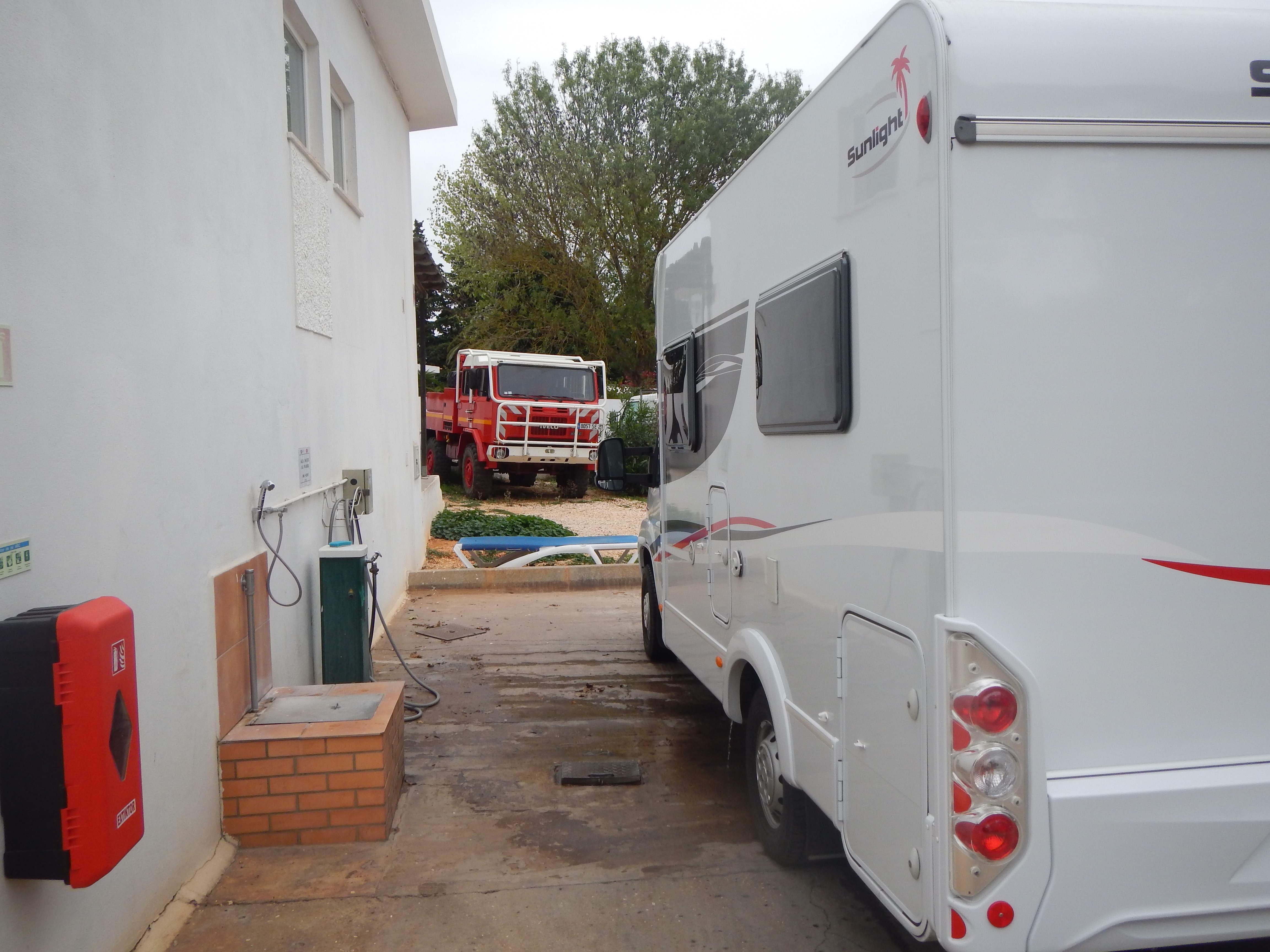
Campground “gray-water” dumping and fresh water “fill-up” station. The redish brick structure attached to the wall is for servicing your porta-potty.

Standard European motorhome “porta-potty” system. Easy to manage and easy to find facilities where you can manage it.
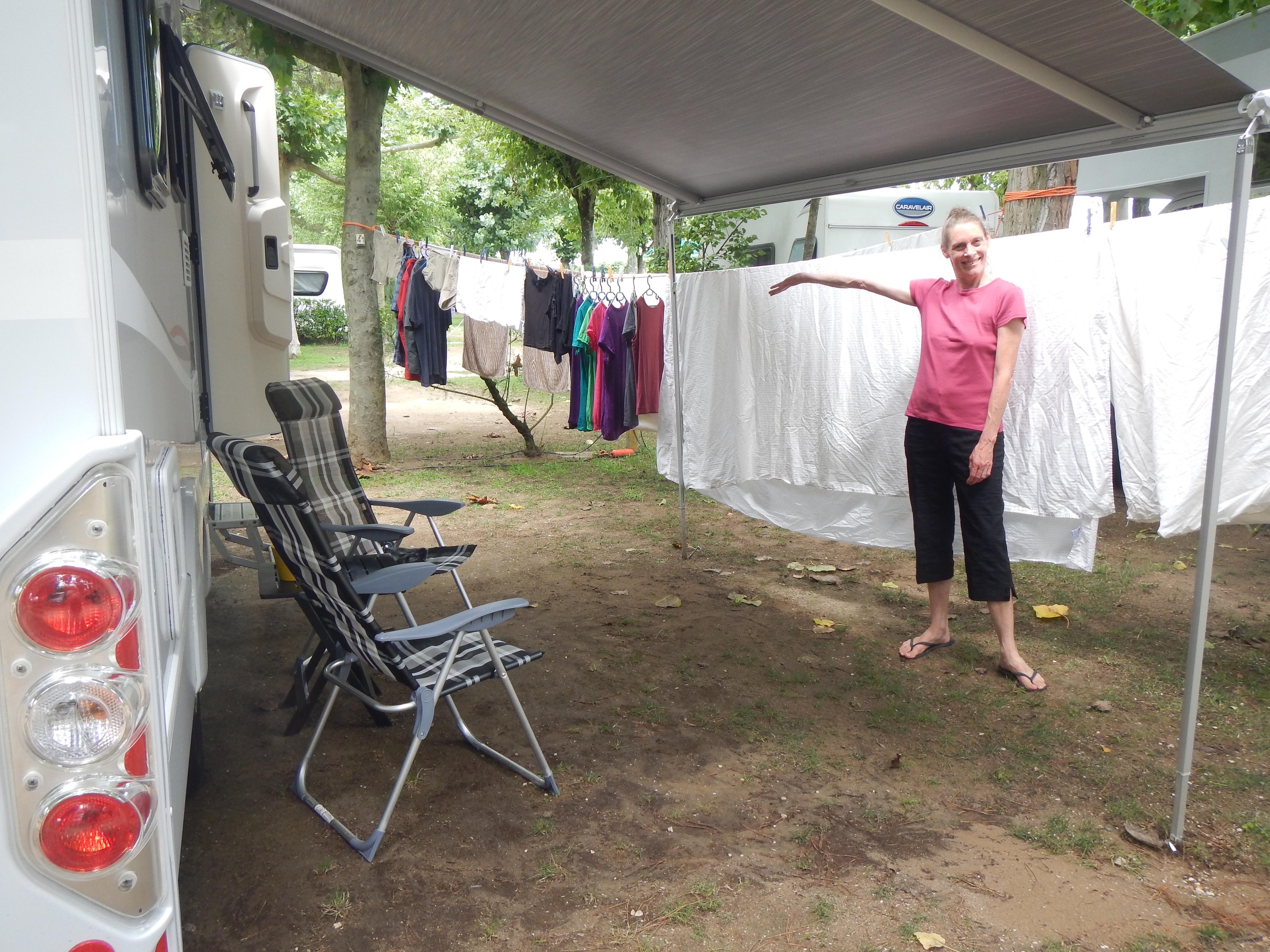
Real Fresh laundry!
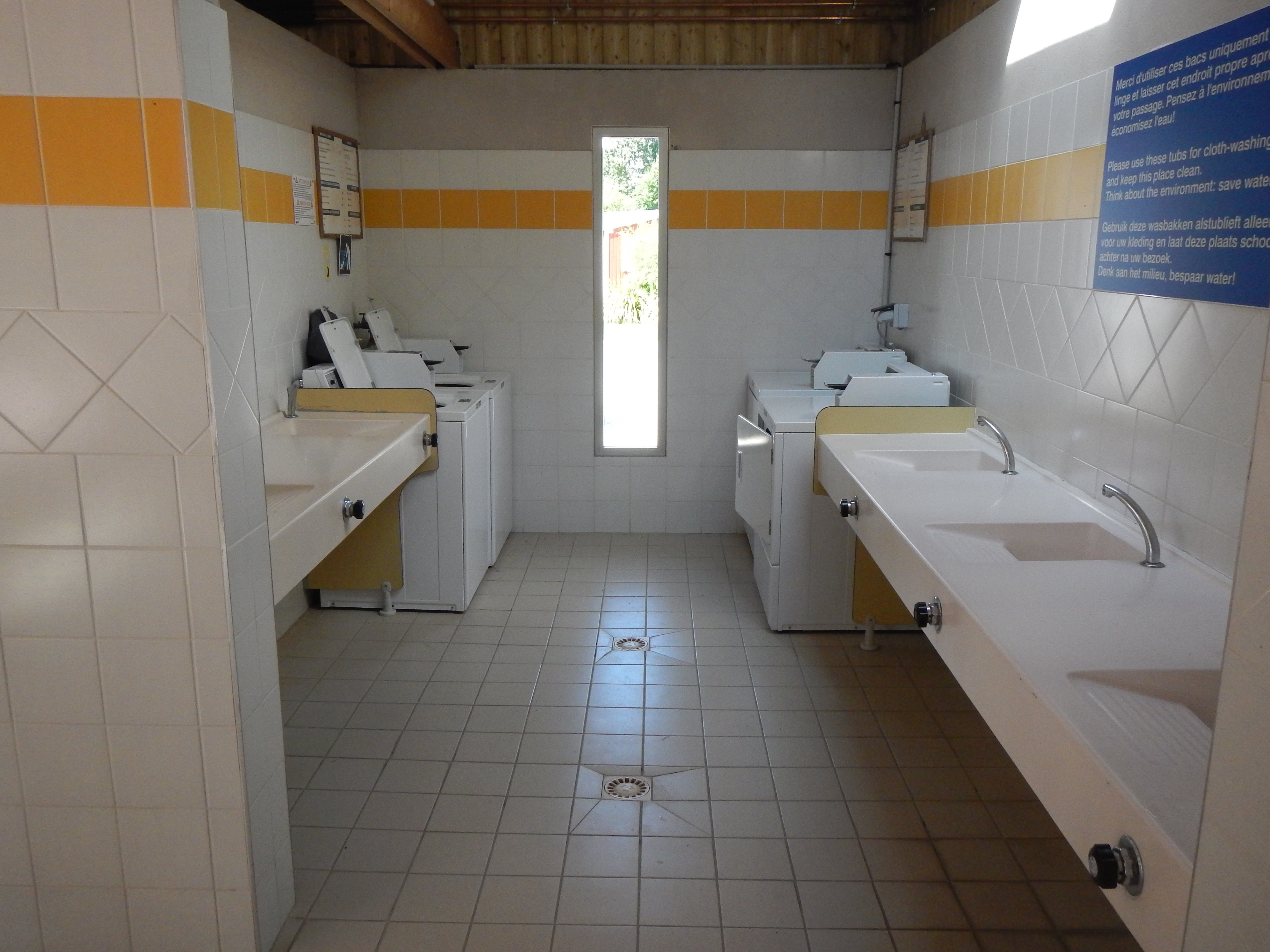
Another example of a campground laundry.

A 5 star campground laundry area.
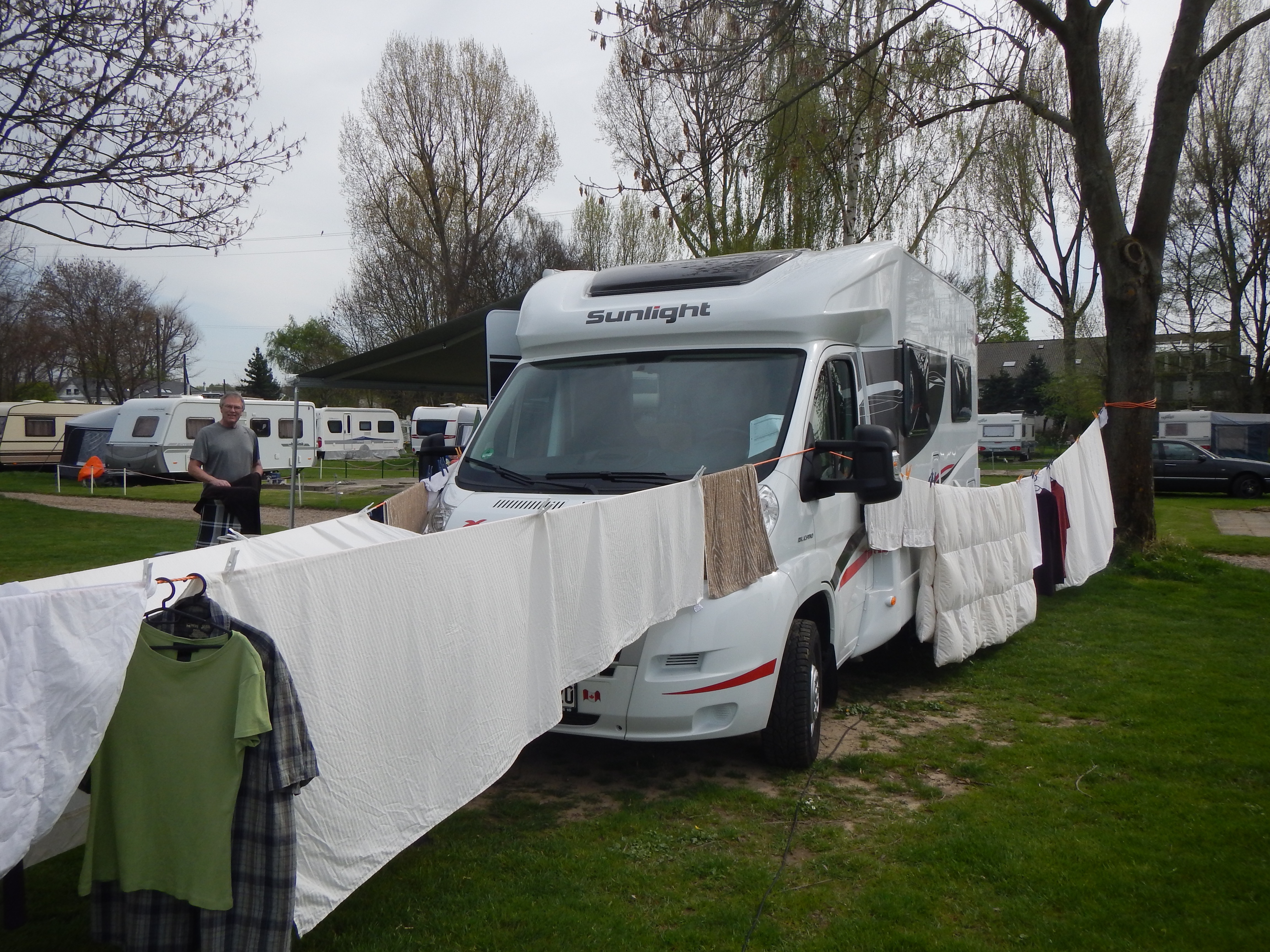
Major clothes wash as we camped beside the Rhein river at Cologne, Germany.
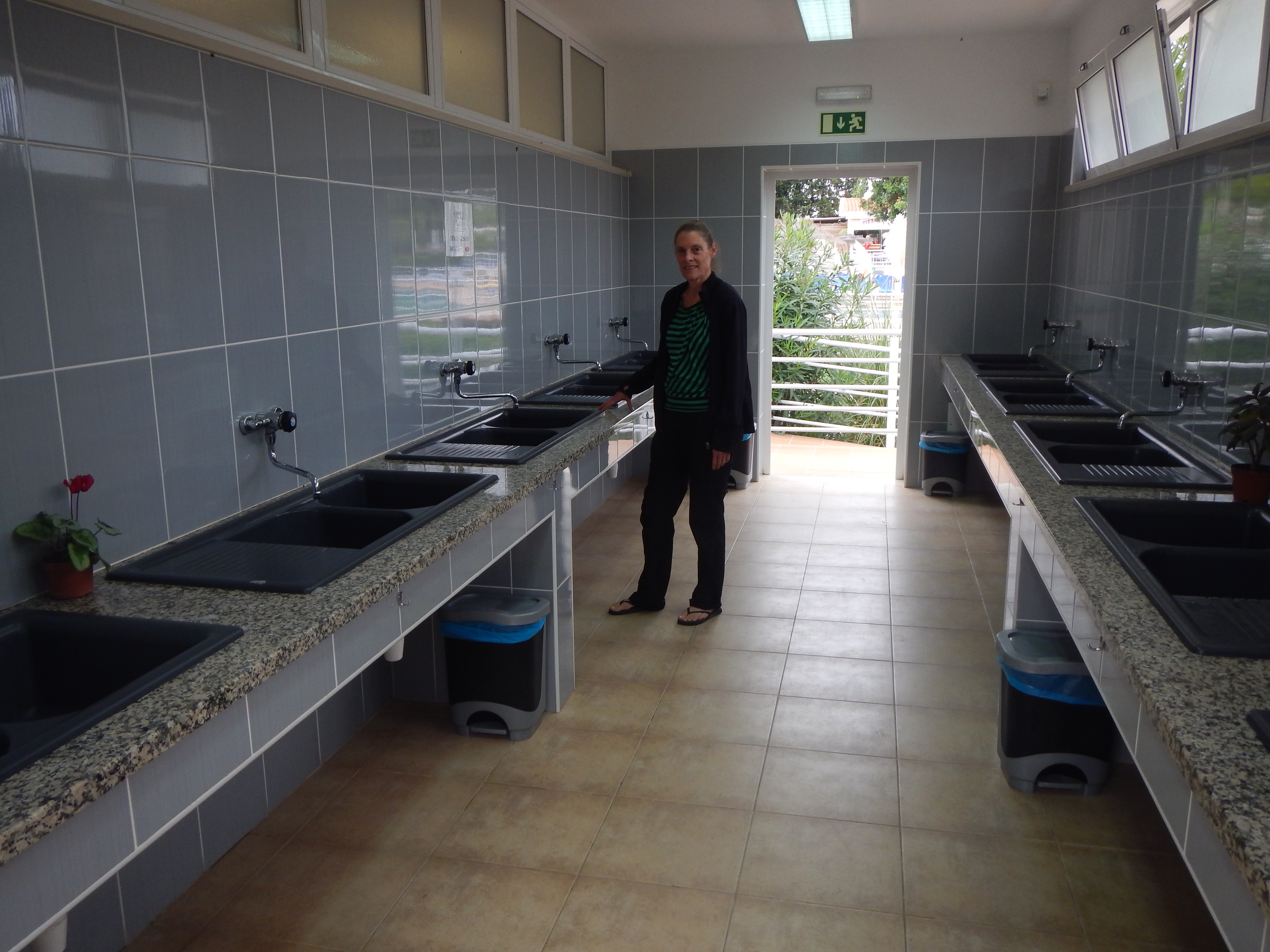
Dish washing station at a 5 star campground in Portugal.
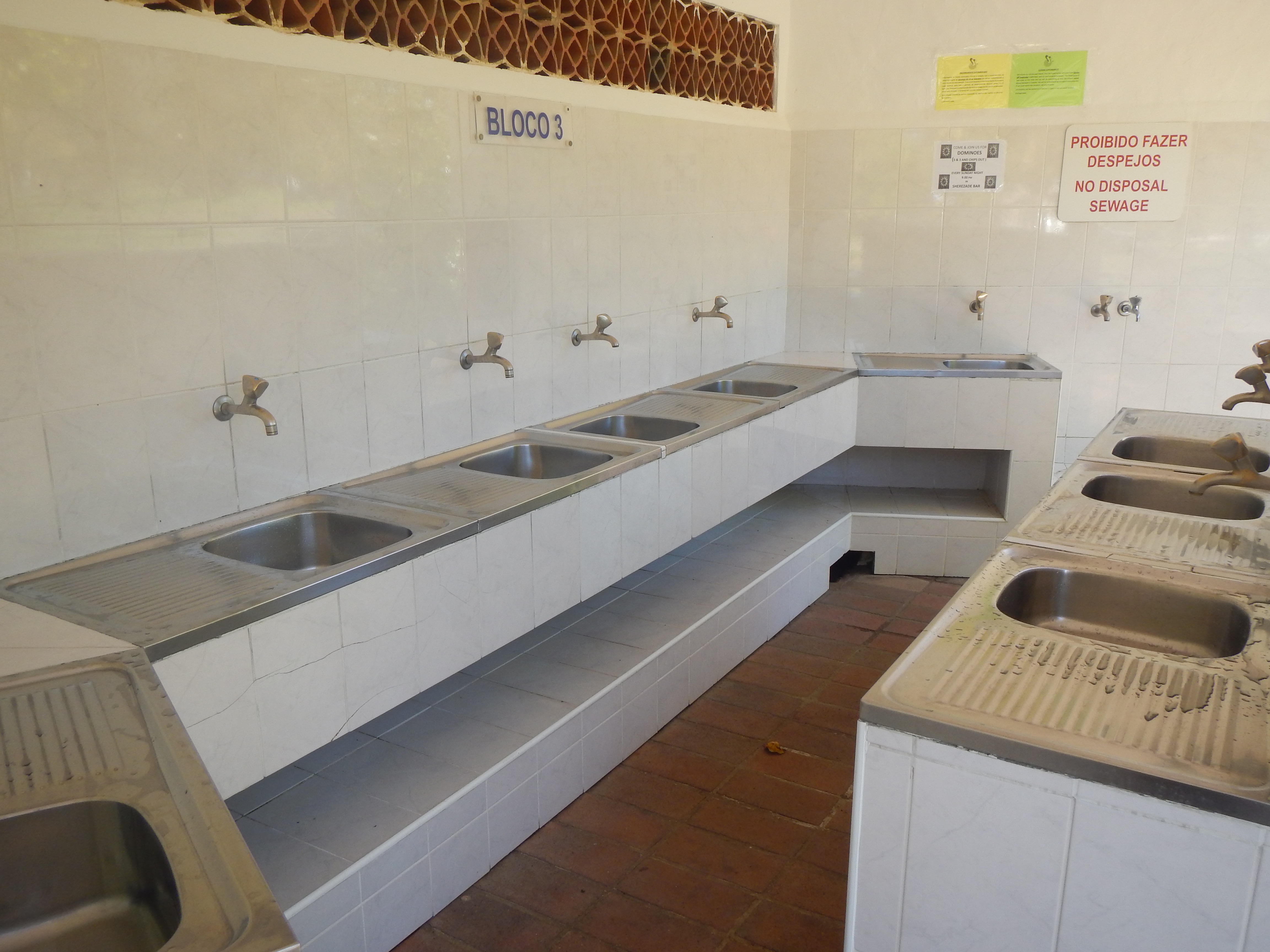
Dish washing station at a campground in Spain.
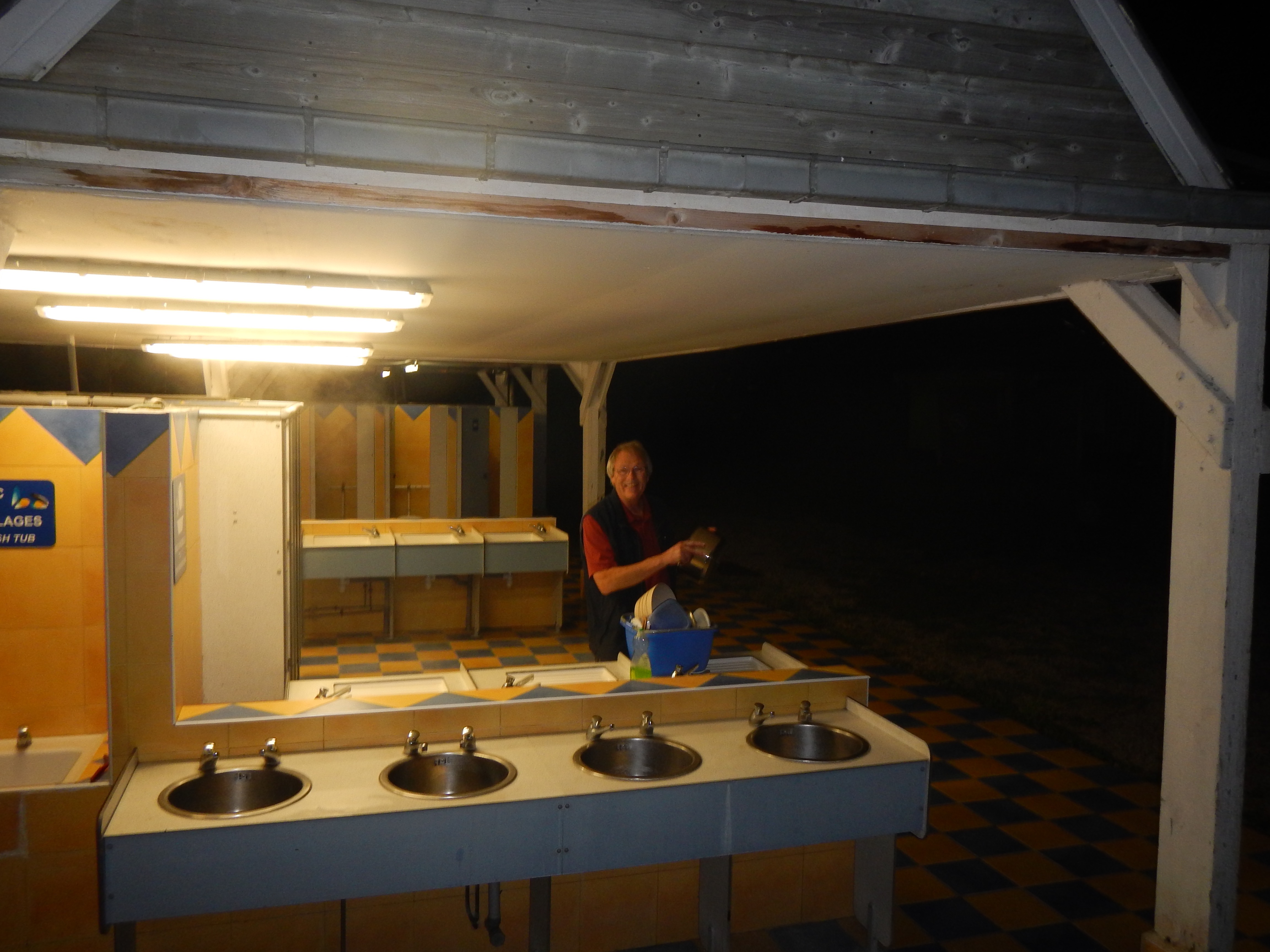
Doing dishes at a campground in Northern France.
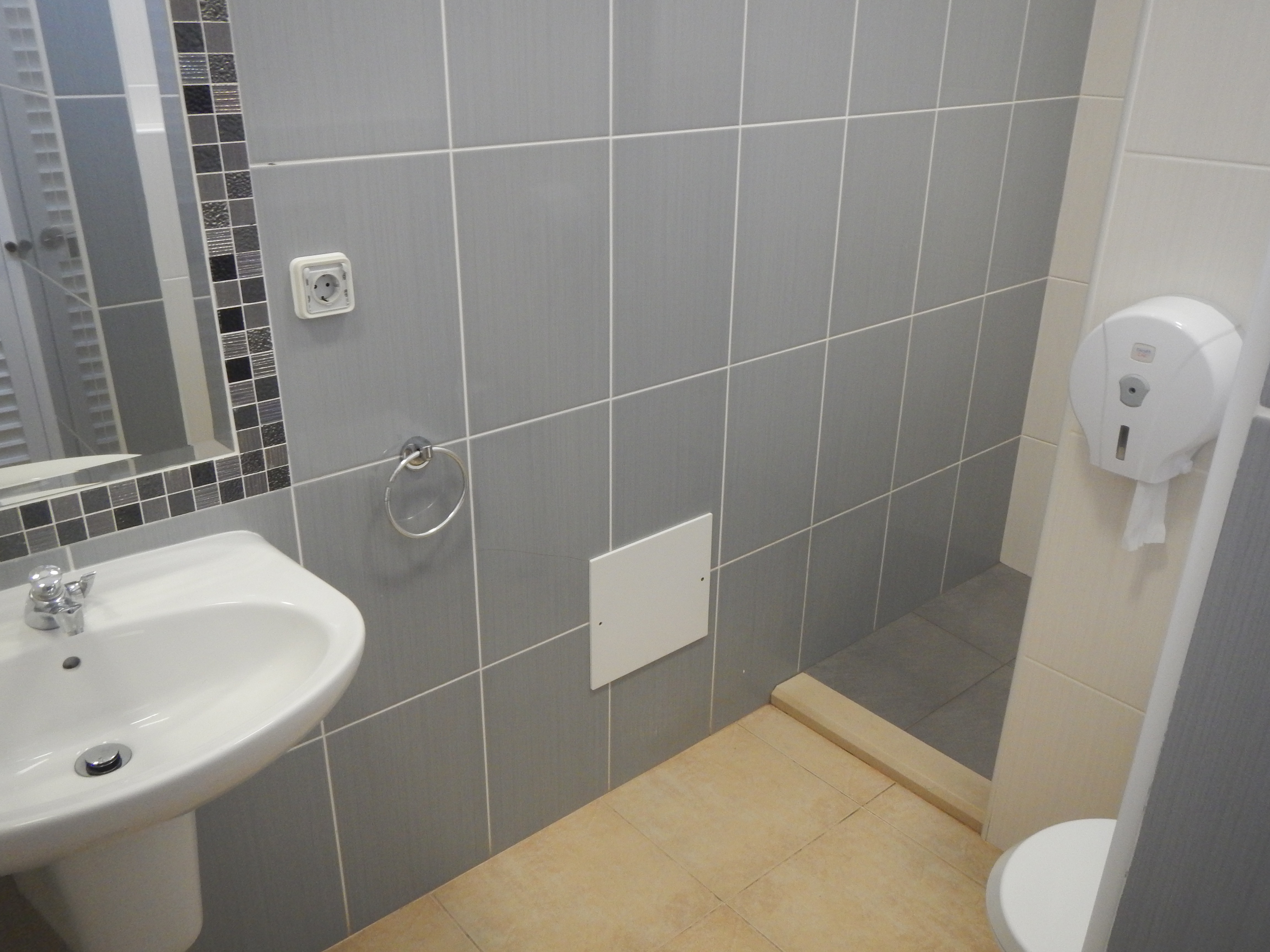
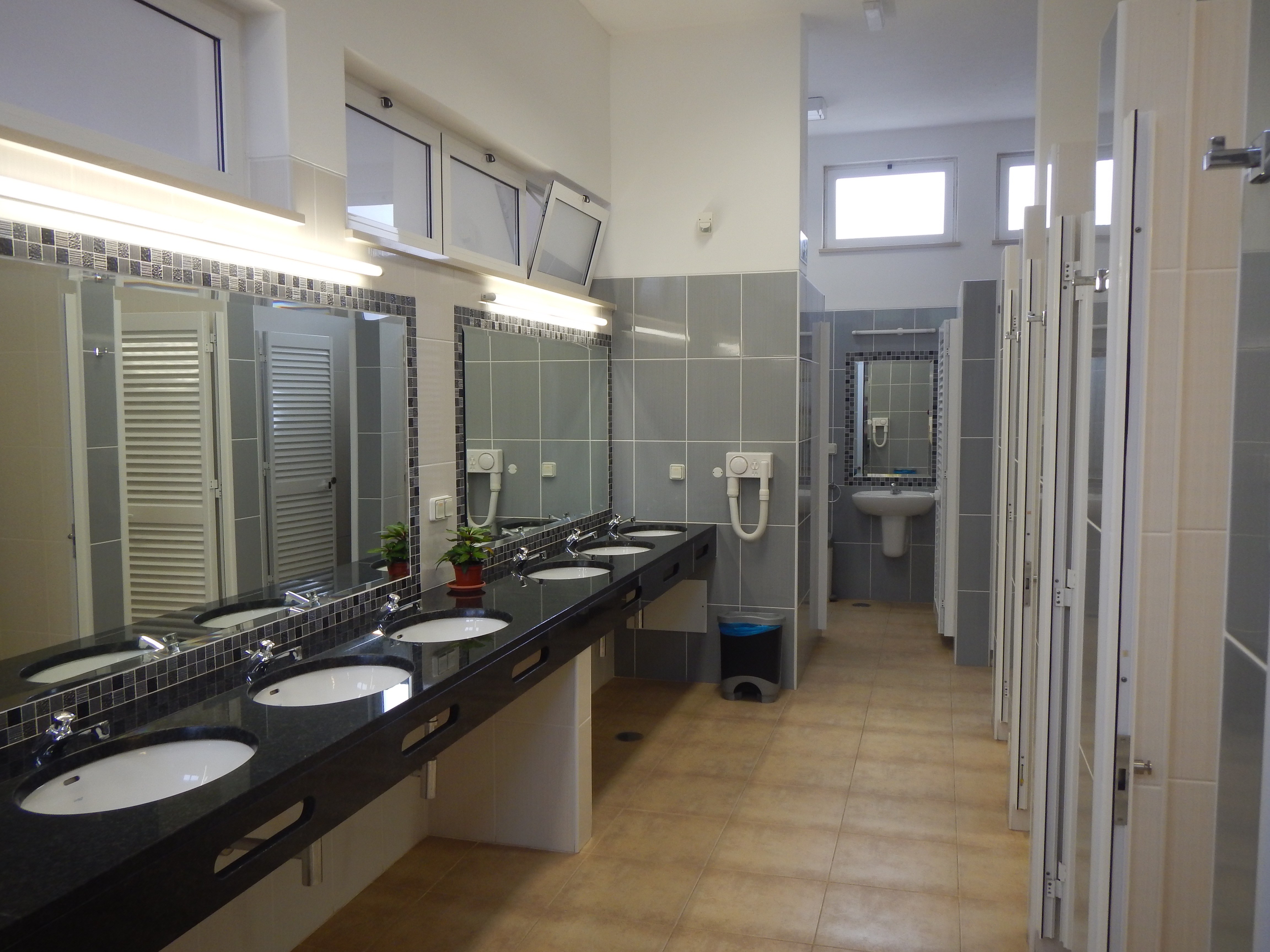
A family washroom at the 5 star campground in Portugal.
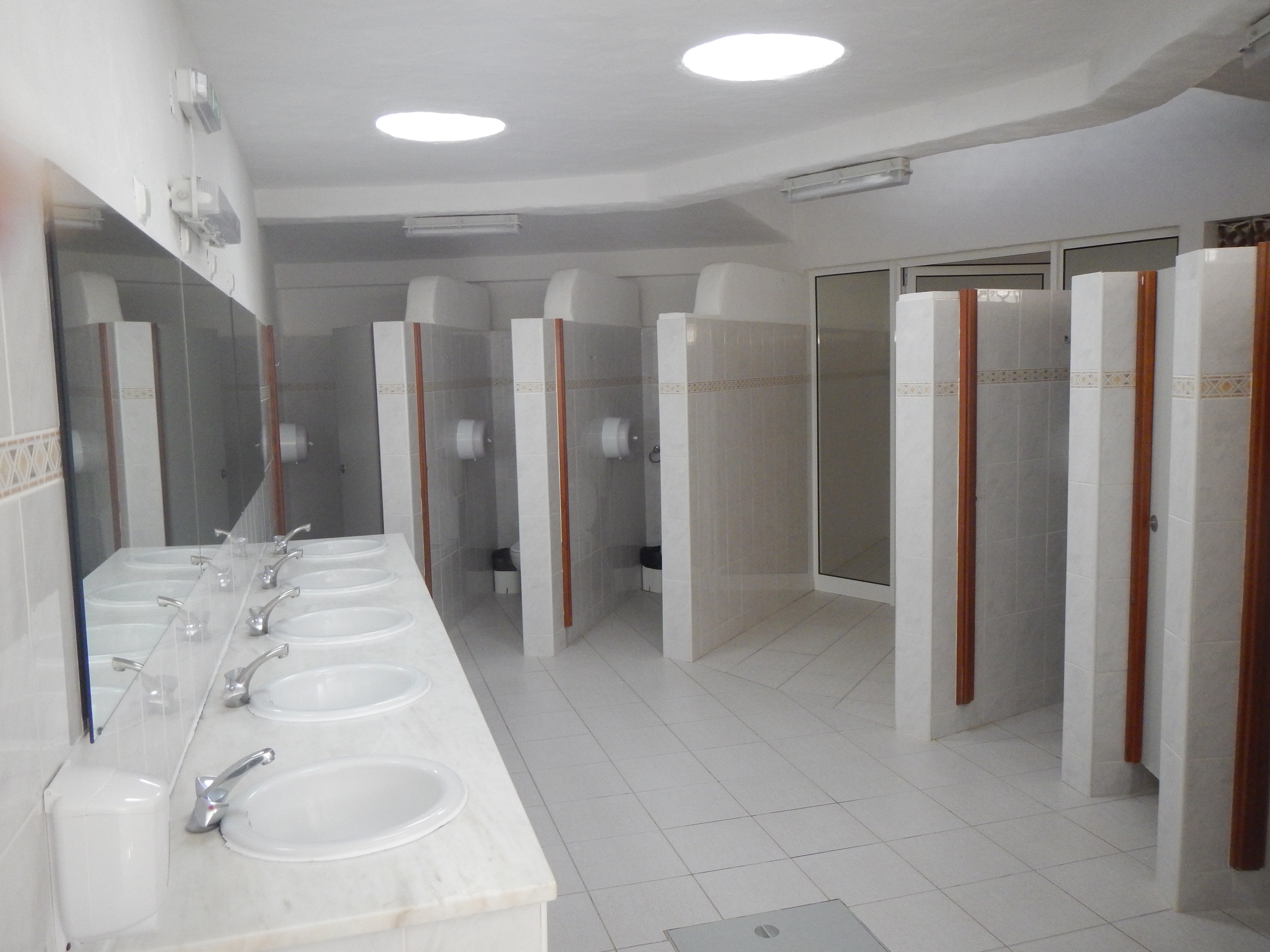
Campground shower facilities in southern Spain.
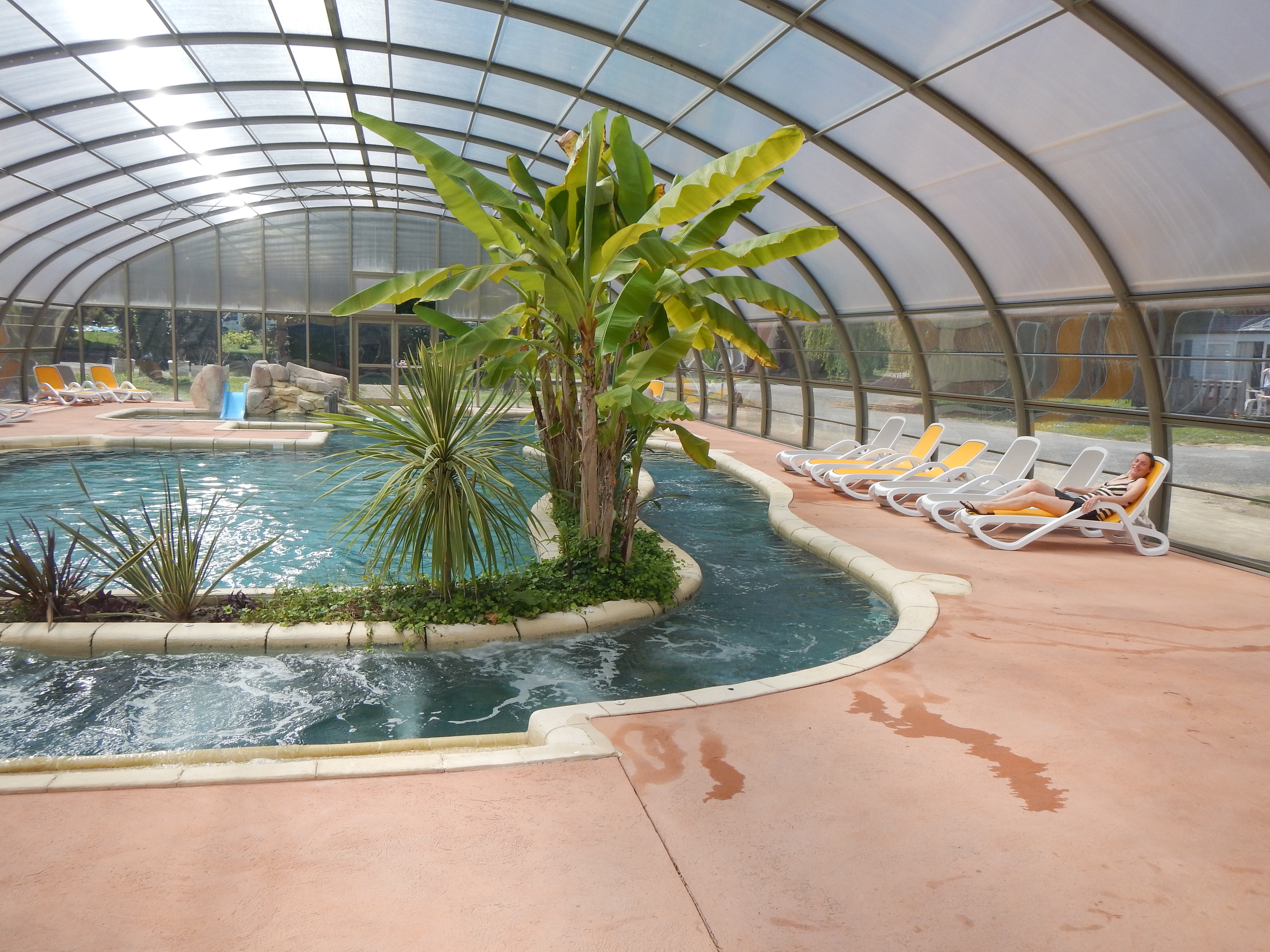
Wonderful 5 star campground in southern Portugal.

This must be France.
A great French Chateau campground in the Loire valley.
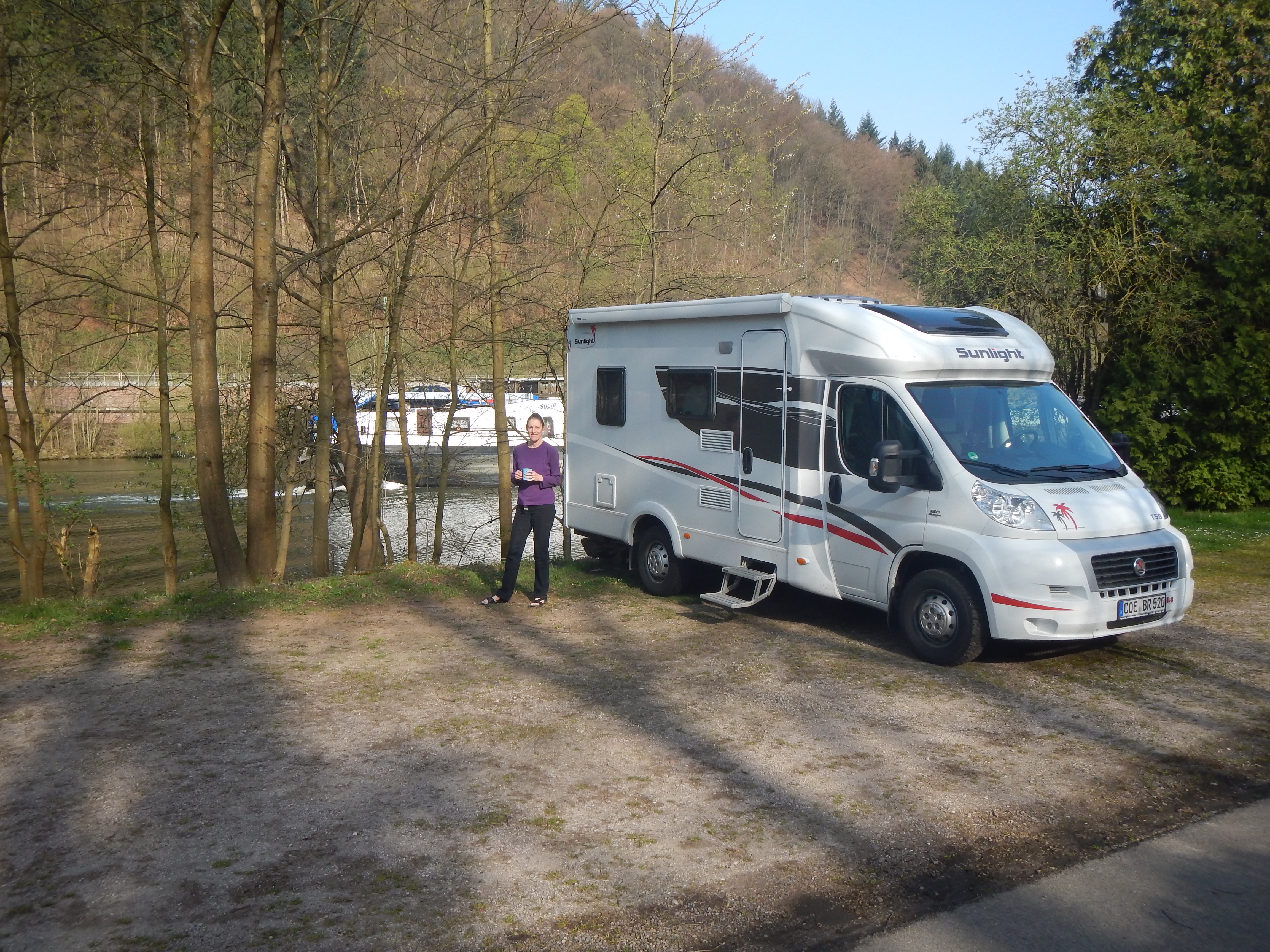
Campground on the river in Heidelberg.
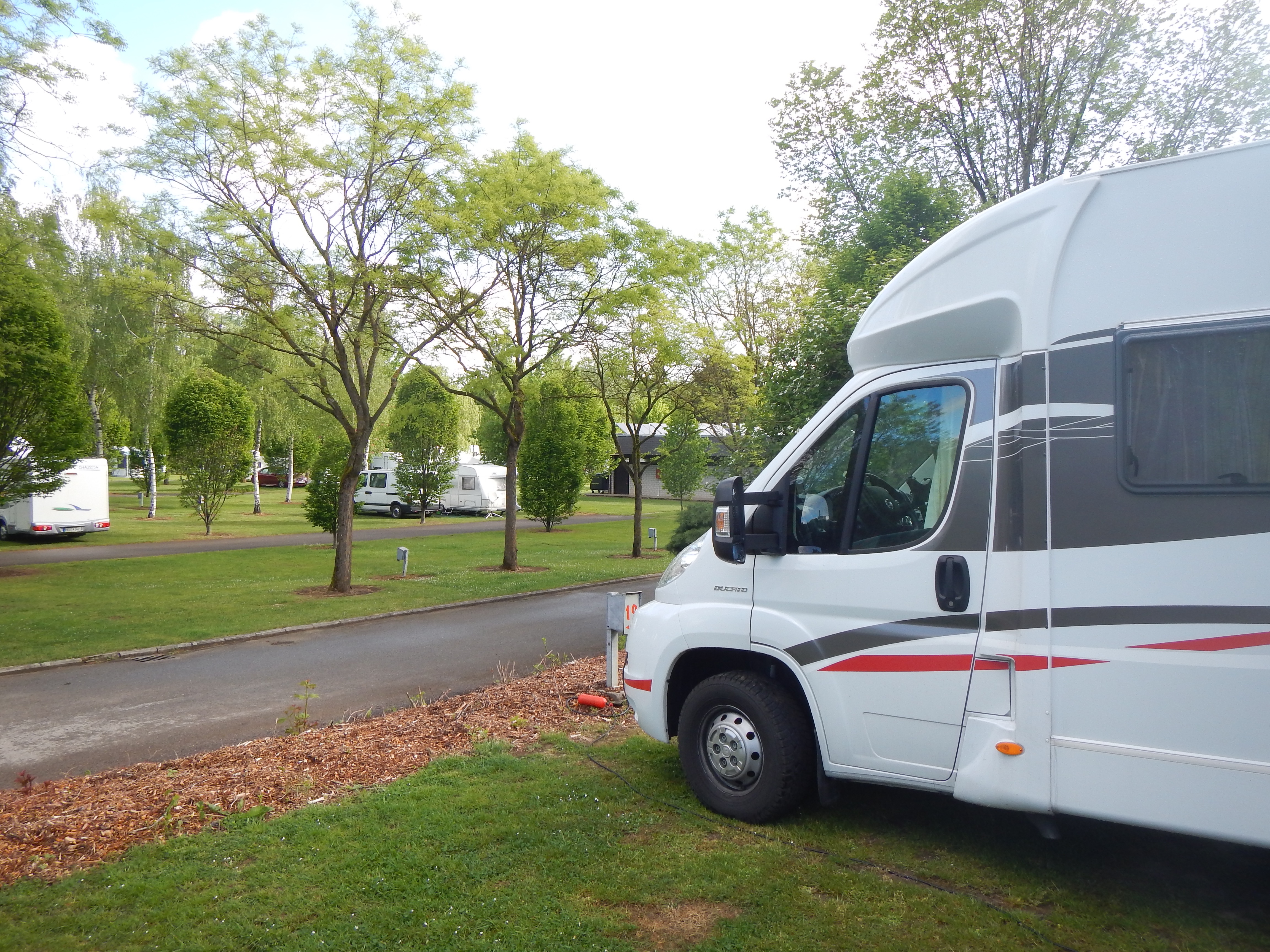
Lovely campground in Luxembourg.
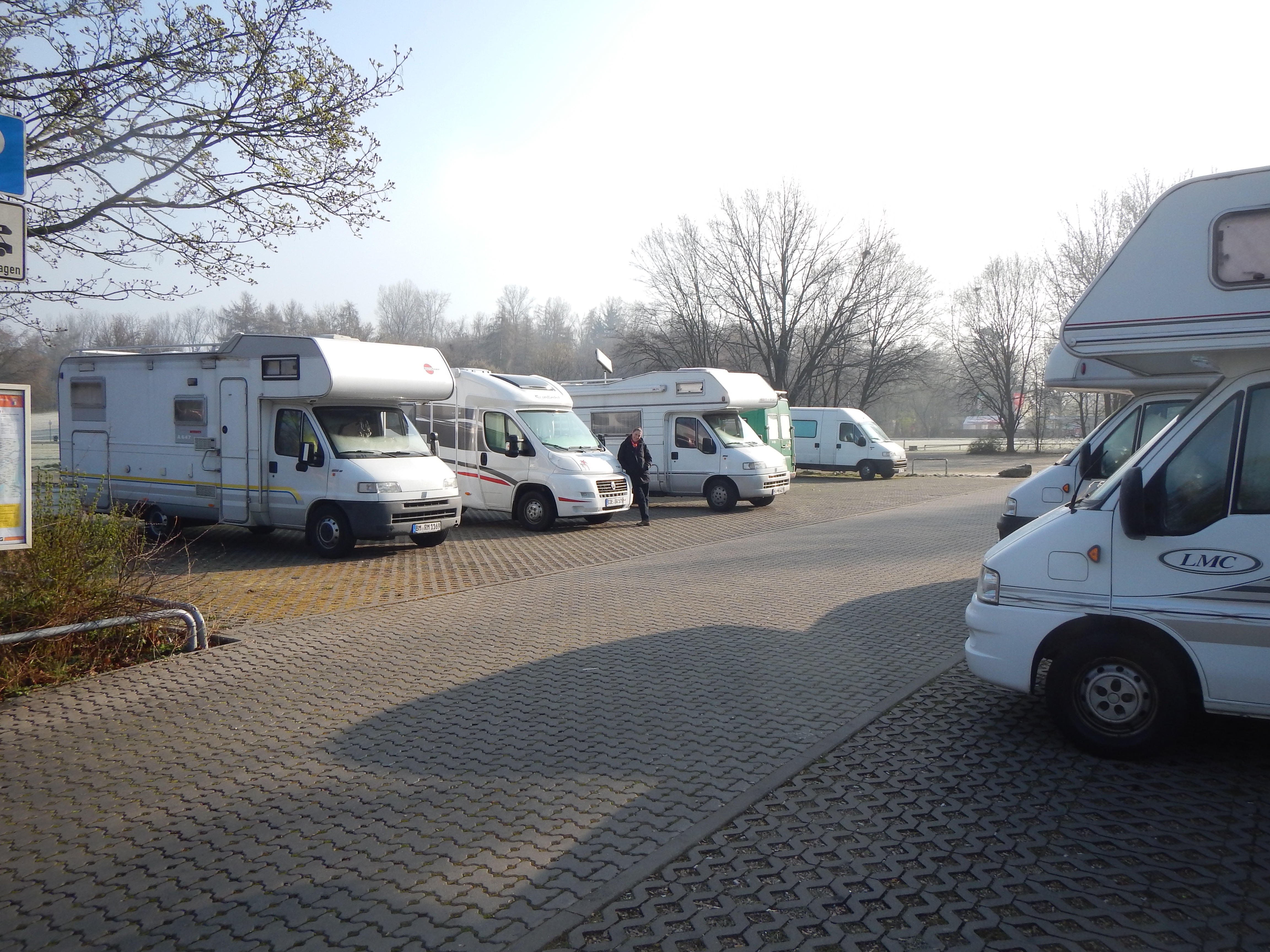
Spellplatz in Nuremberg, Germany.
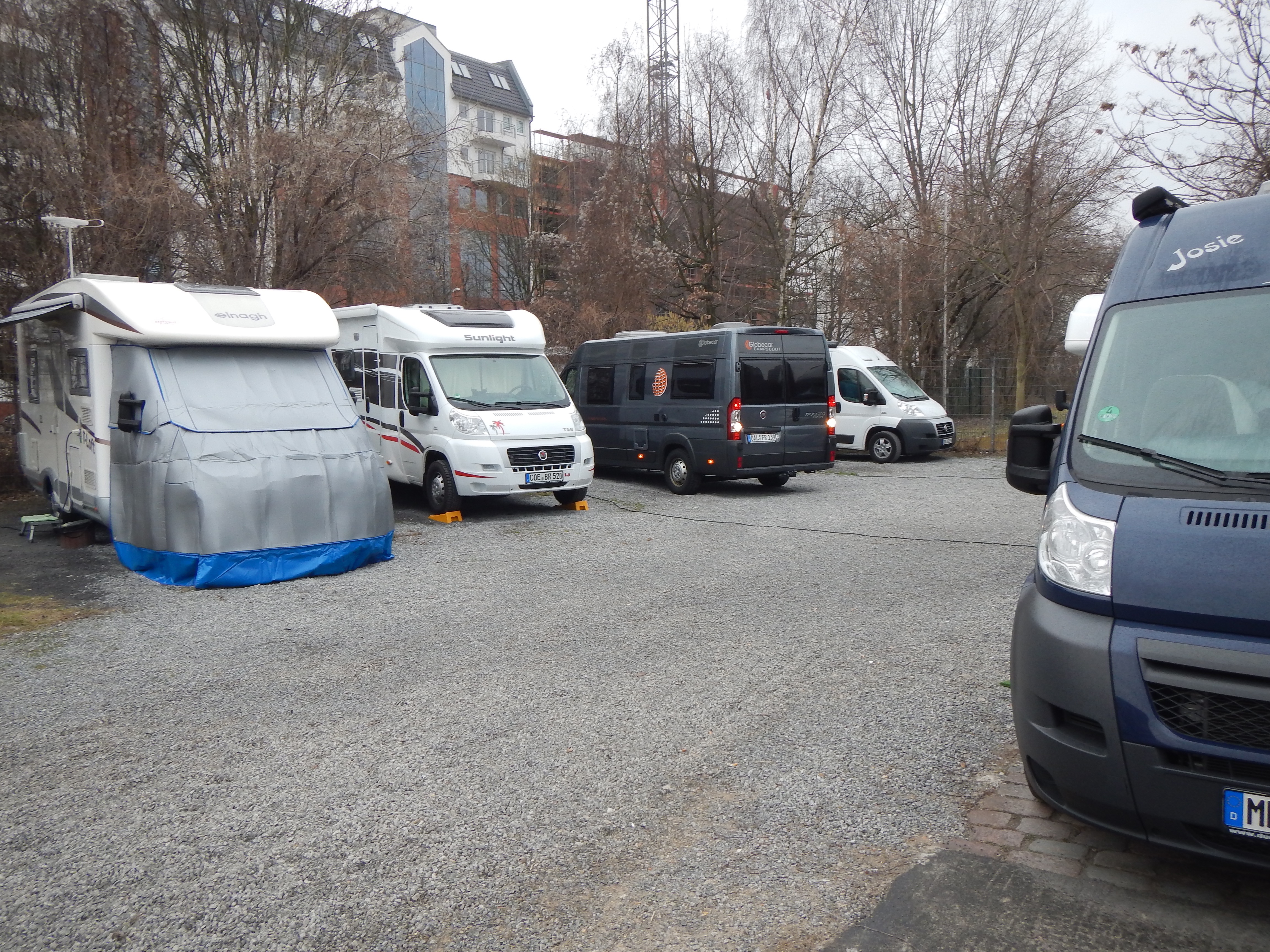
Spellplatz in the centre of Berlin.
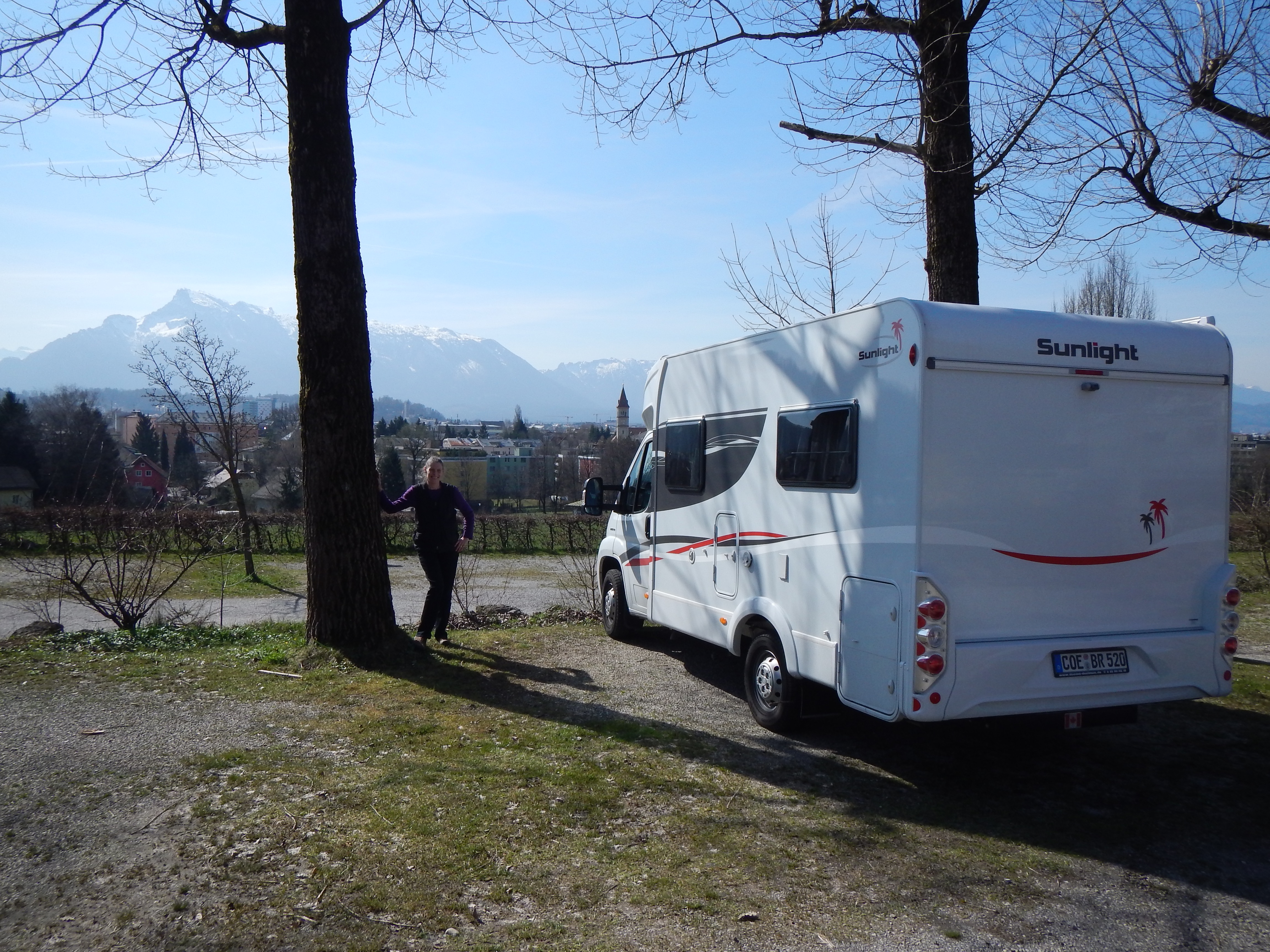
Campground in Salzburg Austria.
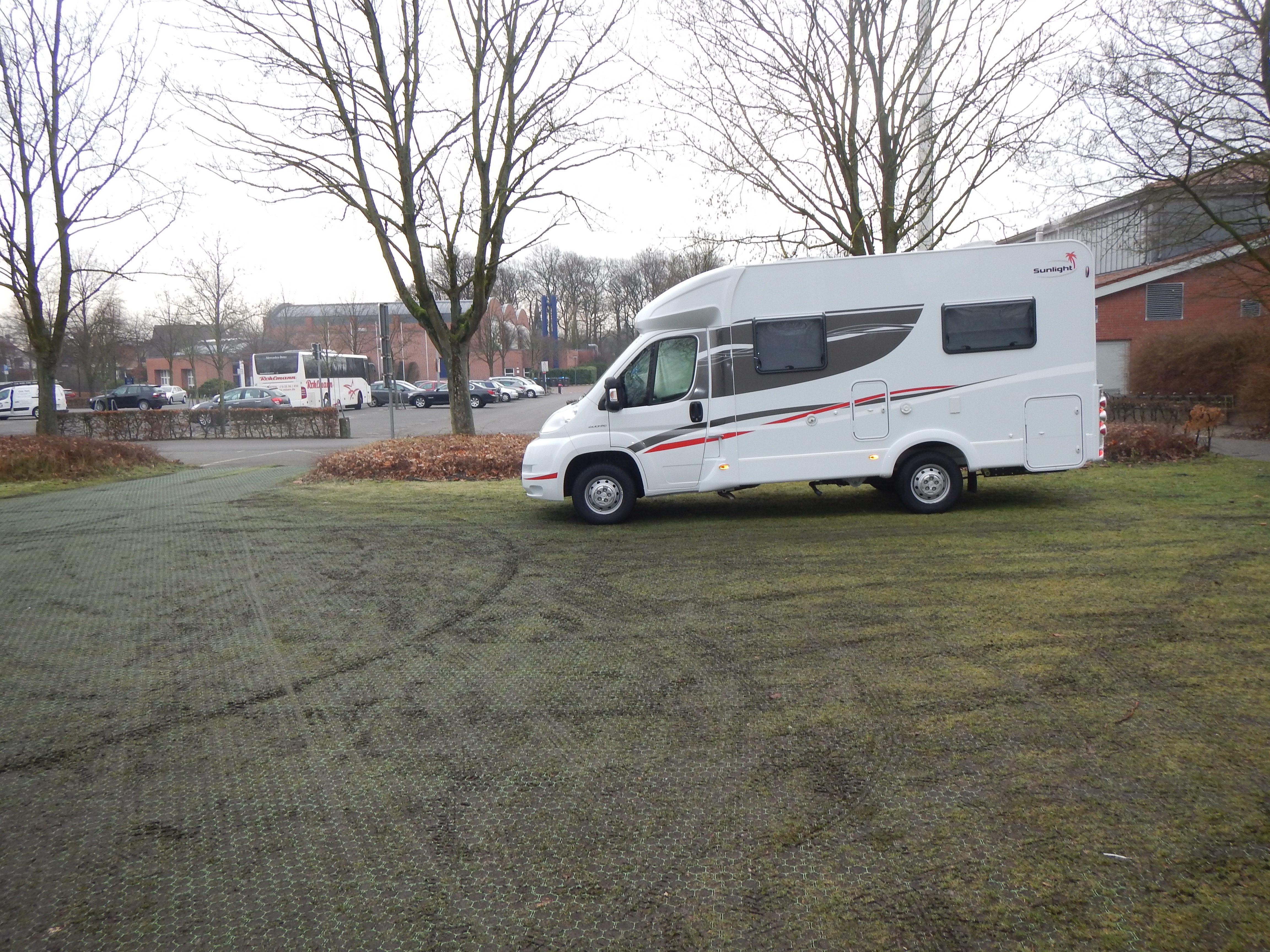
Spellplatz in Senden Germany, near Dulmen.
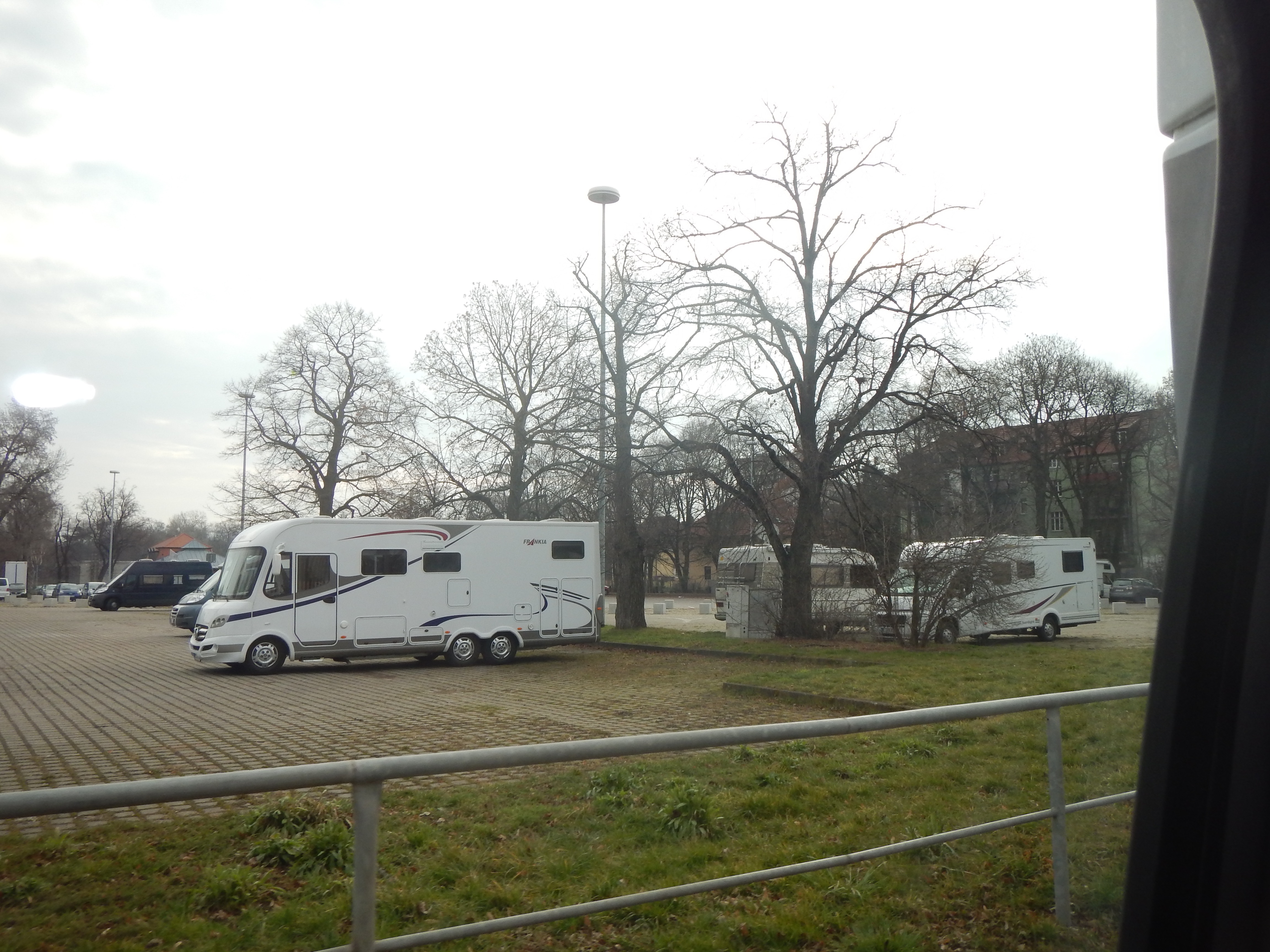
Spellplatz in Weimar Germany.
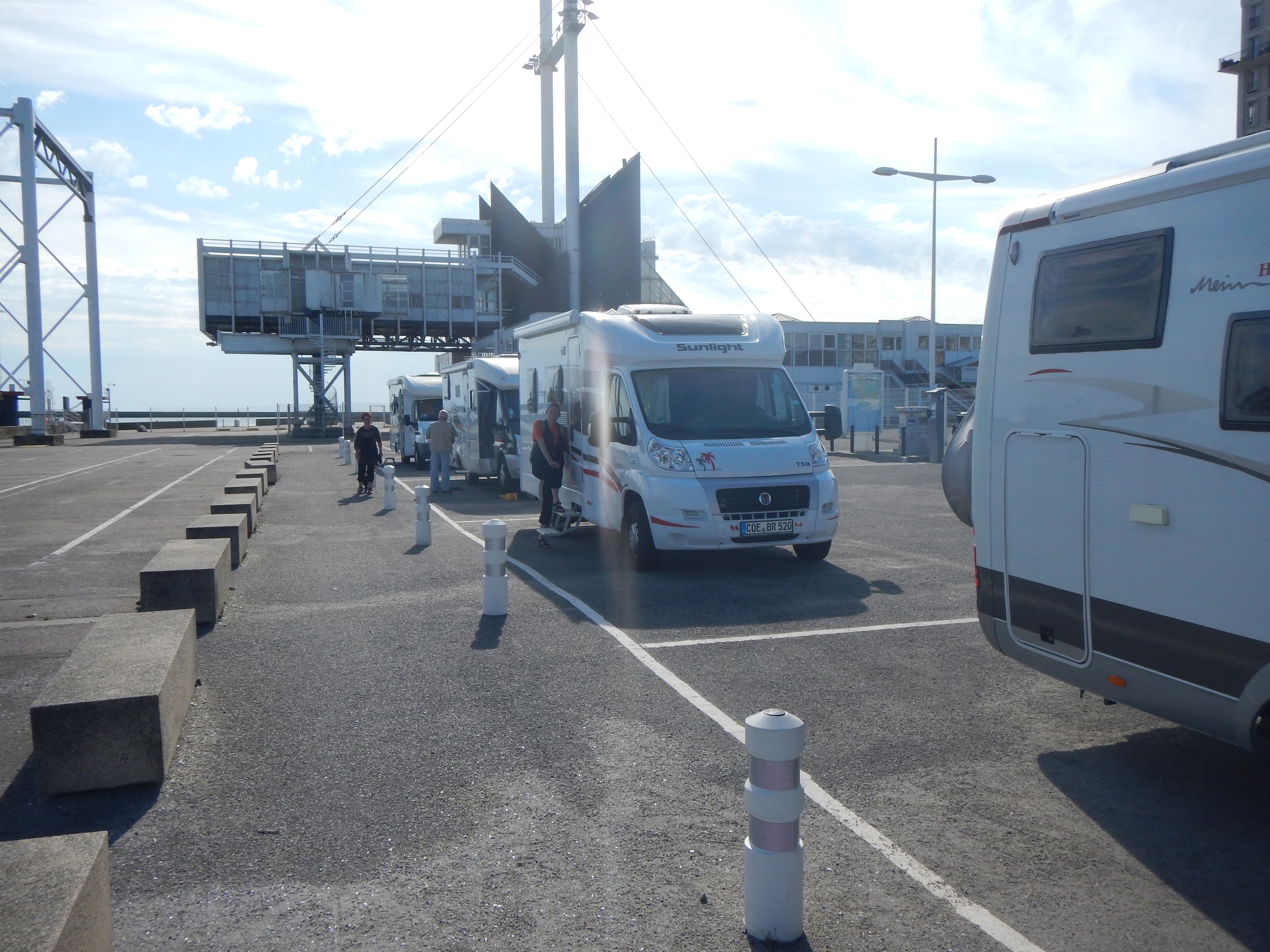
Spellplatz at Le Havre France on the Normandy Coast.
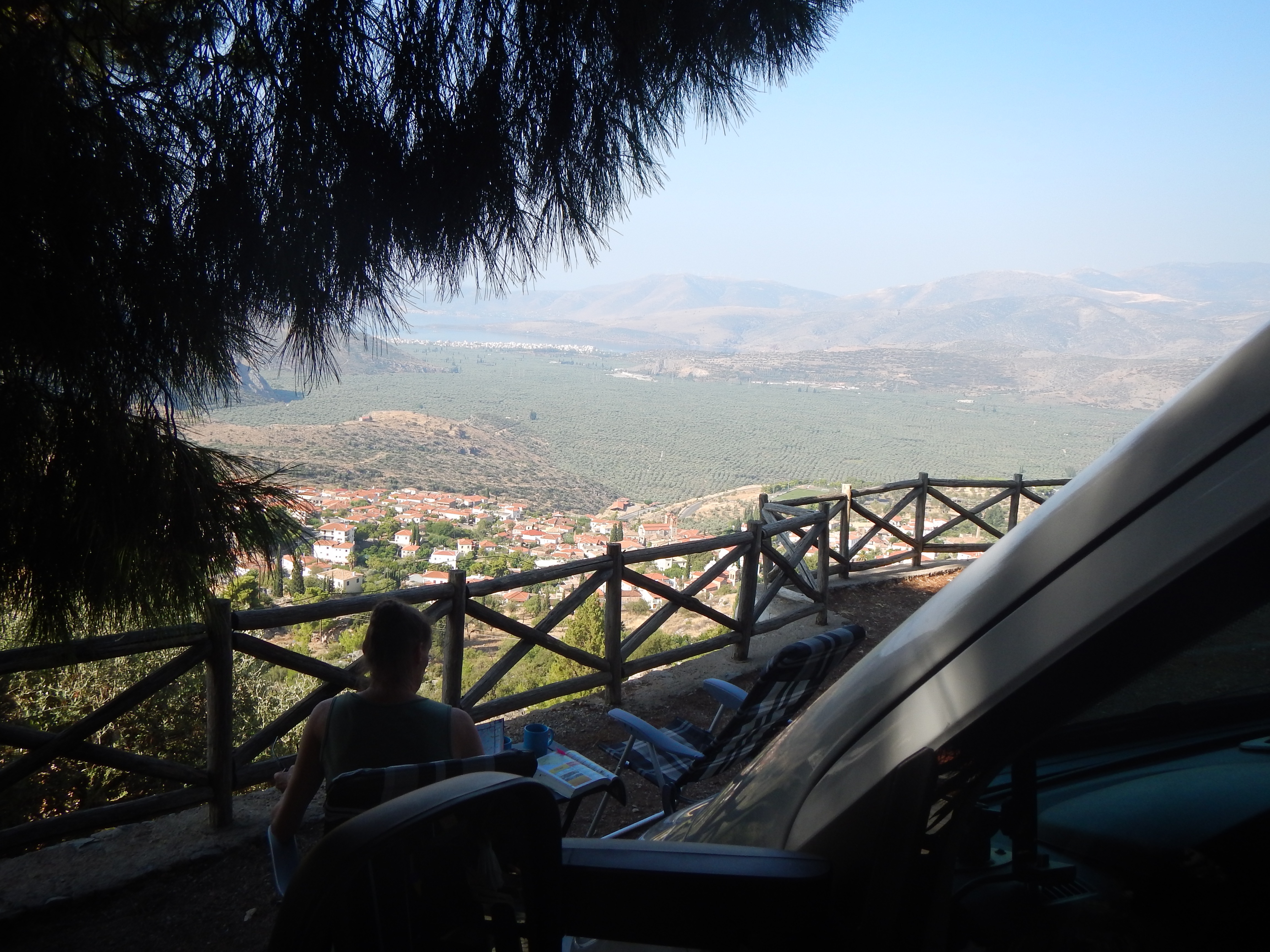
Campground in Delphi Greece.
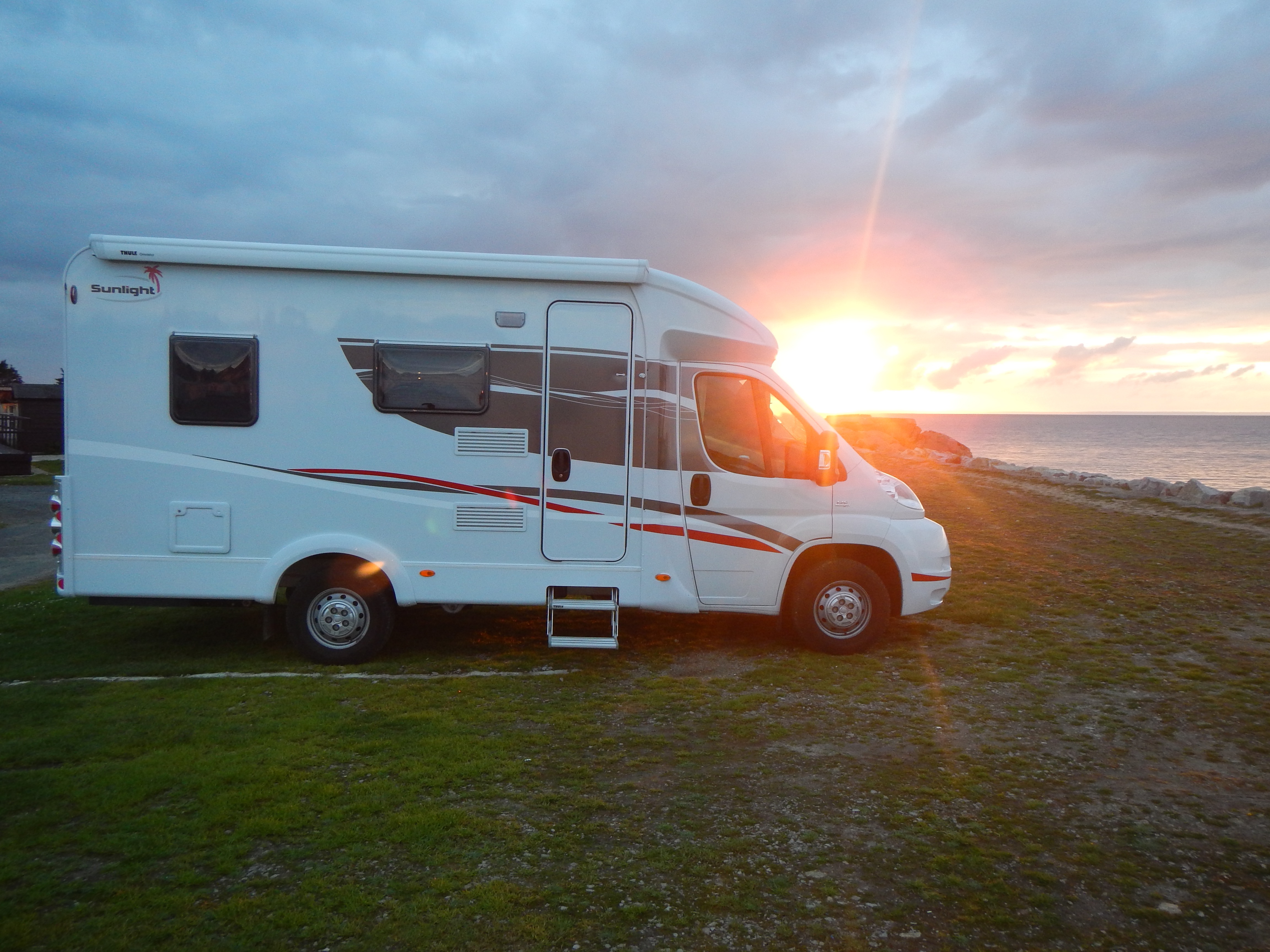
Spellplatz on the West Coast of France.
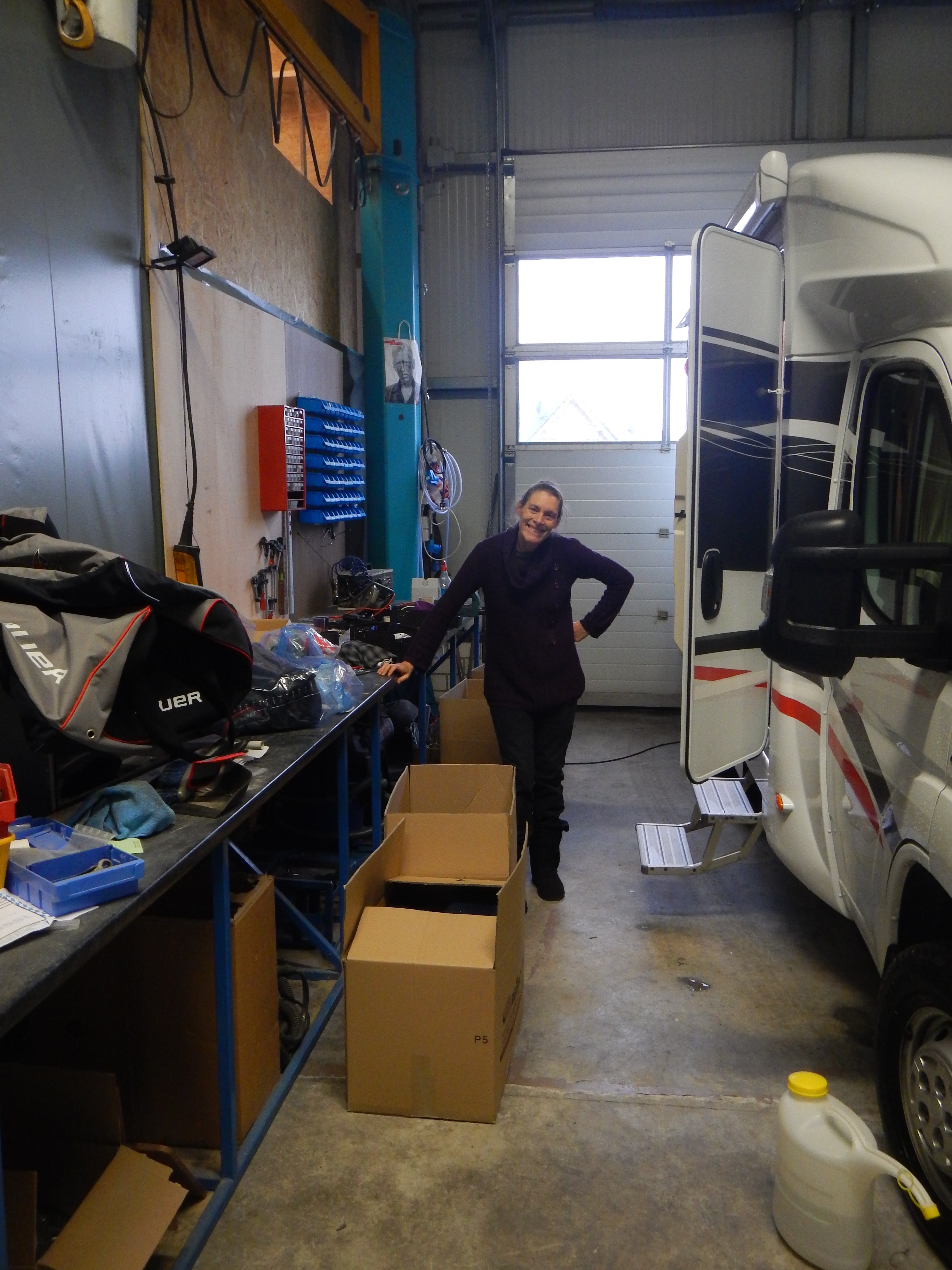
Sadly packing things up at Dumo.
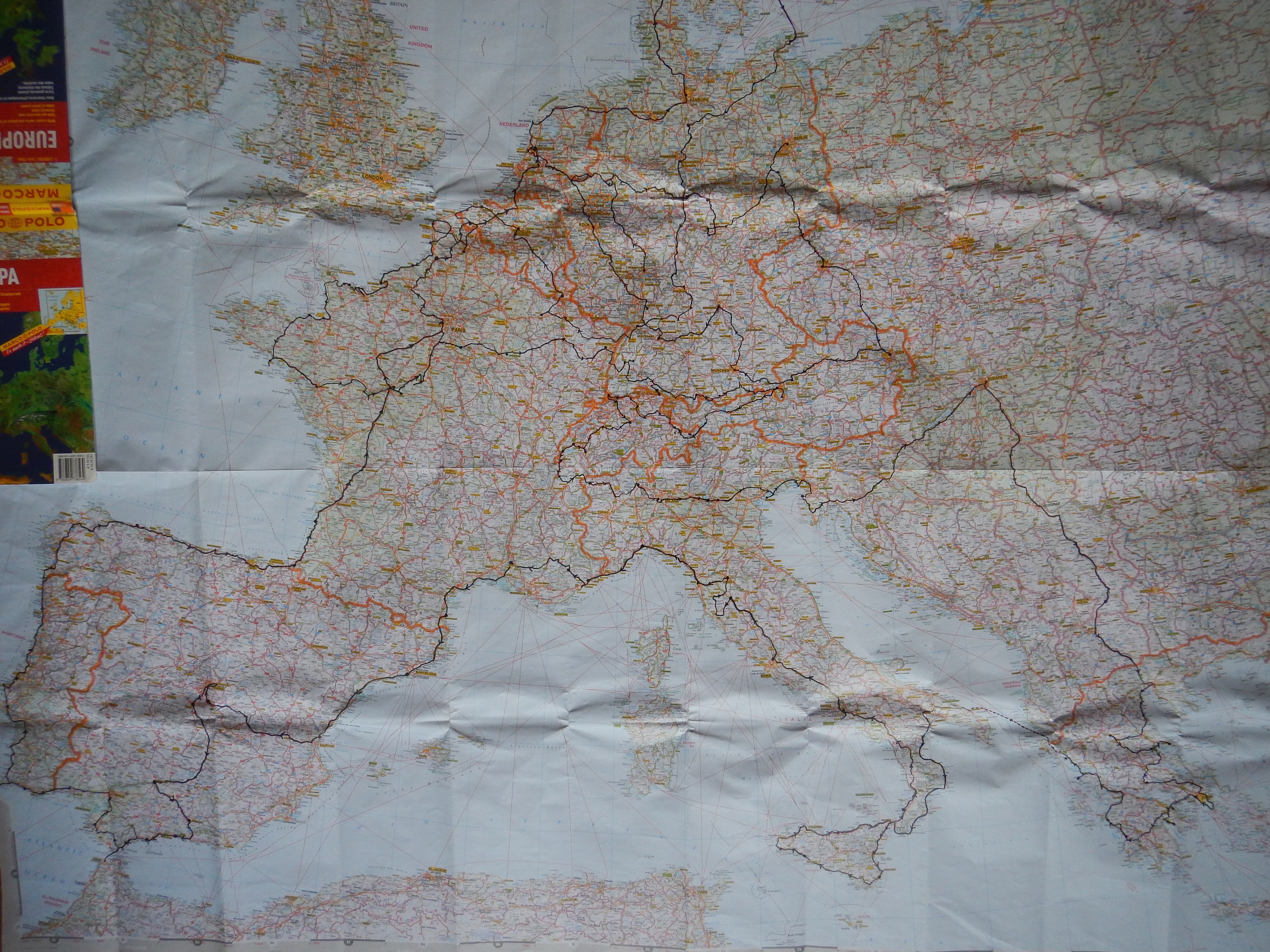
10 months and 30,000 Km’s on that little black line. What a wonderful experience!
 Brumablog